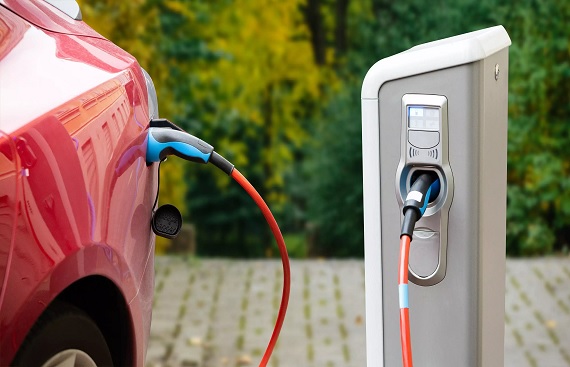

For charger operators, the larger issue is not only installing more stations but understanding why a charger fails when it does and whether the problem is a power cut, a software glitch, or a physical fault that needs a technician on site.
| Photo Credit: Photo for representation only
As Electric Vehicle (EV) charging stations across cities often run into problems because chargers from different companies do not work well together, Bengaluru-based EV software firm Kazam is building a single software system to help operators manage and fix these chargers.
Kazam was incubated at the Indian Institute of Management Bangalore (IIM-B).
For charger operators, the larger issue is not only installing more stations but understanding why a charger fails when it does and whether the problem is a power cut, a software glitch, or a physical fault that needs a technician on site. The lack of clarity often leads to downtime, higher costs and inconvenience for users.
Incubated at IIM-B through its start-up centre NSRCEL, Kazam works behind the scenes as a technology backbone for EV charging networks.
Pallavi N. B. of Kazam, said that the company’s aim is to remove the complexity that arises when operators deploy chargers sourced from multiple manufacturers across cities and highways.
The platform is ‘agnostic’, meaning its software is not tied to any single charger brand. This allows operators to view and manage all their chargers even if they are made by different companies on one common dashboard. “Instead of relying on manual checks or trial-and-error fixes, operators can remotely see the status of each charger, identify the exact nature of a fault and respond faster, reducing both downtime and maintenance costs,” Ms. Pallavi said.
This problem has become more pronounced as EV infrastructure has expanded rapidly in India. Most operators procure chargers from different vendors, each using its own firmware and communication methods. While many chargers follow the Open Charge Point Protocol (OCPP), the industry-standard communication system, its implementation varies across manufacturers.
“OCPP is like a common language, but each manufacturer speaks it slightly differently,” Ms. Pallavi said, explaining how even minor variations can affect data accuracy or command execution.
To address this, Kazam works closely with charger manufacturers at their factories and research centres to align how OCPP is implemented, ensuring that chargers from different brands behave consistently once they are connected to Kazam’s Charging Management System.
The platform currently hosts more than 1.07 lakh chargers on its network.
At an operational level, the company’s software monitors chargers in real time, tracking uptime, energy use and fault alerts. This helps operators detect issues early and move towards predictive maintenance instead of reactive repairs, reducing downtime and operating costs.
Beyond charging management, the company’s platform enables chargers to draw power from local solar and other distributed renewable sources. Through its trading platform, businesses or communities can trade surplus clean energy directly with others. This decentralised model helps reduce pressure on the power grid during peak demand while promoting cleaner energy use.
The company is also preparing for vehicle-to-grid (V2G) and vehicle-to-everything (V2X) systems, under which electric vehicles can both draw power from and supply electricity to homes, buildings and the grid.
Published – December 20, 2025 11:16 am IST