Sportico recently turned three—and we’ve now been around long enough to see promising startups come and go.
On June 30, exactly two years after announcing a $20 million Series A funding round that included participation from Wayne Gretzky, Michael Jordan and Patrick Mahomes, sports streaming startup Buzzer announced it was ceasing operations.
In a statement, Buzzer cited “recent fundraising developments and market dynamics,” the latest victim of a contracted funding environment. According to PitchBook, U.S. investors gave new companies $39.8 billion last quarter, a 48% decline year-over-year.
Buzzer launched with big names and serious momentum in 2021, signing content deals with the NBA, NHL and others. It initially offered access to snippets of live games for prices starting at 99 cents, backed by an algorithm (and staffers) that would recognize potentially exciting moments and alert users in real-time.
However, expanding on—or even holding onto—those rights quickly became a challenge. Leagues demanded top dollar for their prize assets, and broadcasters were wary of giving fans alternative ways to watch. Ultimately, teams, leagues and media companies began prioritizing their own direct-to-consumer apps and subscription products.
Having shrunk its staff by roughly half over the last year, Buzzer changed course and became a service provider to those platforms, before funding issues turned fatal. Now, the company is left to sell its tech holdings, such as the algorithm it developed to identify trending moments and the stack it built to authenticate viewers and stream live events. Potential buyers include other B2B platforms or sports brands themselves, as teams move from regional sports networks to their own apps.
Buzzer’s proposition—a third-party streaming platform catering to young fans—may not have proven viable in today’s world. It’s possible that people are simply too averse to directly dropping cash to watch a few minutes of sports action—or that young people don’t see the need to drop everything to catch a significant moment live at all. After a loud launch, VC money and big rights deals likely made it difficult for the company to experiment with other business models.
Still, CEO Bo Han said in a statement given to Sportico: “The problem we set out to solve—the generational gap that continues to widen among live sports viewers—is existential for our industry. And as someone who deeply wants my 3-month-old son to value the magic of watching a live game, I really hope we find a solution soon. I’ll be rooting hard for the next company or entrepreneur who takes the problem head-on, as well as anyone else out there who fearlessly strives to build something new.”
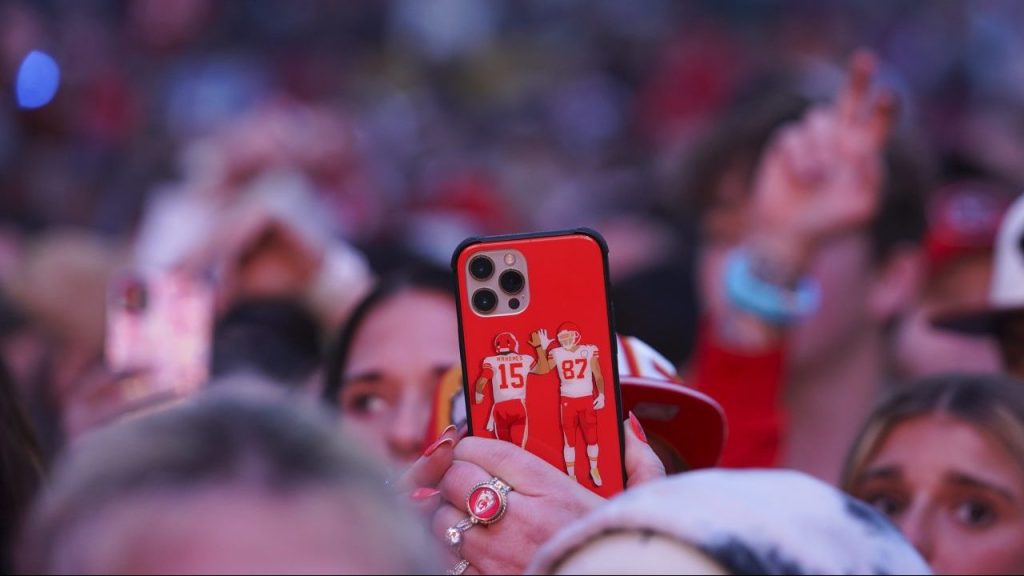
As sports attempt to hook a new generation, they face a cascade of challenges that stem from that 6-inch slab of glass that’s probably sitting somewhere in your peripheral vision, if it’s not currently directly in front of your face.
Modern, megamillion-dollar sports came of age alongside the television, back when that technological innovation was known as the small screen. But this year, experts expect time spent watching digital video to surpass TV’s eyeshare.
On that playing field, live sports have to battle alternatives that offer fewer ads, more personalized options and additional opportunities for interaction. And that’s before factoring in the mass of on-demand content now available, served up in highly curated feeds.
Sports brands have come around to the importance of social platforms. They’re competing for attention, and often winning. Smart outfits have built entire businesses that way. Still, converting those followers into longform viewers—much less physical attendees—has been difficult. Last year, 47% of Gen Z said they’d never been to a pro sporting event. And 33% said they don’t watch live sports, period.
Fragmentation only makes that challenge harder. Knowing that an exciting sporting event is coming up, as well as when it is on, where it is available to watch and how much doing so will cost has become a sport in itself. Who can blame someone for simply opening Instagram, Snapchat, TikTok, Twitch or YouTube to find endless entertainment awaiting them for free instead?
That list of hurdles proved to be one too many for Buzzer to overcome in its effort to woo a new demographic of viewers. But the larger sports industry can’t throw in the towel. And some solutions await.
The formula for success isn’t complicated, at least on paper: Sports need to sell their dramas, their stakes and their characters, putting key aspects of those stories in front of as many eyeballs as they can reach. Then they need to personalize the offering to fans who now follow players more closely than teams, making it easier to keep track of the moments each person actually cares about. From there, events need to be accessible (in some cases, that means free), formatted by device, and delivered in a way that satisfies our stretched, stressed (wait, did my phone just ding?) stupefied minds.
At its best, Buzzer recognized those needs. But in business, as in sports, the clock is always ticking.