– Led by a former global conglomerate expert, the company utilizes edge-based AIto automatically detect accidents and send distress signals, while also developing satellite image-based monitoring for disasters like wildfires and floods.
– With successful preliminary tests in Europe and the U.S., Fuit is launching its global expansion at CES 2026with the ambitious long-term goal of establishing a global satellite network constellation by 2030.
As unpredictability surrounding climate change, large-scale traffic accidents, and massive wildfires grows worldwide, safety is increasingly viewed as a core pillar of social infrastructure. In particular, as modes of transport—including vehicles, ships, and drones—become more sophisticated, a single accident inevitably escalates beyond individual tragedy into a systemic risk for roads and entire cities.
The moment ground-based communication infrastructure is neutralized during a disaster, even a request for rescue becomes impossible. The golden hour required in emergency situations is directly linked to survival, yet current communication infrastructure has clear limitations. This is why situations persist where victims cannot even send a distress signal simply because the network is down or they are in a service shadow area. Establishing a rapid response system for unexpected hazards like vehicle accidents, kidnappings, or sudden medical emergencies is no longer an option but a necessity.
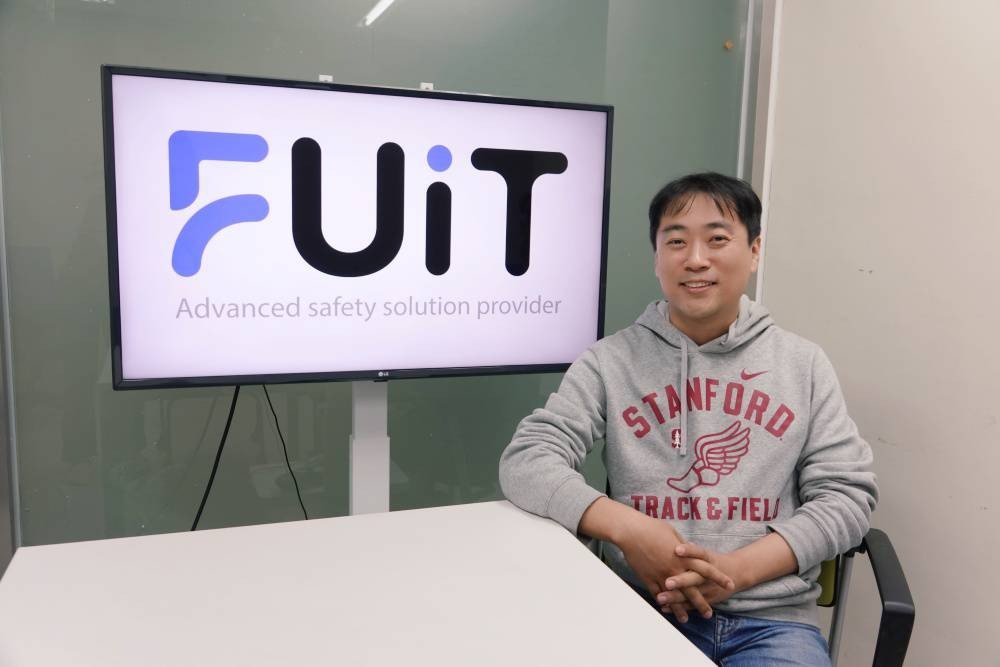
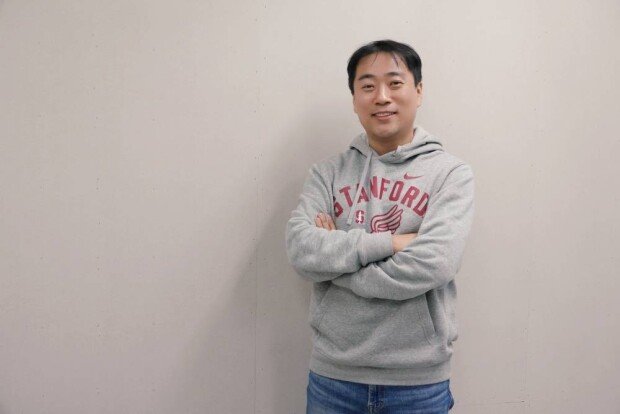
Se-ho Kim , CEO of Fuit / source = IT DongA
Fuit focuses on combining satellite communication and AI-based mobility safety technology to bridge this final broken segment. Its goal is to create an invisible safety net by automatically triggering emergency messages the moment an accident occurs on roads, at sea, or in remote areas where ground networks are severed. The future Fuit envisions goes beyond simple technological innovation to the evolution of a social safety net that protects lives. I met with Se-ho Kim, CEO of Fuit, who views safety as essential infrastructure, to discuss his business strategy and goals.
Strengthening Expertise Based on Global Corporate Experience
Founded in 2022, Fuit is a safety solution company that integrates satellite communication and AI. Starting in digital healthcare, the company has expanded its business scope to vehicles and satellite communications, while also focusing on developing personal safety solutions within smart cities.
CEO Se-ho Kim leads Fuit based on experience gained over 20 years at a global conglomerate. After joining a major corporation as a software developer, he accumulated expertise in new business development by handling diverse fields including product planning, electric vehicle charging infrastructure, digital healthcare, and AI business strategy. His role was also pivotal in strengthening Fuit’s expertise through the robust network he built during that time.
CEO Se-ho Kim said, “At a global corporation, I was responsible for planning synergies between affiliates while dealing with advanced technology fields such as space tech, humanoids, and computing. By naturally experiencing the entire process from product development to manufacturing, I became accustomed to creating new businesses. That experience has had a significant impact on Fuit.”
Securing Technical Competitiveness Through Preemptive Patent Filings
Fuit’s core technology is an ICT-based emergency rescue system known as E-call (Emergency call). E-call automatically detects emergency situations and transmits accident information to an E-call center, enabling safe protection by securing the golden hour for passengers.
In the case of existing E-call services provided by companies like Hyundai, GM, BOSCH, and BMW, high dependency on terrestrial networks makes them limited in shadow areas such as tunnels or mountains. Terrestrial networks are concentrated only in densely populated areas, making it difficult to handle unstable communication or disaster situations. By establishing a satellite and AI-based hyper-connected safety net, Fuit enables rapid and accurate rescue support for passengers without interruption in any emergency. The company is also advancing its technology by defining various scenarios that could occur in shadow areas. Furthermore, in collaboration with a global corporation, Fuit is developing a satellite messaging solution that can be applied to vehicles, ships, and Urban Air Mobility (UAM).
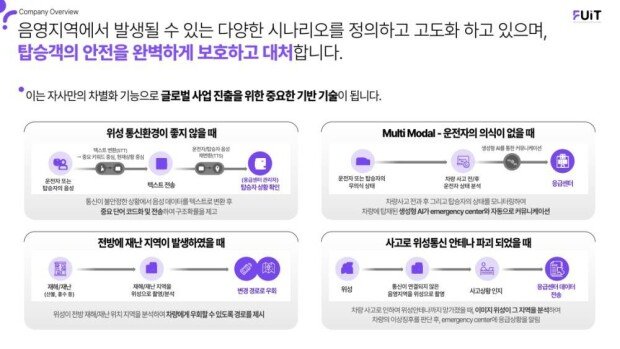
Fuit E-Call, Automatic Emergency Detection System / source = Fuit
Specifically, Fuit’s E-call is equipped with satellite communication-based emergency messaging solution technology. This technology utilizes edge-based AI to assess a driver’s safety status even in limited resource environments and automatically sends emergency messages via satellite communication. It maximizes communication efficiency through dynamic compression messaging technology. Other major technologies under development include coding and transmitting critical words, a satellite-based disaster avoidance route guidance system, a generative AI-based automatic vehicle accident response system, and accident detection and emergency reporting through satellite image analysis.
Fuit has been securing technical competitiveness by preemptively filing related patents since 2023. This year, it completed PCT (Patent Cooperation Treaty) filings and North American patent applications. It is preparing for European patent filings next year.
Kim said, “We analyze global patents every year to build Fuit’s own competitive technological fortress. Interest in satellite communication-based emergency rescue services is rising worldwide. Fuit has been building a leading position by recognizing the potential of this field since 2023. This is our strength.”
Fuit also possesses several new and meaningful patents and technologies. For example, it holds a patent for deception technology that allows a vehicle to drive itself to a police station or communicate with the police in the background during a kidnapping situation. It has also filed a patent for a system that automatically sends notifications to emergency responders near an accident site to secure the golden hour for the injured.
It does not end there. Fuit is also developing safety solutions specialized for vehicles, homes, and offices—where people spend the most time. It is preparing driver-centric safety monitoring for vehicles and home agent-based solutions for elderly people living alone or multi-person households.
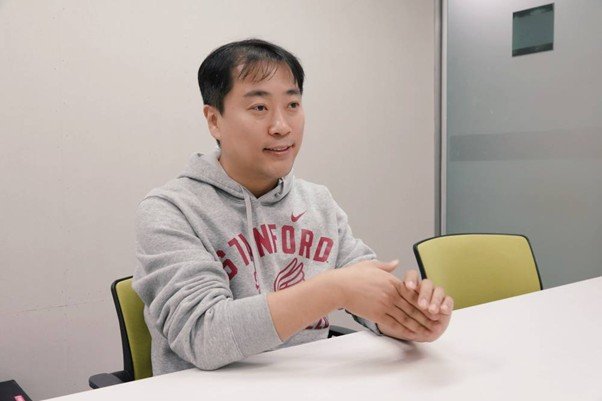
Fuit is leading the field of satellite communication-based emergency services / source = IT DongA
Kim stated, “Each space has different required technologies and requirements. A vehicle is a means of transport, a home is a space for rest, and an office is a workspace. We are developing services tailored to the role of the space. We plan to provide personal safety services by integrating various healthcare technologies, such as non-contact camera-based heart rate monitoring, stress index analysis, and lifelog data analysis from smartphones and smartwatches.”
Preparing Safety Automation Systems Amidst Various Challenges
Fuit has grown through trial and error. In the beginning, there were significant difficulties in technology development and personnel management. Kim admitted, “Conglomerates and startups were different. I experienced trial and error while running a startup without the abundant resources I had at a large corporation.” He added, “External experts were needed for specialized areas such as patents, law, and accounting, but I overcame this by actively utilizing the network I built during my tenure at the conglomerate.”
Kim repeatedly emphasizes that Fuit’s satellite communication-based safety technology is the first of its kind in Korea. To that extent, investment in aerospace technology in Korea is minimal, and awareness of it is lacking. According to Kim, while the US and China are already reusing rockets, Korea is only planning to attempt it by 2035.
Having experienced this firsthand, Kim expressed regret, saying, “When I go for project evaluations, I am often asked why I am pursuing a technology that is not yet mature. But other countries are already making massive investments in aerospace. There is an urgent need to improve awareness regarding the necessity of such technology.”
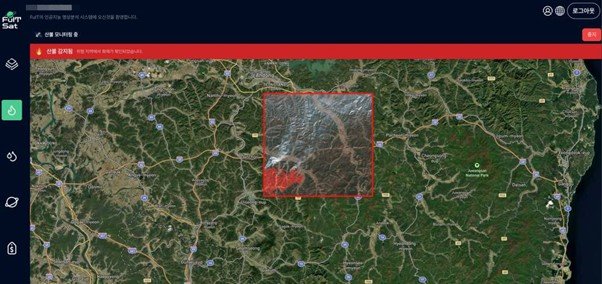
Nevertheless, Fuit is moving forward. In collaboration with the Artificial Intelligence Cluster Agency (AICA), supported by the Ministry of Science and ICT and Gwangju Metropolitan City, and the space specialist company Nara Space, Fuit will begin full-scale demonstration of a satellite image-based disaster monitoring system starting in December 2025. When a user requests a satellite image of a specific area, Nara Space provides the image, and Fuit analyzes it with AI to determine disaster situations such as floods or wildfires.
Fuit has vehicle emergency detection and satellite-based rescue technology. / source = Fuit
Kim stated, “The free model of the satellite image-based disaster monitoring system analyzes past images, while the paid model requests and analyzes satellite images in real-time when a disaster is expected. Additionally, it is possible to build an automated system that can expand services to tasks like pothole detection.”
Furthermore, Kim expressed confidence, saying, “It is rare for a private company to build a satellite communication-based city monitoring system of this level. Fuit can complete an automated system that takes responsibility for safety not only for individuals but also for outdoor spaces in smart cities.”
Overseas Expansion Becomes Visible with a Focus on Security
Fuit’s current challenge is overseas expansion. This is because the market size and demand for satellite communication-based services are much larger abroad than in Korea. To this end, Fuit is working closely with various global partners. In October 2025, the company held meetings with local business partners through one-on-one meetups and an IR Demo Day in Luxembourg. Kim said, “We confirmed positive reactions indicating that our technology has sufficient marketability in Europe.”
Fuit also saw meaningful results in its own preliminary online survey of 50 drivers living in the United States. Ninety-four percent of all respondents expressed a willingness to pay a monthly subscription fee of $49 (72,000 KRW) or more for Fuit’s technology.
Gaining confidence from these results, Fuit will begin its full-scale overseas expansion starting with its participation in CES 2026, the world’s largest consumer electronics and IT exhibition, to be held in Las Vegas in January 2026. Business discussions are underway with partners in Europe and the US, and the company is also considering attracting overseas investment and establishing local branches.
Fuit is in business discussions with various global partners to expand overseas / source = IT DongA
Fuit is also moving to build a system that meets the strict standards of the European GDPR (General Data Protection Regulation). This is based on the judgment that strengthening security is essential since the company handles satellite communication and image data. Kim explained, “While working at a global conglomerate, I gained a perspective of looking at the overseas market first through my experience in global business. I planned Fuit’s business by considering the potential for global expansion rather than just looking at the Korea market.”
As disasters caused by extreme weather surge, ground communication infrastructure is easily destroyed. Kim explains that building a satellite-based monitoring system is essential. Fuit predicts that satellite communication will be more economical and efficient than terrestrial communication by 2030 and plans to establish a satellite network constellation—a group of satellites working together as a single network to cover the entire world—in the long term.
Kim expressed his ambition, saying, “Because life is precious, Fuit’s goal is to develop technology that can secure the golden hour when an accident occurs. We will secure the golden hour for people in danger by perfectly establishing safety solutions within smart cities.”
Fuit’s attempts to focus on safety—from automatic detection of emergencies in vehicles to satellite-based rescue requests and real-time disaster monitoring—are impressive. It is asking what the basic requirements for future smart cities should be, while simultaneously providing an answer to how technology should protect human lives.
By Kui-im Park ([email protected])
Source link