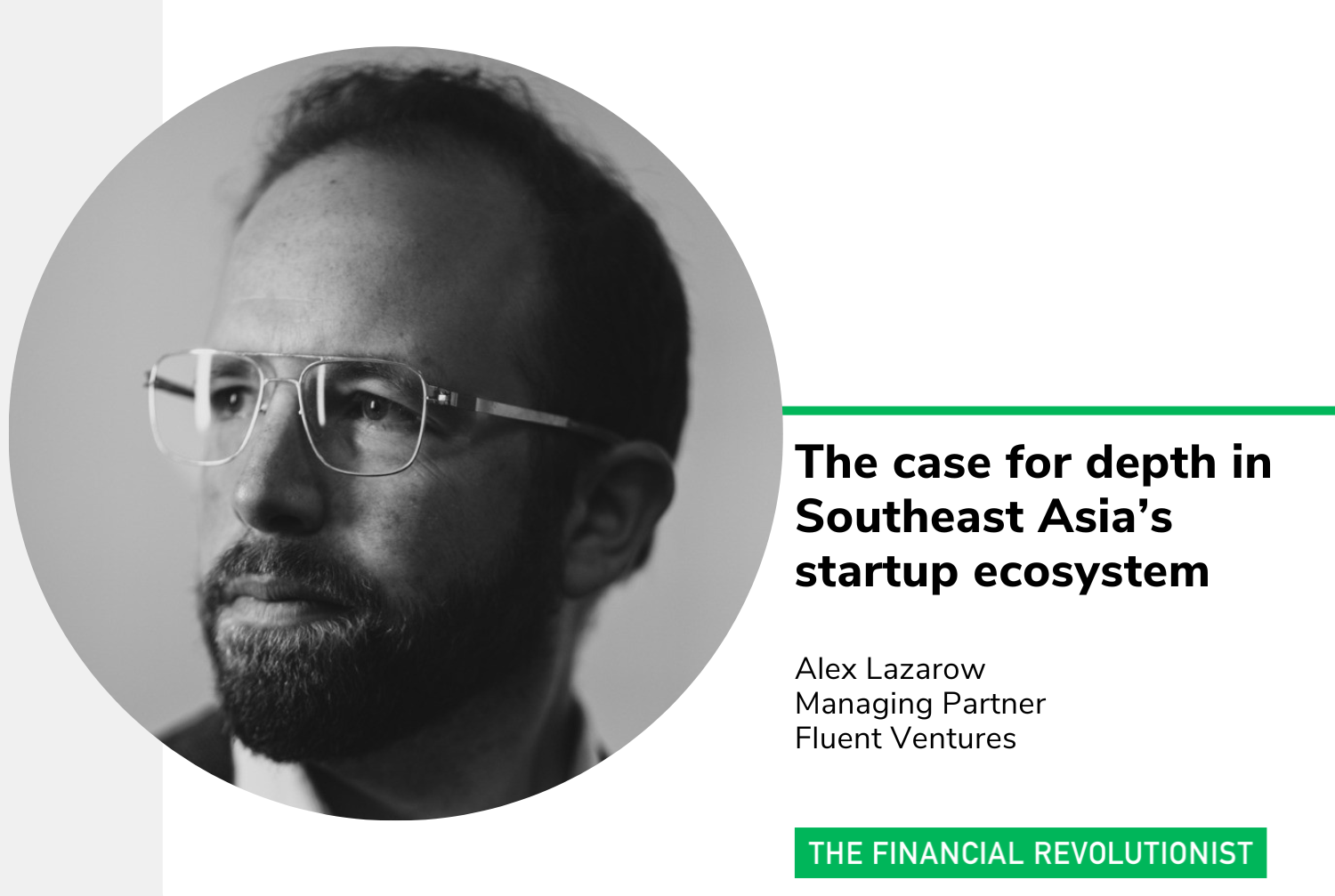
Alex Lazarow is an author, speaker, global venture capitalist and contributor to The FR.
I recently returned from Southeast Asia.
For more than a decade, the region has been framed as “the next frontier” for tech: a young, mobile-first population, rapid GDP growth and a wave of high-profile unicorns. But on the ground, from Singapore to Jakarta, that story felt both true and more nuanced.
The froth has thinned. The Southeast Asia tech ecosystem is being reexamined. A new phase is taking hold, with less hype, more discipline and a deeper focus on building durable businesses.
From blitzscaling to category building
The first wave of the region’s startup story was defined by blitzscaling. Grab, GoTo and Sea Group raised billions, capturing markets by outspending competitors and accelerating consumer adoption. That period created the region’s digital backbone: payments ubiquity, logistics networks and a generation of consumers comfortable transacting online.
It also left behind fragile unit economics and uneven governance.
Quietly, a more durable revolution is underway. As Tech Collective argued, founders are shifting toward vertical AI, industrial and logistics software, climate technology and B2B infrastructure. Consumer scale alone no longer guarantees success. Startups are building the backbone of the digital economy and transformation.
The talent base is maturing in parallel. Much like in other tech ecosystems, a new generation of spin-out founders from Grab, Sea and Gojek are building their own companies — bringing with them the playbooks of their alma maters.
This emerging flywheel mirrors what you see in more established hubs like Silicon Valley or Tel Aviv. A decade ago, Southeast Asia didn’t have this density. Today, it’s starting to.
Enabling infrastructure has also caught up. Payments rails, logistics APIs, cloud and data platforms, along with embedded fintech stacks are now standard building blocks. In Out-Innovate, I argue that startups no longer need to build as much of the full stack as they once did. Enabling infrastructure now shortens the route to market. But it also raises the bar for defensibility. Being first is no longer enough. Depth matters.
A funding reset and a return reckoning
The capital cycle makes this maturation visible in the numbers. In the first half of 2025, Southeast Asia tech startups raised about $2 billion, according to Tracxn’s semi-annual SEA Tech – H1 2025 report. That total was down 24% from the $2.6 billion raised in the second half of 2024.
In 2021, startups in SEA raised more than $25 billion.
The strain is evident at the early stage. Founders are raising smaller rounds, extending runway and being forced to prove unit economics much sooner. Perhaps the strain is highest at the growth stage. For investors, the challenge is different but related: lofty valuations have not translated into cash. DPI (distributions to paid-in capital) remains a weak spot for many Southeast Asia venture funds.
When trust breaks
The funding reset has also exposed a second fault line: governance.
The eFishery and Investree scandals have shaken confidence in the Southeast Asia startup ecosystem, exposing weaknesses in financial controls, board oversight and venture investors’ role when things go wrong.
-
eFishery, once Indonesia’s agritech flagship and a symbol of “impact at scale,” was valued at more than $1 billion, with investors including Temasek, SoftBank and Sequoia. By late 2024, the company was under investigation for allegedly inflating revenue by roughly $600 million in the first nine months of the year. Reports suggested it claimed profits while actually posting losses.
-
Green Queen, which mapped the saga in detail, described it as “the startup scandal that rocked Southeast Asia’s food-tech sector.” Integrity Indonesia reported evidence that eFishery kept two sets of books, one for management and another for investors, with divergences of up to 75% in reported sales.
-
Investree, an Indonesian SME lending platform, tells a different but rhyming story. Once held up as a model of digital credit innovation, the company saw nonperforming loans climb to around 16%, well above regulatory thresholds, amid allegations of executive misconduct and mismanagement. The Runway Ventures unpacked how a combination of governance lapses and weak risk controls led to a sharp breakdown in trust between lenders and the platform.
The builders ahead
Yet the picture is not one of collapse. It is one of recalibration.
The funding pullback is painful for founders and investors alike, but it is also forcing the Southeast Asia startup ecosystem to seek firmer footing.
The next wave of companies will be leaner and deeper. Valuations are becoming more rational. Founders who can navigate constraints and operate as “camels” rather than unicorns are becoming easier to spot.
Tracxn notes that Singapore-based tech firms accounted for 92% of all regional tech funding in the first half of 2025. That concentration underscores both strength and fragility. Singapore remains the dominant hub, but secondary centers such as Jakarta, Ho Chi Minh City and Manila are quietly gaining momentum and merit closer attention from global capital.
For venture firms, return expectations are shifting as well. The model built on endless multiple expansion and rapid exits is giving way to funds designed for longer holding periods, more creative liquidity including secondaries and strategic M&A and governance built in from day one.
Why this is still the moment
All of this might sound like an argument for caution. In reality, it is an argument for discernment.
The next phase of Southeast Asia’s startup story will not be written by blitzscalers. It will be led by builders who understand constraints and treat capital efficiency, integrity and depth as strategic edges rather than limitations to tolerate.