The Focus
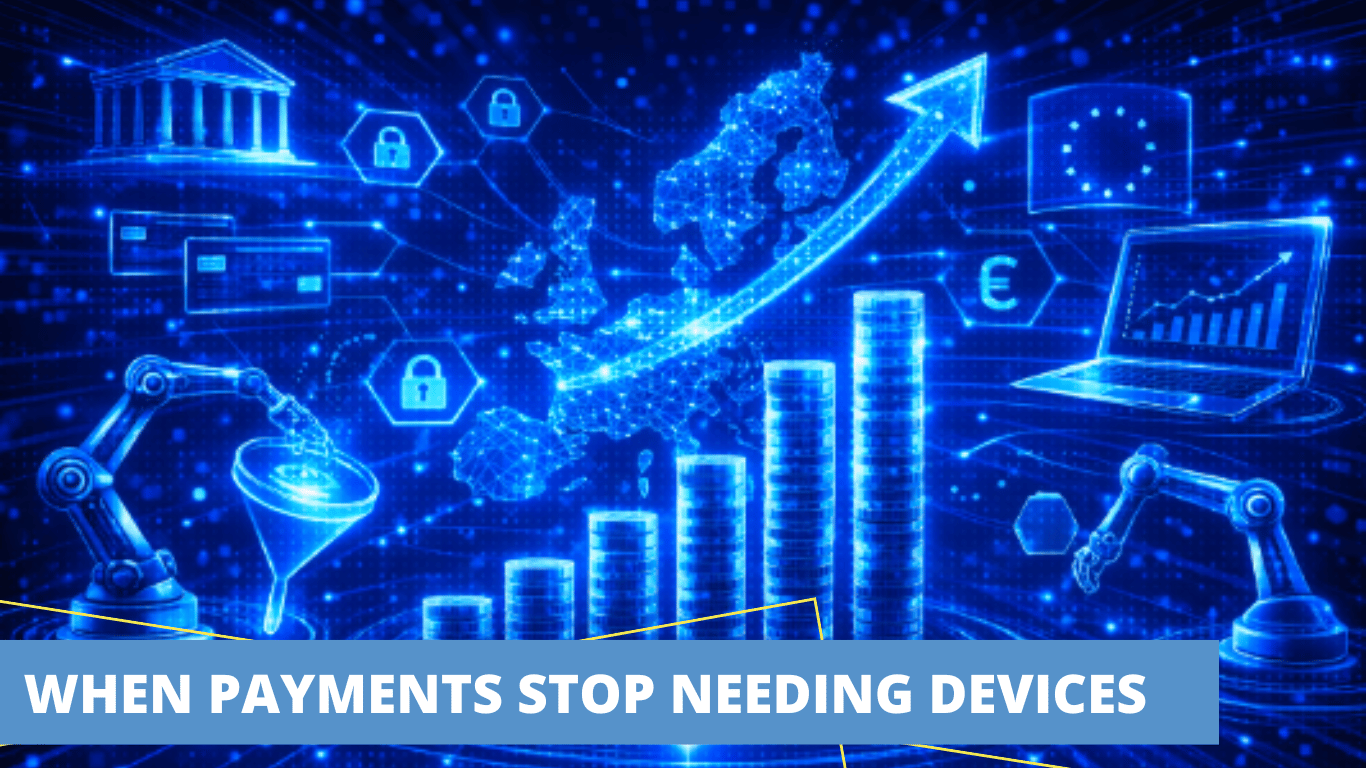
As 2026 begins, some of the most consequential changes in payments are happening out of sight, in software layers designed to make the act of paying almost unnoticeable. PayPal’s recent decision to back Klearly, a European startup focused on hardware-free payment acceptance, fits squarely into that shift.
The signal here is not about one funding round. It is about how value in payments is moving away from physical infrastructure and toward integration, flexibility, and speed.
From terminals to invisibility
Payments become a software function that sits on top of existing point-of-sale environments. Phones, tablets, and already-installed systems do the work. Hardware stops being the differentiator.
That matters because it changes incentives. Innovation no longer waits for device upgrades. New features ship as updates, not installations. Merchants are no longer locked into hardware cycles that lag behind consumer behaviour.
In this model, the checkout experience becomes less about what sits on the counter and more about how well systems talk to each other.
Why Europe is the proving ground
Europe has always been a difficult market for payments companies to navigate. It is highly digital but deeply fragmented. Regulations vary. Acquiring models differ country by country. Consumer habits are local, not uniform.
Hardware-free approaches offer a way to scale through that complexity without forcing standardisation at the physical level. Software adapts more easily than devices. Updates cross borders faster than terminals.
This is why Europe keeps producing payment models that later travel elsewhere. The constraints are real, but so is the pressure to solve them efficiently.
PayPal’s growing pattern of European investments suggests it sees this clearly. Rather than forcing a single global model, it is placing smaller, strategic bets on infrastructure that can flex locally while scaling regionally.
PayPal’s move is notable precisely because it is restrained. This is not an acquisition or a declaration of a new standard. It is a way to stay close to a shift that is still unfolding.
That restraint reflects a broader maturity across fintech.
Read the news:
PayPal Backs Klearly With $14 Million as Europe Pushes Toward Hardware-Free Payments
Your Voice Matters
Share your insights with us!
🚀 Join over 6,000 fintech professionals staying ahead of the curve.
Follow FinTech Weekly for expert insights & industry updates!