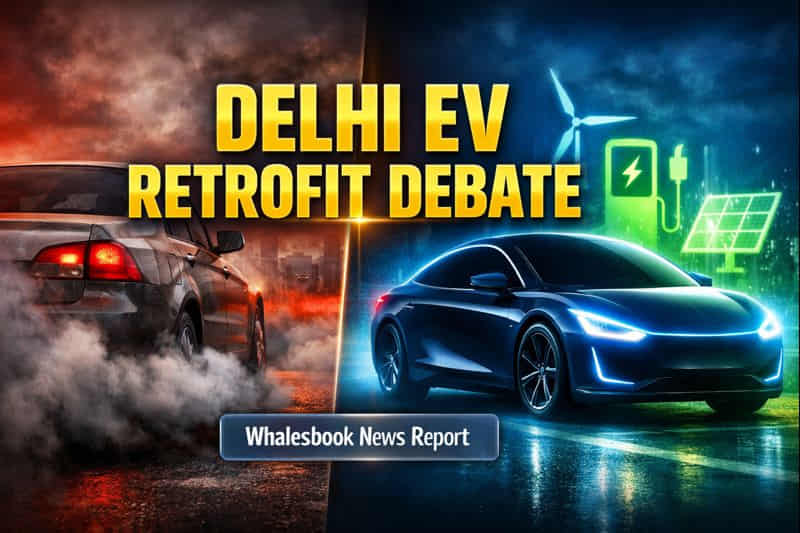
India’s capital is venturing into electric vehicle (EV) retrofitting, offering incentives that have sharply divided the nation’s automotive sector. The Delhi government announced a program to encourage the conversion of internal combustion engine vehicles to electric powertrains, providing an incentive of ₹50,000 for the first 1,000 vehicles. This initiative aims to combat vehicular pollution by extending the lifespan of older cars.
Automakers Raise Safety and Viability Red Flags
Leading automobile manufacturers, however, have voiced significant reservations. Executives speaking anonymously highlighted serious safety and technical concerns, distinguishing EV retrofits from previous conversions like CNG or LPG. Unlike simpler fuel system changes, EV retrofitting involves substantial alterations to battery placement, weight distribution, software, and drivability, which they argue cannot be achieved through retrofitting with the required platform-level engineering. Most major players, including Tata Motors, Mahindra & Mahindra, and JSW MG Motor, declined to comment on the matter.
Auto industry veteran Rajeev Chaba noted that critical EV parameters like battery integration, software, range, performance, and safety require deep evaluation. He stated these parameters cannot be fully optimized in a retrofitted vehicle. Carmakers have heavily invested in dedicated ‘born-electric’ platforms, viewing retrofitting older models as neither technically scalable nor aligned with current safety standards.
Startups See Opportunity Amidst Regulatory Hurdles
Despite the automotive giants’ skepticism, a segment of independent retrofitters sees substantial potential, particularly as a solution to Delhi’s policy restricting older petrol and diesel vehicles. Companies like Delhi NCR-based Folks Motor believe the market could grow with policy reforms. However, they face significant challenges.
Folks Motor’s Managing Director Nikhil Khurana pointed out that EV retrofitting lacks formal recognition in India’s automotive policy framework, limiting scalability. He added that a clear Goods and Services Tax (GST) and regulatory framework are absent, and the central government’s focus remains on new BS-compliant vehicles rather than retrofits. Khurana suggested conversions could apply to vehicles as young as four to five years old, not just end-of-life models.
Calls for Policy Reform to Boost Retrofitting
Pune-based Suma Japanese Technologies, one of the few firms with regulatory approvals, noted that a proposed extension of FAME incentives to retrofitting never materialized. Managing Director Jayapal G highlighted a key commercial barrier: retrofitted EVs face an 18% GST, compared to 5% for new EVs, rendering conversions financially unviable. Industry players are actively lobbying for policy changes, including reduced GST on retrofitted EVs, scrappage-linked subsidies, streamlined registration, and extended vehicle validity periods.