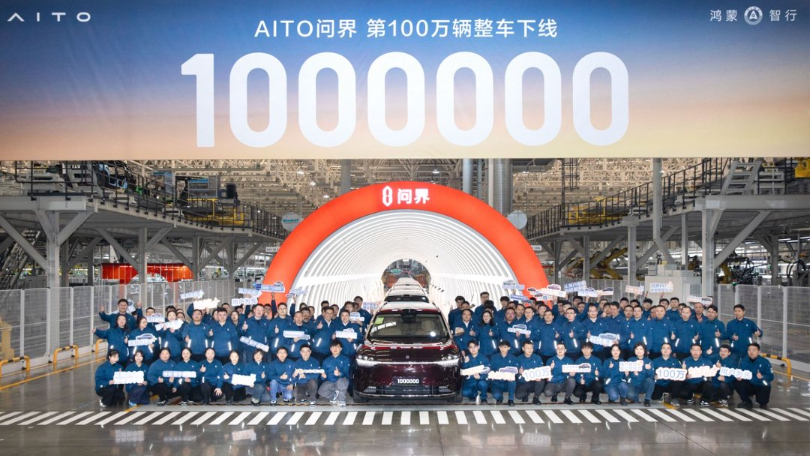
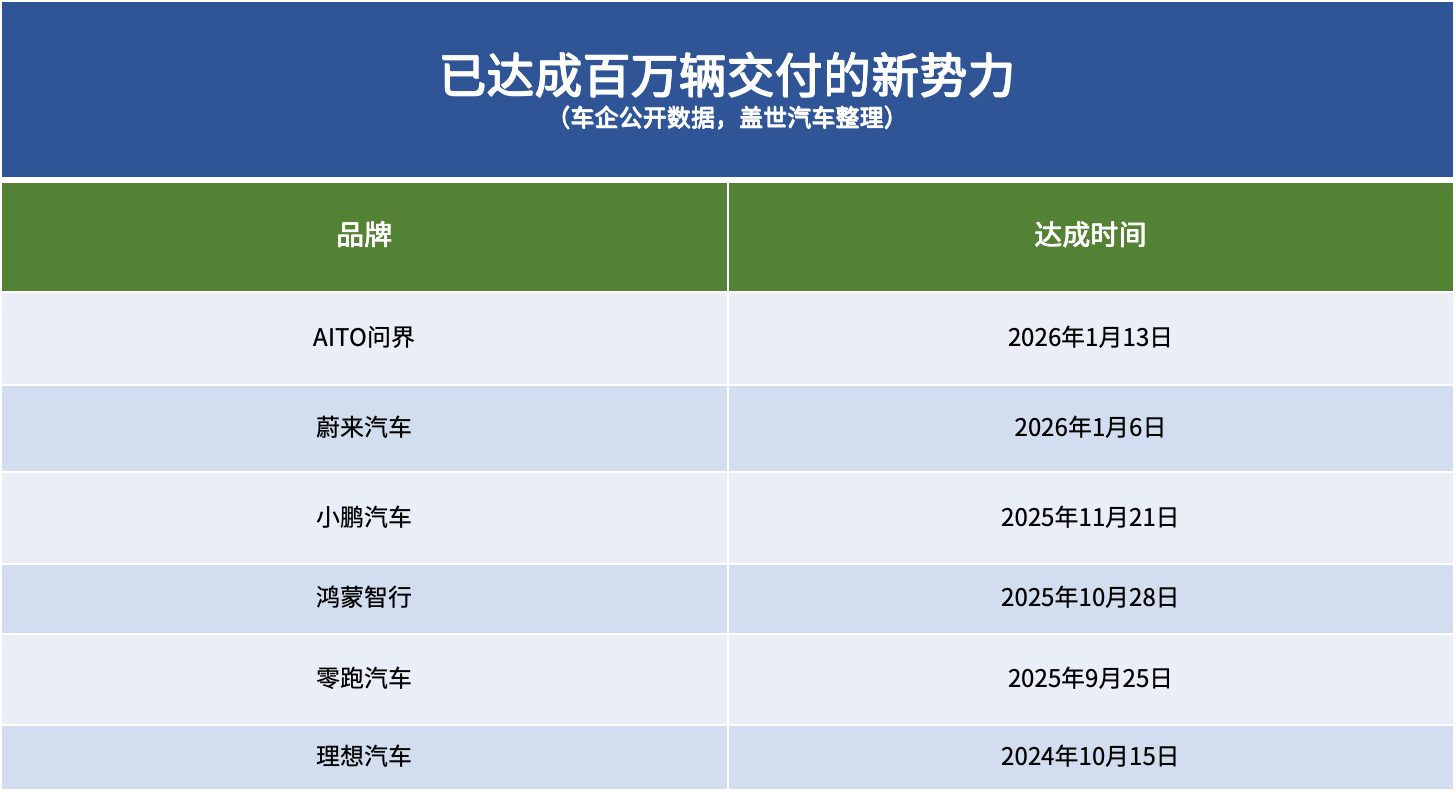
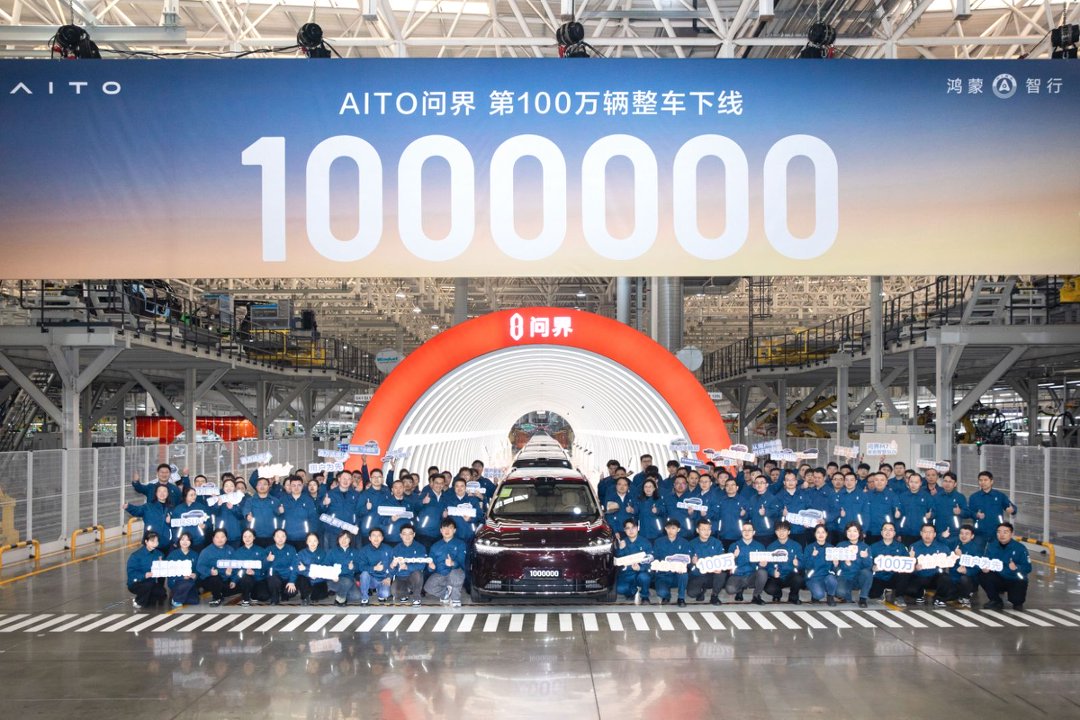
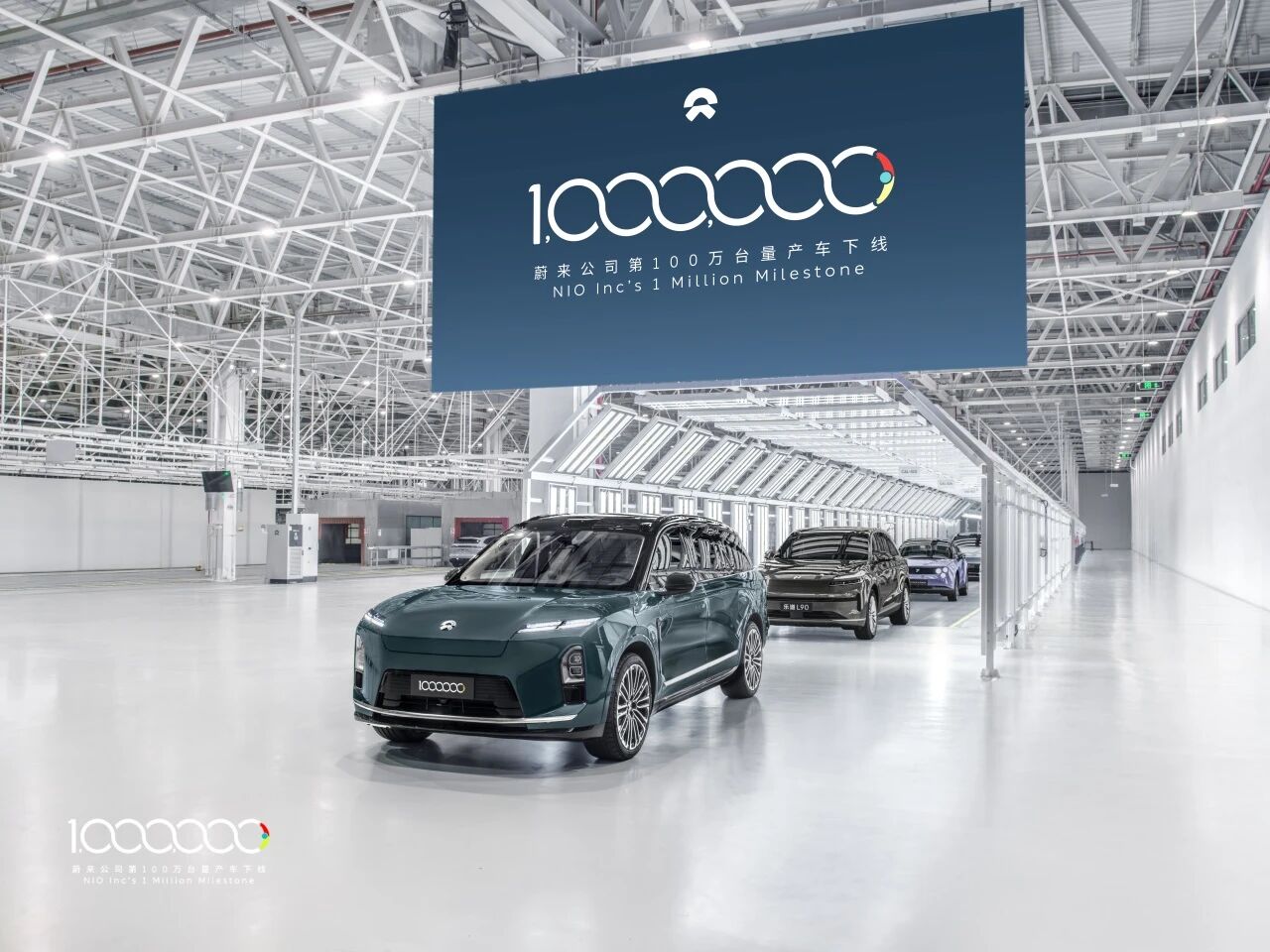
China’s new energy vehicle sector witnessed two significant milestones in early 2026. On January 6, a fresh all-new ES8 rolled off the assembly line at the Hefei Xinqiao plant, signaling that NIO’s cumulative production had surpassed 1 million units. Just a week later, on January 13, an AITO M9 emerged from the Seres Super Factory production line, marking the brand’s one-millionth vehicle.
Two startups representing distinct technological paths and business models cleared this critical threshold almost simultaneously, becoming the new focus of industry attention. Yet this is not the full picture. Across the broader startup camp, multiple brands—including Li Auto, XPENG, Leapmotor, and Harmony Intelligent Mobility Alliance—had already crossed the million-unit mark.
Li Auto hit the million-unit production mark in 2024, driven by precise product positioning and efficient extended-range technology. XPENG’s deep investment in intelligent driving is gradually translating into market recognition. Leapmotor has carved out a solid reputation in the mid-to-low-end market through vertical integration and cost control. Meanwhile, Harmony Intelligent Mobility Alliance joined the million-unit ranks in 2025.
This collective leap over the million-unit threshold signals that China’s EV startups have moved beyond the early market-testing phase into a new stage of large-scale, systematic competition. It serves as a testament to their combined capabilities in product strength, supply chains, manufacturing systems, channel networks, and user service. Yet viewed against the broader market, hitting cumulative sales of 1 million is merely one checkpoint in a long race. As NIO co-founder Qin Lihong put it: “In the auto industry, 1 million units is an important milestone for a company’s growth, but in the grand scheme of the industry, it is insignificant. It means we have truly crossed the starting line.”
The collective dash to 1 million units not only reveals how these companies survive fierce competition but also reflects the diverse paths and deep structural shifts within China’s NEV transition. This “endless marathon” is entering a new leg, where the million-unit mark serves as both proof of past achievements and the starting gun for even more complex challenges ahead.
From “New Species” to “Mainstream Players”
The collective surge past 1 million units by Chinese startups displays a distinct character of “multiple breakthroughs and diverse paths.” The varying timelines and routes taken to reach this milestone clearly reflect different development models and strategic thinking.
AITO and NIO, which reached the million-unit mark in close succession, offer a representative case study.
It took AITO roughly 46 months from its first delivery to the rollout of its one-millionth vehicle, setting the record for the fastest “million-unit speed” among startups. NIO, by contrast, took nearly 11 years from its founding to achieve the same goal. This disparity in speed is, at its core, the result of two distinct strategic choices.
AITO’s rapid growth stems from an industry-first model of cross-sector integration. As early as 2021, Seres and Huawei began deep collaboration across technology R&D, product definition, brand co-building, and channel synergy, creating a new paradigm for cooperation in China’s auto industry. “Achieving the million-unit milestone today is a vivid demonstration of this new model of cross-sector integration,” emphasized Zhang Xinghai, chairman of Seres Group, when discussing the results. “Practice has fully proven that only by being ‘together’ through cross-sector integration can we cross the 1 million mark in the fastest time.”
Image Source: AITO
The core of this model lies in fully leveraging the strengths of both parties. Huawei deeply empowers the partnership with its accumulated intelligent technology, brand influence, and channel capabilities, while Seres contributes its automotive manufacturing expertise and production capacity. Richard Yu, executive director of Huawei, shared AITO’s achievements over the past five years: “The AITO M9 has firmly held the top spot in the 500,000-yuan class for 21 consecutive months, with 270,000 deliveries; the M8 has been the best-seller in the 400,000-yuan class for six months; and the M7 has delivered over 400,000 units. Every model in the AITO series has been a hit.” This cross-sector integration has not only accelerated product iteration and market expansion but also redefined the value standards for high-end intelligent vehicles.
In contrast, NIO chose a more “autonomous” path. From its inception, NIO established a strategy centered on high-end pure electric vehicles, a self-built battery-swapping network, and full-stack proprietary technology development. William Li also admitted: “NIO possesses the gene and capability for original and foundational R&D.”
NIO’s persistence is evident across multiple dimensions: cumulative R&D investment exceeding 65 billion yuan, covering foundational technologies such as chips, operating systems, and intelligent chassis; the construction of the world’s largest battery-swapping network, with over 96 million swaps completed to date; and a commitment to high-end positioning, with an average selling price significantly higher than the industry average. Furthermore, NIO has built a competitive edge through unique user community operations and a comprehensive service system.
The success of these two paths reveals the diversity and inclusivity of China’s NEV market. In the world’s largest and most active electric vehicle market, different business models and technological routes all have room to survive and thrive.
The cross-sector integration model achieved a rapid scale breakthrough by leveraging quick resource integration and accelerated time-to-market. Meanwhile, the full-stack self-research model, by cultivating deep core technologies, has built long-term defensive moats and won the loyalty of specific user groups. These two paths are not opposed but complementary, jointly driving the industry forward.
One Million Units: A Comprehensive Test of Systemic Capability
As startups collectively cross the million-unit threshold, the main battlefield of competition has quietly shifted. Pure product rivalry and sales chasing are giving way to more complex contests of systemic capability. At this stage, the challenge for companies has shifted from “how to survive” to “how to develop healthily and sustainably,” testing their comprehensive strength in supply chain management, cost control, organizational efficiency, technological innovation, and global layout.
Supply chain and cost control have become the primary tests after scaling up. As production climbs to the million-unit level, dependence on the supply chain and management complexity grow exponentially. Recent industry-wide pressure from rising prices for key components like memory chips has posed a severe challenge to the cost-control capabilities of all automakers operating at scale.
At the same time, companies have formed differentiated supply chain management models based on their own strategies. Some have built a stable, collaborative supply ecosystem through deep cross-sector integration; others have strengthened autonomy over key links through vertical integration; and still others have improved supply chain efficiency through more refined management and demand forecasting. These distinct supply chain strategies directly influence a company’s risk resilience and profitability in a market environment of fluctuating costs.
Upgrading organizational management and operational efficiency is also a metamorphosis companies must complete after crossing the million-unit scale. When a company grows from a small startup into a medium or even large enterprise, existing management styles and organizational structures often struggle to adapt to new development demands.
In fact, several startups have already begun driving deep organizational restructuring, shifting from an early-stage startup mindset to a scale-operation mindset, establishing a more refined, data-driven management system. William Li revealed that NIO is advancing internal management reform: “We are promoting a ‘million-fold mindset’ internally, advocating for company-wide operation. What does that mean? When we used to talk about costs—2 yuan, 5 yuan—now we require multiplying everything by 1 million.” This transformation is reflected not only in cost control but also throughout the efficiency improvements of the entire value chain, covering R&D, production, sales, and service.
Technological innovation is moving from single-point breakthroughs to a new stage of systemic iteration. The million-unit scale provides automakers with valuable data assets and a foundation for iteration, making data-driven technological evolution possible. As intelligent competition enters its “second half,” companies are increasing their layout in artificial intelligence, computing power investment, and algorithm optimization. Intelligent driving systems are extending from highway scenarios to complex urban roads, smart cockpit ecosystem integration is deepening, and electronic-electrical architectures are evolving toward central integration.
These technological advancements not only boost product competitiveness but are also redefining the value composition of automobiles—the proportion of software and services in the vehicle’s full lifecycle value continues to rise. In this regard, many startup brands are part of the leading camp, laying a solid foundation for further development.
Global expansion is also shifting from an option to a necessity. As the penetration rate of China’s NEV market continues to break records, the room for growth in the domestic market is gradually narrowing. In this context, going overseas has become the logical, inevitable choice for startups seeking new increments.
Of course, true globalization is not merely about exporting vehicles; it involves the comprehensive export of systems covering localized R&D, production, sales, service, and energy ecosystem construction. Different companies have chosen differentiated overseas strategies based on their own resources and capabilities: some are using small cars as lead products to enter mature markets like Europe; others are focusing on emerging markets such as the Middle East and Southeast Asia; and still others are partnering with traditional automakers through technology licensing models. These explorations are rewriting the global automotive industry landscape, as Chinese brands begin to transform from participants in the Chinese market to competitors in the global arena.
New Forces’ Industrial Integration?
The collective crossing of the million-unit threshold by startups has not only changed the survival status of individual companies but is also profoundly reconstructing the value creation methods and competitive logic of the entire automotive industry. A notable feature of this transformation is that the industry is shifting from zero-sum competition between individual enterprises to a new development stage characterized by ecological synergy and value co-creation.
Industry boundaries are blurring, and integrated innovation is becoming the mainstream.
The traditional vertical division of labor in the auto industry is being broken down, with cross-sector integration between automobiles and fields like artificial intelligence, chips, software, energy, and transportation deepening continuously. This fusion has not only spawned cross-sector cooperation models like AITO but is also driving the entire industry toward a composite form of “Automotive + Technology.”
Through its new model of cross-sector integration, AITO has taken the lead in building an ecosystem deeply integrating the automotive and ICT industries. Zhang Xinghai emphasized: “The new model of cross-sector integration is not a simple splicing of hardware and software, but a deep fusion of both parties’ strengths, technologies, and resources. The Seres-Huawei model covers key areas such as R&D, product, intelligent manufacturing, brand, ecosystem, and service, achieving deep integration across the entire industrial chain to jointly build the core product power of intelligent EVs.” This deep integration has not only enhanced product competitiveness but also created a new model for industrial value distribution. Other startups are also building their own ecosystems; for instance, NIO has constructed a unique automotive ecosystem through its energy service system (NIO Power) and user community.
Another dimension of industrial reconstruction is the evolution of the energy ecosystem. NIO’s “chargeable, swappable, upgradable” technical route has transcended simple energy replenishment to become an important component of the new power system. Other energy technology routes are developing in parallel. Continuously iterating extended-range technology, high-voltage fast-charging technology, and new battery technologies are all jointly driving the larger-scale adoption of new energy vehicles.
Regional economies and the automotive industry are also forming a deeper bond. The NEV industry is no longer merely an autonomous act of enterprises but is closely linked to local economic development and industrial transformation and upgrading. Multiple provinces and cities are cultivating new energy vehicles as strategic emerging industries, attracting and nurturing leading enterprises through policy support, resource allocation, and ecosystem building. Zhang Xinghai pointed out: “The rollout of AITO’s one-millionth vehicle is a Chongqing sample of new quality productive forces and an important milestone in the history of Chongqing’s automotive industry.” This “industry-region” symbiotic model has not only accelerated the formation of industrial clusters and reduced logistics and collaboration costs but also promoted the modernization of local industrial chains. To some extent, the competition among automotive enterprises is also a competition between regional industrial ecosystems.
Facing the future, startup enterprises generally display a more rational and long-term development philosophy. When setting goals for the next stage, there are both aggressive plans like AITO’s challenge to “reach the second million within two years” and pragmatic strategies like NIO’s pursuit of “40% to 50% steady annual growth.” Discussions on the industry’s endgame have also become more rational. Unlike the early pessimistic prediction that “only three to five will remain,” more and more industry participants recognize that the Chinese automotive market is sufficiently large and diverse to support multiple companies in achieving scaled development.
Image Source: NIO
Summary:
The near-simultaneous crossing of the million-unit threshold by startups like AITO and NIO marks the entry of China’s NEV industry into a new stage of development. This is not merely a victory for a few companies but a concentrated reflection of the innovative vitality, systemic capability, and market resilience of China’s automotive industry during its electrification and intelligent transformation. From the rapid breakthrough of cross-sector integration to the long-term adherence of full-stack self-research; from precise market segmentation to cost control through full-domain self-research; from single-product competition to ecosystem construction; and from leading in the domestic market to laying out a global vision, Chinese startups are exploring diverse paths to success.
One million units is not the finish line, but a more challenging new starting point. It means companies are shifting their focus from pursuing single hit products and growth speed to building sustainable systemic competitiveness, healthy financial conditions, and global layout capabilities.
The competition in the post-million-unit era will be an “endless marathon” centered on technological depth, operational efficiency, user value, and ecosystem synergy. Only those companies that can continuously innovate, operate efficiently, deeply understand users, and build open ecosystems are likely to secure a place in the future industry landscape.
Source link