Startup profile: Xlue
- Founded by: Ophir Frieder, Hao-Ren Yao and Chenyan Xiong
- Year founded: 2025
- Headquarters: Pittsburgh, PA
- Sector: Healthcare, AI
- Funding and valuation: $1.5 million SAFE round raised at an undisclosed valuation, according to the company
- Key ecosystem partners: Carnegie Mellon University
A Pittsburgh startup is using AI to flag cancer risk early, and data from the region’s largest health system could soon help sharpen its tool.
Startup Xlue’s large language model, CATCH-FM — or CATch Cancer Early with Health Foundation Models — analyzes electronic health records to predict a patient’s likelihood of developing the life-threatening disease. The tech detects patterns in a patient’s health data that statistically resemble records of other patients later diagnosed with cancer.
Even a four-week delay in cancer treatment can increase a patient’s risk of death by up to 13%.
Now, Xlue is launching a clinical trial at a Taiwanese hospital, and UPMC could be next, according to the startup’s cofounder Chenyan Xiong.
“We are in discussions locally with UPMC,” Xiong, who’s also an associate professor at Carnegie Mellon University (CMU), told Technical.ly. “They have a beta program which will give CMU researchers access to their patient data.”
CATCH-FM hopes to gain controlled access to UPMC data via the Ahavi program, the UPMC Enterprises program that de-identifies patient health data.
In preliminary research, Xlue’s tool analyzed records from 30,000 Taiwanese patients, and 50% to 70% of the patients flagged for high risk of lung, liver or pancreatic cancer were later diagnosed with those conditions.
Xiong and his fellow researchers plan to use data from Ahavi to test if their AI model can predict pancreatic cancer risk in patients as well as it did in Taiwan. While this research project between CMU and UPMC has been two years in the making, there’s currently no formal agreement for CATCH-FM to be used in UPMC’s health network.
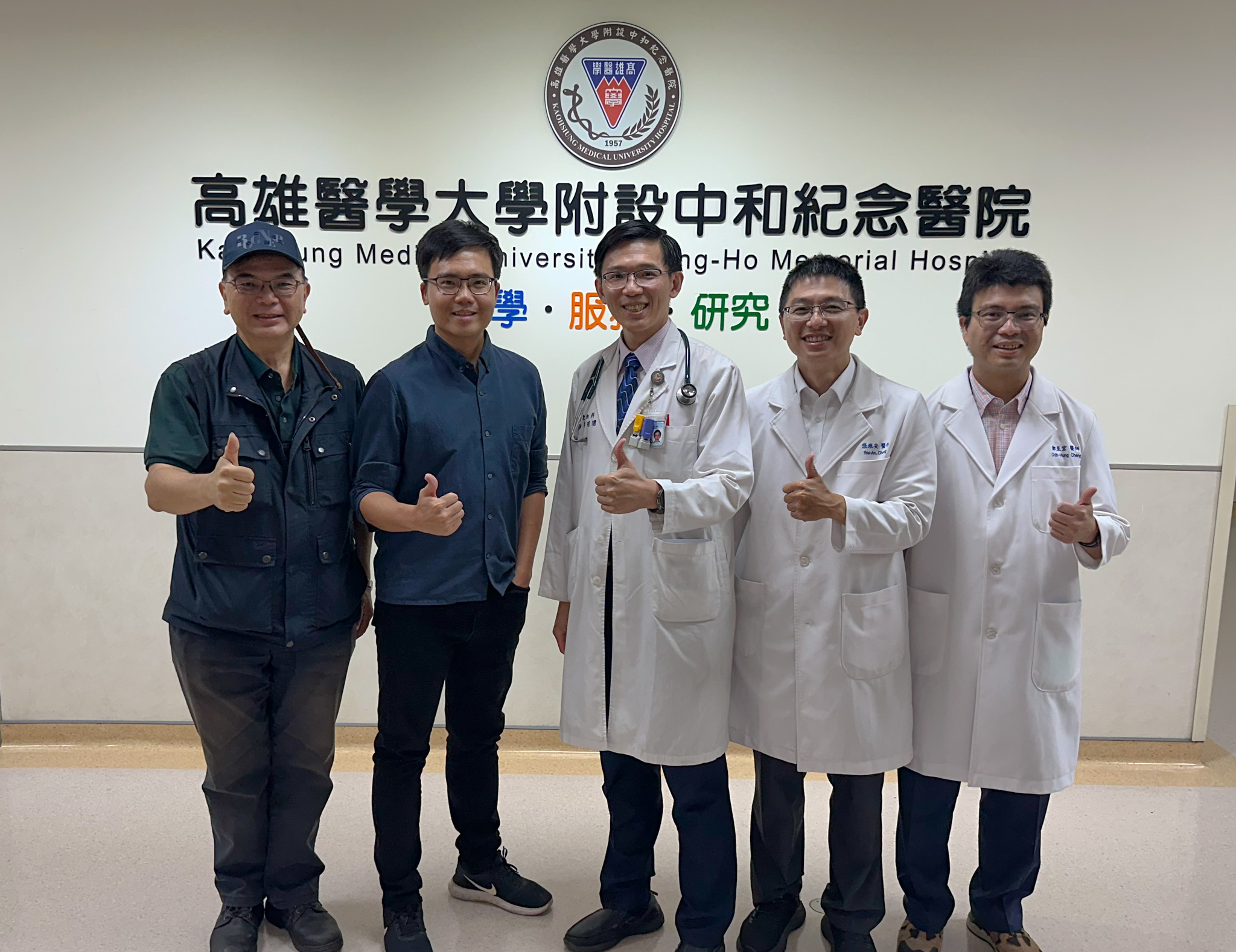
As Xlue continues to explore options with UPMC, it’s already kicking off a clinical trial for lung and liver cancer screenings at Taiwan’s Kaohsiung Medical University Hospital. In the coming year, Xiong and his cofounders hope their tool will start being used in more hospital settings.
“I hope in 2026 we’ll be able to push our cancer risk prediction models into actual hospital systems,” Xiong said, “and we are able to find a group of patients that have a higher risk [of cancer] and to recommend the right cancer screenings for them.”
Cancer rates, screening demands rise
Xlue built its model from scratch, trained on millions of health records from the Taiwanese National Health Insurance Research Database — a government-run, population-wide electronic health record system covering over 99% of Taiwan’s population.
After the initial training, researchers refined CATCH-FM using patient records selected by clinicians to help it better predict the risk of lung, liver or pancreatic cancer.
The hard part isn’t so much maintaining patient privacy while training a model, according to Xiong, because developers can work inside a hospital’s secure systems or on private servers. The more prevalent issue is actually getting access to usable patient data in the first place.
“Healthcare data is very scattered,” Xiong said. “Different hospitals have different data. Sometimes we have different data types. Also, the pathways of having access to the data are unclear.”
It’s worth the trouble, though, as catching cancer early can save lives. Even a four-week delay in cancer treatment can increase a patient’s risk of death by up to 13%, according to a 2020 meta-analysis.
CATCH-FM also comes at a time when young people under 50 years old are increasingly being diagnosed with a wide variety of cancers. As a result, major medical groups have lowered the recommended ages for cancer screenings.
AI healthcare continues to grow in Pittsburgh
Spun out from CMU last year, Xlue plans to remain headquartered in Pittsburgh with an office on the university’s campus, according to Xiong.
The company has raised $1.5 million via a SAFE round, Xiong said, with future goals of basing its business model on saving money for hospitals and insurance companies.
“We also have [ongoing] conversations with many other cancer centers, but I’m not sure how much I can share,” Xiong said. “One of the top 15 cancer centers — the president there also sees the same vision of using AI to help with preventive care.”
Xlue isn’t the only Pittsburgh-based company trying to integrate AI tools into healthcare. While AI’s role in diagnosing and curing diseases is growing, many companies in the field today are working to help healthcare workers who are overloaded by administrative tasks.
For example, Pittsburgh startup Abridge aims to fight burnout by giving doctors more time with patients and less time on paperwork. Abridge has found success to the tune of nearly $780 million raised and more than 200 partnerships with healthcare systems with its AI tool that records clinician-patient conversations and automatically generates clinical notes.
The rise of AI tools in healthcare has prompted some regulatory interest in Pennsylvania’s legislature.
Lawmakers have proposed requiring insurers and healthcare providers to tell patients when they use AI, to require that humans make all final healthcare decisions and to show evidence they are minimizing bias in their AI use. However, no legislation on this topic has been passed to date in the commonwealth.
Since “medical expertise and AI expertise are still two very separate expertises,” Xiong said, it can remain a challenge to identify what problems AI tools should solve in healthcare.
Updated at 10 a.m. to include additional context on the Ahavi program from UPMC.
Source link