Author | Huang Nan
Editor | Yuan Silai
Yingke learned that the AI – powered smart sports wearable brand “MossCode” recently completed an angel – round financing of tens of millions of yuan. This round was jointly invested by XVC and Qingliu Capital.
MossCode belongs to Shenzhen Wuyin Power Technology Co., Ltd. Its current valuation has reached $100 million.
The financing funds will be used to expand the R & D team and ensure the stable mass – production of products. The products are planned to be officially launched in the European and American markets in the first half of 2026.
Ni Ruoyang, the founder of MossCode, was once an investor in the TMT and hard – tech sectors at Sequoia. She was deeply involved in the growth cycles of overseas hardware projects such as Yunjing and EcoFlow. In 2023, she joined EcoFlow as the head of the home energy storage division, responsible for developing the European home energy storage business. She expanded the team size from 10 to 100 people within a year and achieved annual revenues of 1 billion yuan in the first year.
Ma Xiao, the co – founder, graduated from Huazhong University of Science and Technology with a bachelor’s and master’s degree in electrical engineering. He was once the person in charge of OPPO’s imaging flagship product line. There are also many core business personnel from leading enterprises such as OPPO, Apple, Suunto, and Coros in the team. They have led the R & D of many benchmark sports watches and have a complete ability loop from user insight to hardware delivery and then to commercial monetization.
Few people expected that when Ni Ruoyang decided to start a business, she would choose to return to a more personal proposition – sports and health. In her student days, she was a rower. A serious injury during training and a long recovery process gave her a real understanding of physical condition and sports recovery beyond data indicators.
According to the 2024 global smartwatch shipment report released by CounterPoint, Apple Watch has shown a negative growth trend for two consecutive years, with an annual decline of 10% – 19%, and about 6 – 7 million users are lost each year.
In sharp contrast, the vertical and professional track continues to explode: Garmin achieved a record – high revenue of $1.77 billion in the third quarter of 2025. This brand, which has long dominated the professional sports field, proves that sports and health are no longer just “optional consumer goods” but an incremental market with high willingness to pay and professional barriers. The smart health monitoring brands Whoop and Oura Ring achieved revenues of $700 million and $500 million respectively, which also verified the user base and commercial feasibility of data – driven and regular health monitoring.
A clear user migration path is forming from “general smart wearables” to “vertical and professional devices”.
However, at the same time, there is a significant demand gap in the market behind this path. Garmin builds a professional barrier with reliability and in – depth data, but its complex operation and high learning cost deter many users; Whoop focuses on “unobtrusive companionship”, weakens the presence of hardware, and focuses on recovery and sleep monitoring, but has obvious shortcomings in the core data dimensions of sports scenarios.
Ni Ruoyang herself is also a senior Garmin user. After the company was established in 2024, she and her team spent a lot of time conducting market research. They reached more than a thousand American users through questionnaires alone and conducted in – depth interviews with dozens of sports enthusiasts.
Ni Ruoyang told Yingke that most users who switch from Apple Watch to Garmin are those with clear needs for sports data. They are a typical “instrumentally rational” group. After finding that the Apple Watch cannot meet their core requirements for data accuracy, reliability, and long battery life, they actively choose Garmin and are willing to pay a premium for these core advantages.
However, Garmin’s “professional barrier” also brings a high threshold for use. The complex interaction logic and a large amount of raw data that need to be interpreted by users themselves put many users in a dilemma of being able to collect data but not being able to understand it. Eventually, they have to export the data and rely on third – party applications or even large models to convert the raw data into understandable and practical insights.
The MossCode team also found a very representative phenomenon: some in – depth sports users choose to wear Whoop on their left hand and Garmin on their right hand.
This intuitively reflects the limitations of a single device. Whoop can provide excellent recovery guidance and an unobtrusive wearing experience, but it cannot provide real – time GPS and detailed data during sports; Garmin has a powerful sports recording function, but it is difficult to give intuitive and understandable recovery suggestions. Users are forced to use two sets of devices and two accounts to piece together a complete “sports – recovery” loop.
The research results confirm their judgment that existing products cannot fully meet users’ core needs. This also leaves a clear positioning space for MossCode’s product design: a new wearable species that can simultaneously meet the needs of “real – time data interaction during sports” and “all – day recovery monitoring”.
“We are not going to’make another’ sports watch, but’remake’ the sports watch,” Ni Ruoyang said.
This stems from the team’s three – layer thinking about industry variables. At the technical level, the coordinated upgrade of computing power and energy density provides strong support for the implementation of a new hardware form. On this basis, scientific research breakthroughs in physiological principles have also promoted a key transformation in users’ understanding of sports science. It is no longer “training dose determines the effect”, but “approaching the sports limit by fitting individual abilities”. At the same time, large AI models have also broken the barrier of professional terms, allowing more targeted and practical personalized training methods to easily enter the lives of the general public.
“Our most core original users are those who have been educated by Whoop about the value of recovery but still cannot do without Garmin’s sports data,” Ni Ruoyang summarized to Yingke. “Their wearing on both wrists is itself the most vivid proof of the’market intersection demand’.”
The company name “MossCode” is a homophone of “Morse code”, which means that the product is expected to become a window for users to understand themselves and a “coding text” to decode their physical states.
To achieve the core function of “all – day adaptability”, MossCode must solve a classic paradox in the hardware industry: unobtrusive wearing requires extreme thinness, lightness, and long battery life, while professional data collection cannot do without powerful sensors, computing power, and battery support.
“The primary nature of wearables is ‘wearability’. If users are reluctant to wear the device continuously due to discomfort, all the advantages of data collection and algorithms will become zero,” Ni Ruoyang emphasized. This means that at the product definition stage, any performance enhancements that may significantly increase the weight, thickness, or affect the wearing comfort need to be carefully selected and balanced.
In terms of improving sports ability, the understanding of sports science has shifted from one – dimensional sports performance management centered around cardiopulmonary function to a comprehensive understanding of individual plasticity and adaptability based on neuroscience.
Traditional sports products mostly focus on “training intensity”, and users need to find a suitable plan through repeated trial and error. In contrast, MossCode’s AI layout does not define a standardized training path but builds a context for individual sports ability based on LLM; by collecting physiological signals, subjective state feedback, and long – term sports preferences all day long, it conducts dynamic management around the user’s individual state, and finally helps each person find a sports rhythm suitable for themselves and the optimal path to achieve their goals.
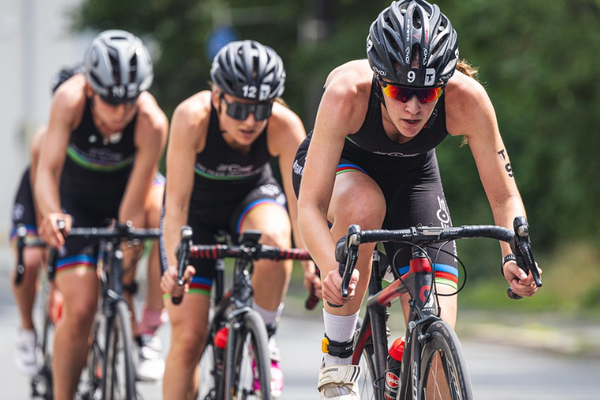
Yingke learned that the company plans to first enter the core sports circles with high data requirements and high experience sensitivity, such as cycling and endurance sports. After establishing a professional reputation, it will gradually expand to a wider range of health and general sports interest groups.
On one hand, the growth of general – purpose devices has reached its peak, and on the other hand, vertical and professional devices continue to penetrate. The driving force behind this is the evolution of users’ needs from “owning data” to “understanding data” and then to “acting based on data”.
To enter a market dominated by giants such as Apple, Garmin, and Whoop, a startup must have a differentiated breakthrough point. MossCode’s strategy is not to confront them comprehensively but to precisely enter a niche that has been ignored and is difficult for giants to cover. This is destined to be a journey that requires great patience and precise execution.