
Africa’s e-mobility sector is surging forward in 2026, driven by urbanization, policy incentives and investment in electric two-wheelers, buses and charging infrastructure.
The continent is shifting from pilots to scalable, commercially viable electric vehicle (EV) ecosystems driven by climate goals, energy security needs and economic opportunity.
Mobility startups are emerging as trailblazers on the African continent and are changing the transportation landscape while fostering a sustainable future for the continent’s young population.
One such startup is Nigeria’s EV Mass Transit Solutions, a mobility and rider‑ecosystem firm organizing the country’s motorcycle and tricycle transport sectors.
Established in 2023, EV Mass Transit Solutions provides innovative, efficient and scalable mobility solutions, particularly for unionized transport operators, fleet owners, lenders and vehicle manufacturers.
Connecting Africa Associate Editor Matshepo Sehloho spoke to EV Mass Transit Solutions Founder and CEO James Clinton about the startup.
Matshepo Sehloho (MS): What inspired the founding of EV Mass Transit and how do you envision the company transforming urban mobility in Nigeria and across Africa?
James Clinton (JC): EV Mass Transit was started to address core challenges in Nigeria’s transport sector by providing innovative, efficient and scalable mobility solutions – particularly for unionized transport operators, fleet owners, lenders and vehicle manufacturers.
Our platform focuses on helping organize transport unions, manage riders and ensure revenue assurance through technology-enabled systems.
We are modernizing traditional transit operations by introducing digital fleet and rider management systems that make operations more transparent, organized and financially sustainable.
This reflects a broader desire to bring efficiency and professionalism to mass transit in Nigeria’s urban ecosystems.
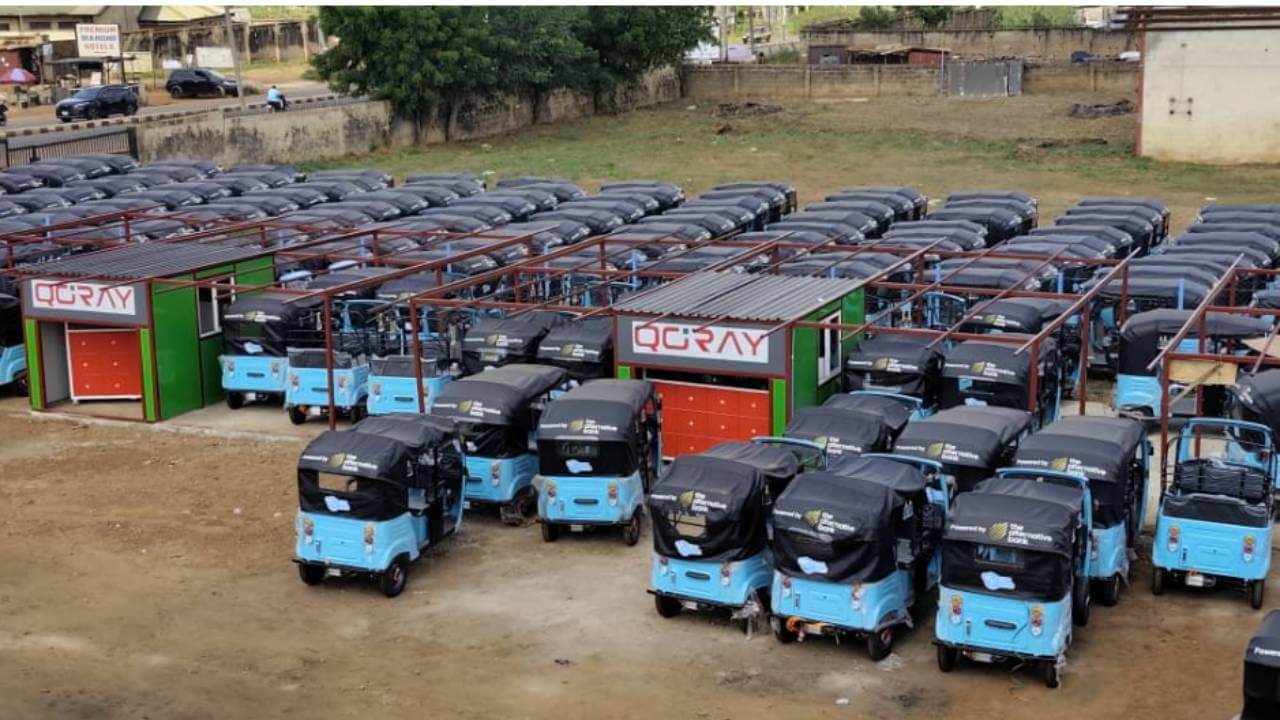
EV Mass Transit Solutions provides efficient, scalable mobility solutions for unionized transport operators, fleet owners, lenders and vehicle manufacturers. (Source: EV Mass Transit Solutions)
MS: What unique technological advantages do your EVs offer over imported models, such as in battery life, charging infrastructure, or adaptation to African road conditions?
JC: We work with original equipment manufacturers (OEMs) who understand the African terrain.
OEMs who understand the peculiarities of power generation and distribution in Africa, and the financing challenges faced by the transport sector and the peculiar situation surrounding deployment of charging infrastructure in the African context.
MS: What are the main regulatory, infrastructural and cultural hurdles to EV adoption in Nigeria, and how is EV Mass Transit addressing them?
JC: Electric vehicle adoption in Nigeria is not simply a technology shift. It is a systems transition.
The hurdles are real, regulatory, infrastructural, financial and cultural but they are solvable when approached holistically.
MS: With Africa’s fintech boom, how are you integrating digital payments for seamless ticketing and operations in mass transit?
JC: Africa’s fintech revolution is one of the continent’s greatest structural advantages.
At EV Mass Transit, we see digital payments not as an add-on, but as foundational infrastructure for modern mobility.
Mass transit cannot scale efficiently without transparent, real-time financial systems.
MS: Tell us about your recent funding rounds, key investors and any partnerships with global players like battery makers?
JC: We have been self-funded thus far; however, we have strategic supply partnerships with several Chinese battery manufacturers and two OEMs.
We actively don’t seek equity funding, we are, however, open to debt funding options like collateralized debt funding, that are well-structured and possible.
MS: How do you plan to compete with established players like Bus Rapid Transit (BRT) systems or international EV entrants, while creating local jobs?
JC: We don’t compete with BRT main systems or international EV entrants, we are a last-mile sector-focused segment.
A segment that requires excellent local relationships, fully afro-centric and not open to just any player, therefore, we do not see BRT systems or international EV companies as adversaries.
We see them as part of a broader mobility ecosystem.
EV Mass Transit is not trying to replace large bus systems. We are solving a different and equally critical layer of the urban transport stack.
MS: Beyond emissions reduction, how does EV Mass Transit contribute to Nigeria’s green economy goals and the UN Sustainable Development targets?
JC: At EV Mass Transit, electrification is only the starting point. We see electric mobility as a catalyst for economic restructuring, job creation, energy transition, financial inclusion and data-driven governance.
MS: What role do you see for EVs in reducing urban congestion and improving accessibility for underserved communities in Lagos and beyond?
JC: Urban congestion in Lagos and other African cities is not just a traffic problem, it is a systems problem driven by fragmented transport networks, inefficient routing, aging vehicles and weak data visibility.
Electric vehicles alone will not solve congestion, but structured electric mass mobility systems can.
At EV Mass Transit, we see EVs as a catalyst for reorganizing urban transport, not merely replacing engines.
MS: Can you outline your five-year roadmap, particularly regarding scaling production, fleet deployment and entering new markets like South Africa or Kenya?
JC: EV Mass Transit was founded to modernize and organize Africa’s mass mobility ecosystem using technology, structured fleet management, and EV infrastructure.
Our vision over the next five years is clear, to become West Africa’s leading EV fleet operations and infrastructure management platform, and to expand into East and Southern Africa through scalable, technology-driven partnerships.