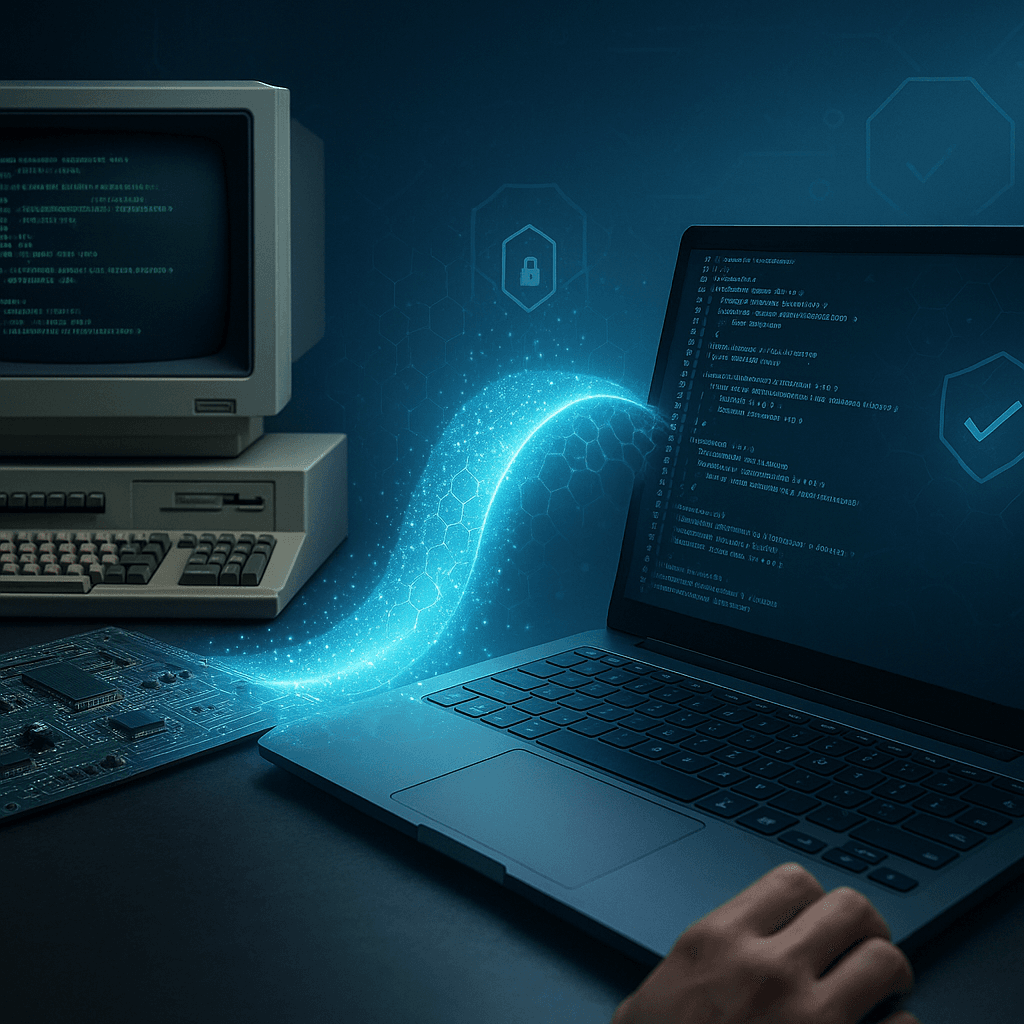
Code Metal, a Boston-based defense tech startup, just closed a $125 million Series B to tackle one of the Pentagon’s biggest headaches: modernizing decades-old software that runs critical military systems. The company’s AI-powered platform translates ancient code into modern languages while verifying every line to prevent bugs that could compromise national security. In an industry where F-35 fighters still rely on code written in the 1980s, Code Metal’s approach could reshape how defense contractors handle software modernization.
Code Metal is betting $125 million that the Pentagon’s software problem is actually an AI opportunity. The Boston startup announced its Series B today, drawing attention to a crisis most people don’t see: the U.S. military runs on code that’s older than most of its recruits.
The company uses AI to translate legacy software written in archaic languages like COBOL, Ada, and Fortran into modern equivalents like Rust and C++. But here’s the twist that matters for defense applications – Code Metal doesn’t just translate code, it formally verifies every conversion to mathematically prove the new version works identically to the original. In defense systems where a single bug could ground aircraft or compromise missile guidance, that verification step isn’t optional.
“Modernization can’t come at the cost of new bugs,” Code Metal’s approach acknowledges, according to Wired’s coverage. The startup is tackling what defense insiders call “technical debt” – the accumulated burden of maintaining software that predates the internet but still controls everything from logistics systems to fighter jets.
The market opportunity is massive. Defense contractors spend billions annually just maintaining legacy code, with some estimates suggesting 60-70% of military software budgets go toward upkeep rather than innovation. The F-35 Joint Strike Fighter program alone operates on millions of lines of code, much of it written decades ago and requiring specialized programmers who are rapidly retiring.
Code Metal’s timing aligns with mounting pressure on the Pentagon to accelerate software modernization. The Department of Defense has been pushing its “software-defined” initiative, recognizing that future conflicts will be won by whoever can update and deploy code fastest. But most AI coding assistants like or focus on writing new code, not translating mission-critical legacy systems where mistakes could be catastrophic.