
While teenage founders are not new in tech, with Mark Zuckerberg and Bill Gates both starting companies at 19, the rise of AI is accelerating a shift toward even younger entrepreneurs entering the field.
Fridtjof Berge, cofounder and chief business officer at Antler, told CNBC Make It that structural changes in the tech ecosystem are driving the trend. Investors increasingly favor founders who can “move fast and break things,” continuously iterate, and adopt emerging technologies with fewer preconceptions.
“Younger founders are more likely to approach problems with a blank slate,” he said, adding that early technical exposure gives them an advantage in building AI-driven products.
Kevin Hartz, a San Francisco-based investor who mentors teenagers through the Z Fellows program, described them as “a driving force behind this AI economy today.”
Below are some of the teenage founders have recently drawn attention for building fast-growing AI startups, according to the New York Post.
Pranjali Awasthi
|
|
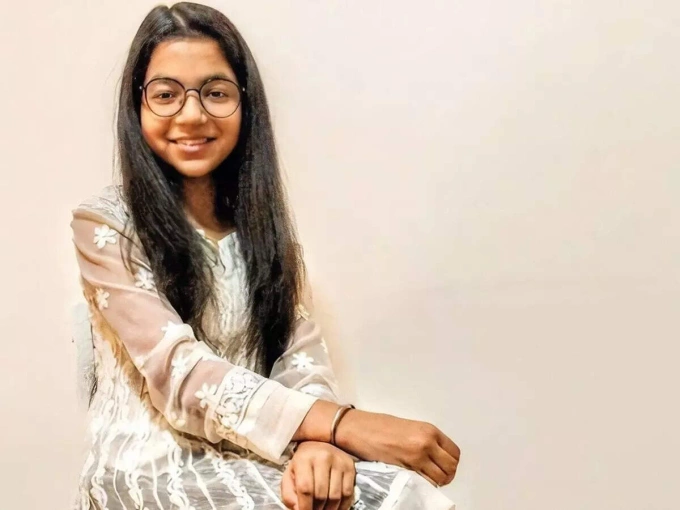
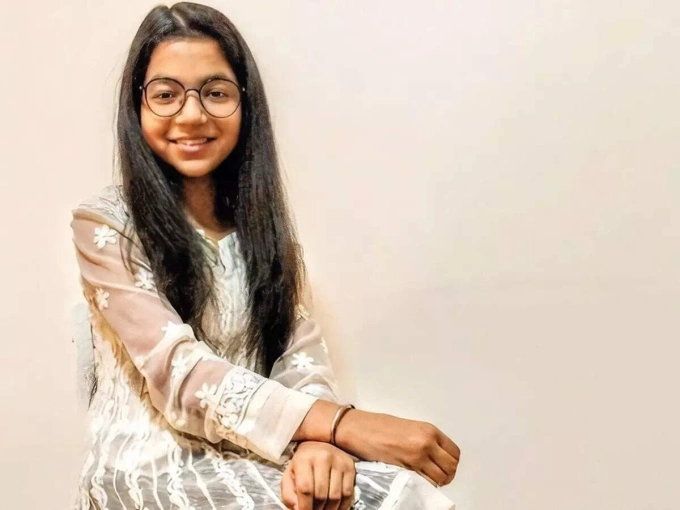
Pranjali Awasthi, 19, founder of AI startups Delv AI and Slashy. Photo from Instagram |
At 19, Awasthi has already founded two AI companies. She launched her first startup, Delv AI, valued at $12 million, at 14 while still in high school in Florida, U.S. The platform analyzes and summarizes documents using AI.
After graduating early at 16, she briefly attended the Georgia Institute of Technology before dropping out and moving to San Francisco to pursue entrepreneurship. “I’ve kind of just got desensitized to the, ‘Oh my God, you’re so young,’” she told the New York Post.
She is now building her second startup, Slashy, an AI email assistant backed by Y Combinator, a U.S.-based startup accelerator known for funding early-stage tech companies, alongside cofounders Harsha Gaddipati and Dhruv Roongta. The trio live together, which she said helps them “bond as we go through this process.”
Awasthi told Business Insider that being a young founder shapes how others respond to her, noting that people are often willing to help but may also “look down at me – literally and figuratively” when assessing her intentions. She added that she stays focused by keeping conversations “rich and stacked with content” and limiting distractions from social media.
Zach Yadegari
|
|
Zach Yadegari, 19, founder of Cal AI, an app that tracks calorie intake through food photos. Photo courtesy of Yadegari |
Yadegari, 19, from Long Island, founded Cal AI, an app that tracks calorie intake through food photos.
Earlier in March, he sold the app, which has been downloaded more than eight million times and generated $40 million in the past year, to MyFitnessPal. While neither party disclosed the terms of the sale, Cal AI said it is projecting $50 million in revenue in 2026. The company’s seven employees, along with Yadegari, will join MyFitnessPal, according to Forbes.
He began coding at seven and sold a gaming website for six figures at 16. He is currently attending the University of Miami mainly for “social experience,” but said he may drop out to focus on building another company.
He previously said he did not want to be an “archetypal dropout founder” when he was rejected by 15 top universities last year, including Harvard University, Stanford University, Massachusetts Institute of Technology and Princeton University, despite strong academic results and a profitable startup.
But he said in a recent interview with Inc. magazine: “I’m more ambitious, I’m more f**king hungry than I’ve ever been. I need to drop out, and I need to build a team in person, and build a billion-dollar company.”
Siddarth Nandyala
Nandyala, 15, based in Frisco, Texas, founded Circadian AI in 2024. The app detects early signs of heart disease by recording heartbeat sounds through a smartphone and analyzing them using machine learning.
“It can be provided to trained professionals or nurses or healthcare providers in these resource-constrained environments,” he said.
Defying the stereotype of the college dropout tech founder, he is currently studying at the University of Texas at Dallas, where he is the youngest student ever enrolled. Due to his age, he still lives at home instead of in dorms, but he said college has been a pivotal experience.
“It’s taught me so much in terms of prioritizing — both a social and a developmental perspective,” he said. “It’s really shaped me as a person.”
Sunkalp Chandra
|
|
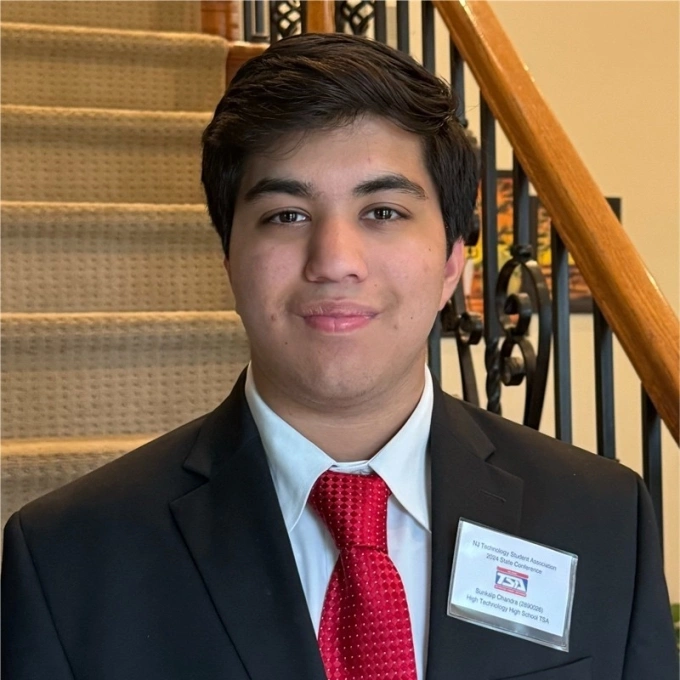
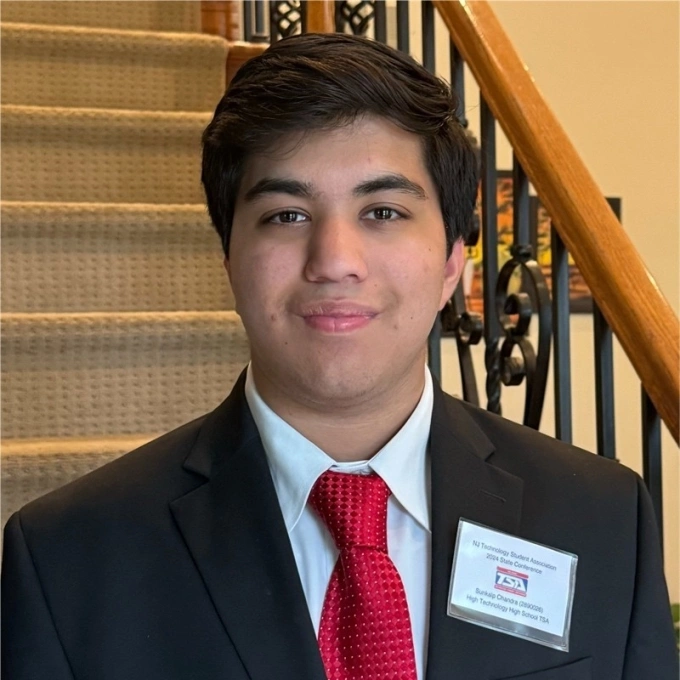
Sunkalp Chandra, 18, founder of Reteena, a AI startup focused on improving Alzheimer’s diagnosis and therapy. Photo courtesy of Chandra’s LinkedIn |
Chandra, an 18-year-old high school senior in New Jersey, runs Reteena, a startup focused on improving Alzheimer’s diagnosis and therapy.
He splits his time between schoolwork and building the company, working mornings, evenings and weekends. His cofounders, based in South Korea and the U.S., collaborate remotely despite never meeting in person.
“We wanted to use modern AI to help people maintain their dignity, memory, and identity as they age,” he said.
While some in the healthcare sector initially questioned a startup led by teenagers, Chandra said it did not affect his commitment.
“We focus on showing our preparation, our research,” he said. “Once people saw the rigor behind what we’re building, the conversation shifted from doubt to more curiosity and support.”
Aayam Bansal and Ishaan Gangwani
Aayam Bansal and Ishaan Gangwani, both 18 and based in San Francisco, have raised $1.5 million for their startup Synthetic Sciences, including $500,000 from Y Combinator.
Their platform helps researchers automate tasks such as reviewing studies and conducting experiments.
The idea emerged after their research paper was rejected by the Association for Computational Linguistics, prompting them to rethink how academic workflows could be improved.
While Gangwani skipped college after graduating from high school in 2025, Bansal was accepted to the University of Illinois Urbana-Champaign, U.S., but dropped out before completing his first semester, according to India’s Economic Times.
Running a startup without school can still be demanding for a teenager, as Bansal said: “In a single day I might be talking to investors, dealing with legal or compliance issues, handling operations, shipping product, debugging code, talking to users and thinking about marketing.” “The constant context-switching is exhausting.”
“At this age, you’re learning all of it in real time, which is intense, but it also forces you to level up very quickly,” he said.
Source link