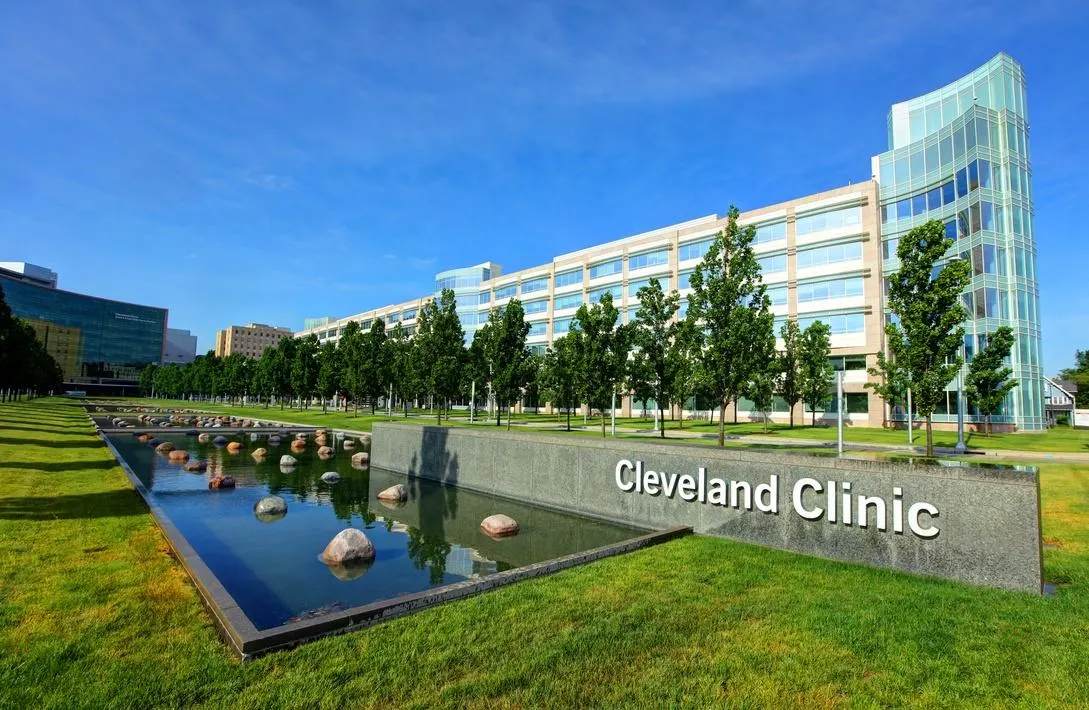
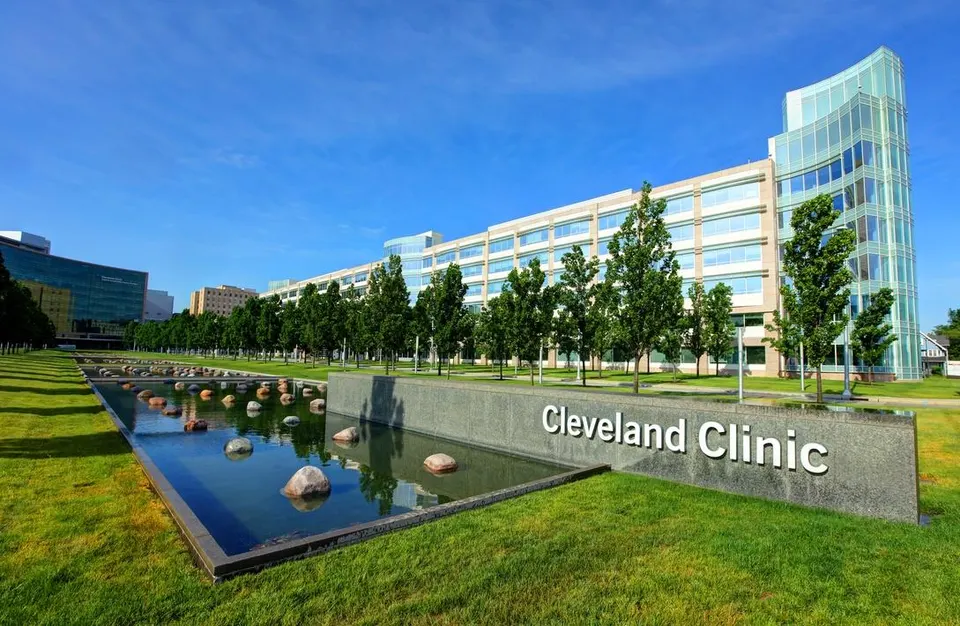
Cleveland, Ohio, USA – June 17, 2017: Daytime view of Cleveland Clinic main campus entrance reflecting pool near University Circle
getty
For many health systems, the challenge has shifted from finding an AI vendor to solve a specific challenge to deciding which ones can move beyond pilots. And discerning which ones actually change how work gets done.
That is the backdrop for Cleveland Clinic’s partnership with Luminai, a San Francisco-based startup building an AI-native platform to automate complex administrative healthcare workflows. The collaboration comes as Luminai announces a $38 million Series B funding round, bringing its total capital raised to approximately $60 million, with backing from Peak XV Partners (formerly Sequoia Capital India & SEA), General Catalyst, Define Ventures, Y Combinator and others.
The timing reflects a broader inflection point. Health systems are under mounting pressure to modernize operations while managing workforce shortages, rising costs and increasingly complex care delivery environments. Many are now looking beyond narrow AI tools toward systems that can operate across functions.
Cleveland Clinic, one of the largest and most operationally complex health systems in the world, offers a high-stakes proving ground. With more than 80,000 employees, 23 hospitals and hundreds of outpatient facilities, even incremental improvements in administrative workflows can have system-wide impact.
Rohit Chandra is Chief Digital Officer at Cleveland Clinic
Rohit Chandra
“We’re always looking for ways to meaningfully apply AI to streamline workflows and make them more efficient for our caregivers,” said Rohit Chandra, Cleveland Clinic Executive Vice President and Chief Digital Officer. “The goal of our collaboration with Luminai is to reduce administrative burden and allow our caregivers to focus on patient care and more substantial work.”
Why Administrative Work Has Been So Hard To Automate
Administrative complexity remains one of healthcare’s most persistent challenges. Estimates suggest that administrative activities account for roughly a quarter or more of total U.S. healthcare spending, much of it tied to manual coordination across billing, insurance, scheduling and intake processes.
In practice, that work often depends on unstructured inputs, fragmented systems and human judgment. That is particularly visible in referral management, the first use case Luminai is tackling with Cleveland Clinic.
“Referrals were selected as the initial use case because workflows in this space are complex and involve several steps including manual intake, data validation, and coordination across systems,” Chandra said. “They also require frequent follow-up.”
Despite years of efforts to digitize, many referrals still arrive via fax, and for organizations the size of Cleveland Clinic, they can be in the thousands per day – often mixed in with faxes unrelated to referrals. Each document must be reviewed, interpreted, matched to the correct patient and provider, and routed appropriately before care can begin.
Kesava Kirupa Dinakaran, Luminai’s co-founder and CEO, has spent the past several years focused on this exact problem: how to make software handle the work that humans currently perform to bridge disconnected systems.
“The biggest barrier was the amount of unstructured data,” Dinakaran said. “Without structuring that data, you can’t actually automate the workflow.”
Kesava Kirupa Dinakaran is co-founder and CEO of Luminai
Kesava Kirupa Dinakaran
His perspective is shaped by an unconventional path into the field. Before founding Luminai, Dinakaran was part of a small group of engineers in Silicon Valley experimenting with early large language model applications. Earlier still, he was a competitive Rubik’s Cube solver who set a world record for solving the most cubes in an hour – an experience that, he says, sharpened his instinct for pattern recognition and optimization at scale. He later earned recognition on the Forbes 30 Under 30 list for his work in AI.
That throughline – breaking down complex, repetitive problems into solvable systems – ultimately led him to see the opportunities in healthcare, where the same kind of pattern exists, just at a much larger scale.
“Each health system is its own snowflake,” he said. “The way work gets done is different everywhere.”
At the same time, critical information often sits across multiple systems, leaving staff to carry context from one tool to another. That fragmentation introduces delays and variability in how work is processed – one of the core operational challenges AI is now being asked to address. Historically, that combination has limited automation efforts to narrow pilots that struggle to scale.
From Point Solutions To Operational Infrastructure
Luminai’s approach is to build what it describes as a foundational layer for operational automation. Dinakaran said the platform combines three elements: transforming unstructured data into usable formats, building a knowledge graph that reflects how a specific health system operates, and deploying AI agents that can execute workflows across systems. He argues that many automation efforts fail because they focus too narrowly on individual tasks without addressing underlying data and process complexity.
Luminai is making a parallel case in operations: automating one task well carries limited value if every new use case requires rebuilding context, integrations and oversight from scratch – a dynamic that has slowed many healthcare AI deployments from scaling beyond initial pilots.
For the referrals use case with Cleveland Clinic, Luminai’s agents ingest incoming documents, determine whether they are referrals, extract key clinical and administrative data, match them to the appropriate patient and provider, and route them to the correct department. When confidence levels fall below a threshold, the system routes work to human staff with most of the processing already complete.
According to Dinakaran, early deployments have achieved automation rates exceeding 80% for certain document types, while reducing manual processing time significantly. For Cleveland Clinic, the opportunity extends beyond efficiency alone.
“Patient experience is directly shaped by how efficiently and reliably administrative processes operate behind the scenes,” Chandra said. “Our goal is to use AI to make these processes more efficient.”
In the case of referrals, that includes reducing the time it takes for patients to move from referral to scheduled care, while ensuring a more responsive and tailored experience as patients move through the system. More broadly, the shift reflects a step-change in what AI can handle operationally.
“AI has moved beyond narrow automation into systems that can actually execute complex operational work,” Chandra said. “Today’s AI can reason through complexity, adapt to exceptions, and execute multi-step processes end-to-end.”
A Crowded Market With A Shift In Buying Behavior
Luminai is competing in a market that’s rapidly expanding – and increasingly saturated. Investor capital has poured into AI startups focused on various parts of administrative workflows, whether that’s clinical documentation, patient engagement or operational responsibilities – each of which intensify competition for health system dollars.
For example, Ambience Healthcare is building AI copilots to automate clinical documentation and coding and recently raised a massive $243 million funding round to scale its ambient documentation platform across health systems. Another company, Artera, is deploying AI agents to manage patient communications across scheduling, intake and billing workflows, backed by a $65 million growth investment last December. Meanwhile, Assort Health, which quickly raised $102 million in successive rounds, is applying AI to front-end patient access, including call center automation and scheduling, as part of another wave of funding in voice-based healthcare AI.
On the operational side, earlier-stage companies like UnityAI are targeting workforce coordination and staffing, recently raising capital to automate scheduling, reduce labor costs and improve throughput in clinical environments.
With the growing number of vendors, many health systems like Cleveland Clinic are shifting toward a more integrated approach.
“We wanted to address workflows in a holistic way rather than by optimizing individual tasks,” Chandra said. “This allows us to move beyond isolated tools and create a more cohesive, scalable approach.”
Investors see that shift as part of a broader recalibration in healthcare AI.
Shailendra Singh is Managing Director of Peak XV Partners
Shailendra Singh
“Large health systems need a single company and platform to solve multiple problems, instead of being burdened with dealing with hundreds of vendors,” said Peak XV Partners Managing Director Shailendra Singh, the lead investor in Luminai’s series B round. “We love the ‘enterprise transformation’ approach that Luminai is taking versus a lot of point solutions.”
However, even within the partner ecosystem of the same provider organizations, AI platform-oriented companies can be advancing a broader vision. Dyania Health, for example, is also working with Cleveland Clinic to deploy AI at enterprise scale, focused on chart review and clinical data abstraction. While the use cases currently differ from Luminai’s focus areas, these parallel efforts point to a reality where multiple AI platforms are beginning to coexist – and could one day potentially compete – within the same health system.
The Open Question: Can Healthcare AI Platforms Actually Scale?
The central question for Luminai – and for the broader category – is whether platform approaches can translate into durable operational advantage.
Healthcare buyers remain highly use-case driven. Enterprise sales cycles are long. AI deployments must meet strict requirements for security, auditability and compliance. And scaling from one successful implementation to multiple workflows often introduces new layers of complexity.
Dinakaran said Luminai is taking a deliberate approach. “When we partner with a health system, we align upfront on what success looks like. If we hit those outcomes, the expectation is to expand. If not, we don’t.”
Looking ahead, Cleveland Clinic sees opportunity to expand this approach across high-volume, complex and operationally intensive workflows throughout the administrative layer of the organization. If successful, Cleveland Clinic’s work with Luminai represents a shift in how health systems approach AI – from a collection of tools to a more integrated operational layer. If not, it will reinforce the challenges that have historically limited automation efforts in healthcare.
Either way, the outcome will help define the next phase of AI adoption in one of the most complex industries in the economy.