
From AI investing to defense tech and city infrastructure, the focus was on turning momentum into results
“Our moment is here and now. We are open for business in Miami Beach.”
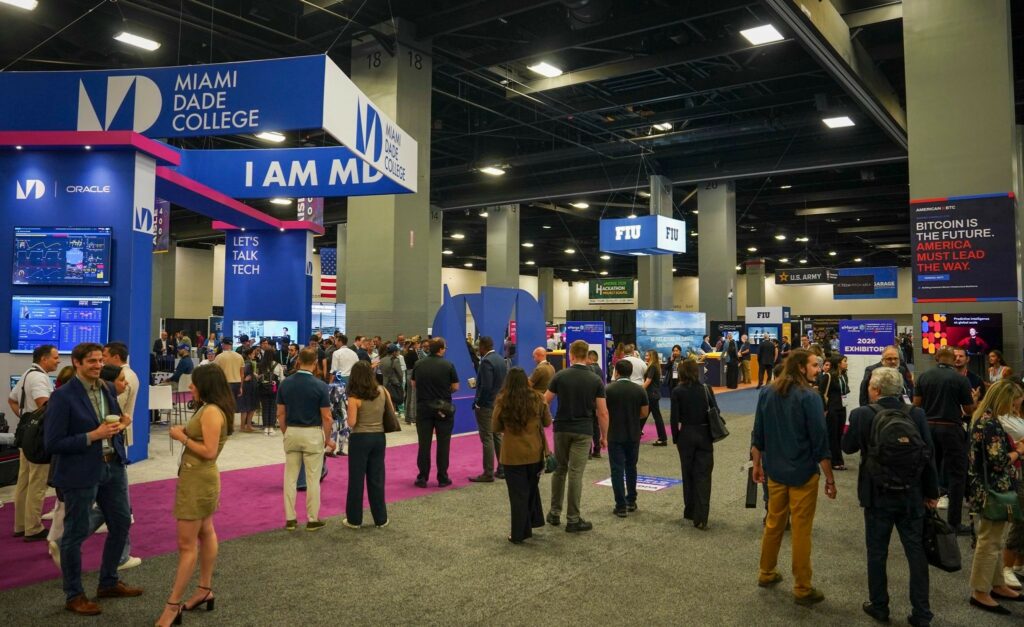
These words from Miami Beach mayor Steven Meiner kicked of the second main conference day of eMerge, the annual conference aiming to showcase everything #MiamiTech to the rest of the world.
Local developer Stephen Ross may be one of the people in South Florida taking most advantage of this exact moment. “There’s so much change happening right now, and this is the moment when growth is going to take off here, especially across South Florida,” he told attendees from the main stage.
“Florida is probably the best business state in the country,” Ross added. “People just don’t recognize it yet because there hasn’t been as much business activity here historically. Our job is to get the message out and bring people here to South Florida, because the benefits are already here.”
Tim Tebow on mindset, purpose, and building for more than yourself
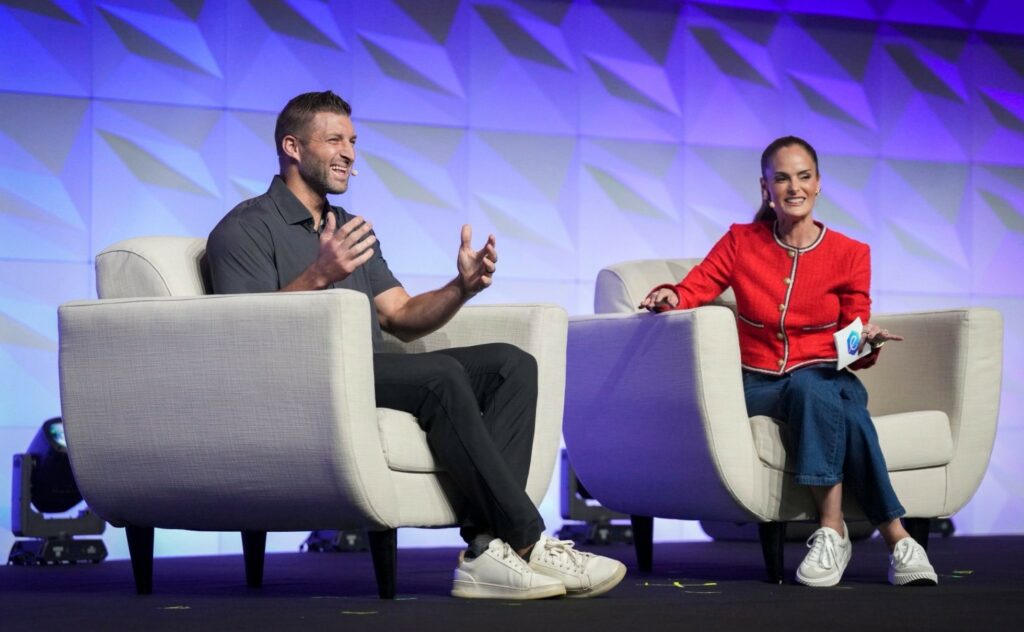
Tim Tebow’s conversation with Melissa Medina drew parallels between professional sports and building, leading, and living with purpose.
The former Heisman Trophy winner, ESPN analyst, and founder of the Tim Tebow Foundation framed impact as a choice. “You have to stand for something to have impact,” Tebow said, arguing that respect lasts longer than being liked.
For entrepreneurs, his strongest point was about where drive gets aimed. Competitiveness is useful, he suggested, but only if it serves something bigger than personal success.
“You want to live a meaningful and purposeful life? Make it about everybody else,” Tebow said.
He also connected that mindset to technology, especially AI, calling it “one of the most vital pieces” in fighting child exploitation and trafficking. For a room full of founders and technologists, it was a reminder that the tools being built can help solve problems that are urgent, human, and very real.
Investing through disruption, with one foot on the gas and the other on the brake
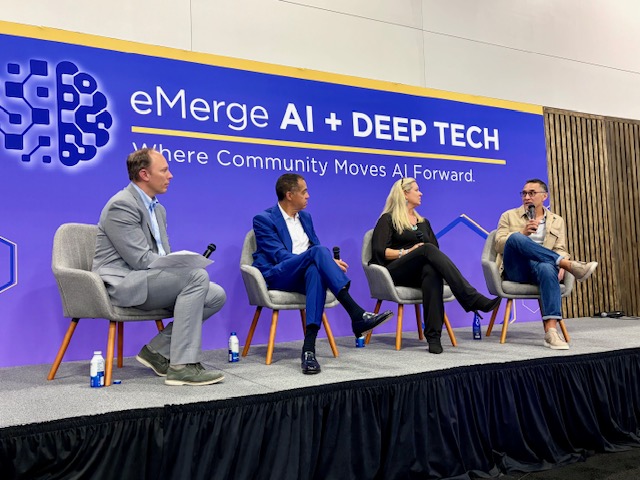
Top South Florida investors were in agreement that AI is creating real opportunity, but also real uncertainty.
Ed Sim, founder of Boldstart Ventures, a $1.1 billion early-stage firm focused on enterprise, cybersecurity, AI infrastructure, and developer tools, said the market is moving faster than anything he has seen in 30 years. But his focus remains simple: people.
“You have to assume there are 20 or 30 competitors,” Sim said, arguing that the best founders will be the ones who can hire great talent and adapt quickly.
He also pushed back on AI hype, especially in cybersecurity. AI can find vulnerabilities at scale, he noted, but fixing them inside large companies is a very different problem. “The problem is not finding them. It’s fixing them,” he said.
Don Peebles, chairman and CEO of the Miami Beach-based Peebles Corporation, one of the country’s largest privately held real estate development firms, brought the conversation back to brick-and-mortar business. Real estate, he said, is still “in the dark ages” when it comes to tech. But that creates room for AI to make a major impact.
“What used to take a team of analysts can now be done in about an hour,” Peebles asserted, pointing to faster underwriting and decision-making. His bigger point was that AI could lower barriers for entrepreneurs and open the door to more innovation in old-line industries.
Hillary Matchett, chief investment officer and general partner at Quantum Coast Capital, a Palm Beach firm investing in quantum technologies that support the future of AI infrastructure, argued that AI’s next phase depends on what happens underneath it.
“The idea of putting AI with quantum is where the secret sauce will be,” she said. For Matchett, the issue is readiness. Florida, she said, is moving in the right direction on quantum, but the workforce needs to catch up fast, from early education to advanced research.
Defense tech’s front door is opening wider
For startups, the defense world can still feel hard to access. Emil Michael, from the Office of the Under Secretary of War for Research & Engineering, put it bluntly. “Working with the Department of Defense can feel like walking into the DMV without speaking the language and asking for a license.”
But Michael and DARPA Director Stephen Winchell made the case that this is changing.
Winchell said DARPA has built DARPAConnect to help small businesses get into its ecosystem faster, with more flexible ways to get on contract. Michael added that several funding programs, from small business funds to the Office of Strategic Capital, are now being organized under one group so companies can be met at the right stage of their lifecycle.
The goal, Michael asserted, is “fast yes” or “fast no.” The U.S. government is looking for startup-level speed in areas like AI, cyber, quantum, photonics, chips, and defense infrastructure. Winchell noted that DARPA started investing heavily in AI back in 2018, committing $2 billion across 130 programs.
For founders, the bottom line is that the government still has its own rules and friction, but the door is more open than it used to be. And as Michael noted, there is far more capital, talent, and defense tech momentum in places like South Florida than there was a decade ago.
Digital cities get practical
Better permits, faster answers, safer systems, smoother travel. That’s the promise of smart cities. At eMerge, government experts talked about making this dream a reality.
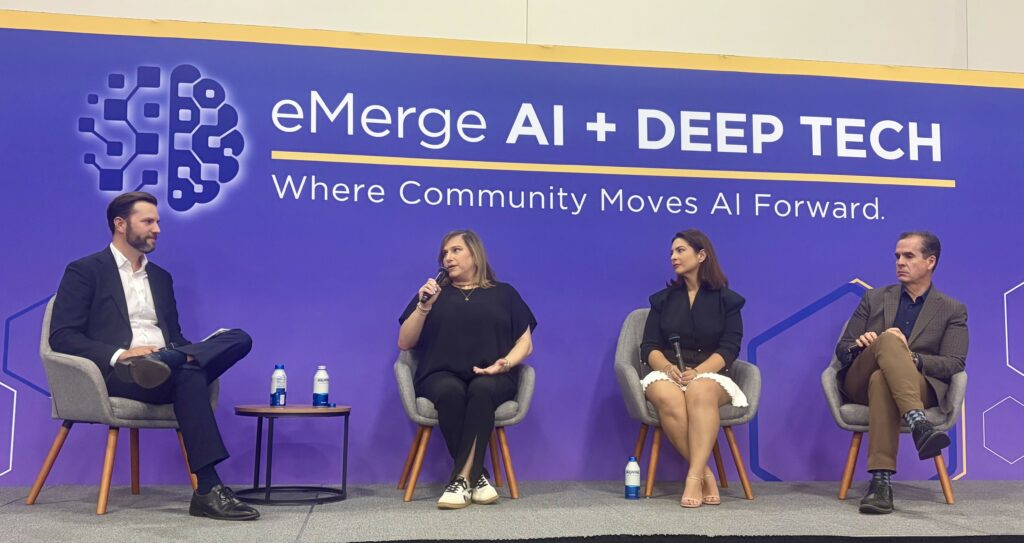
Ana Chammas, who leads R&D for Miami-Dade County, said the shift has been dramatic. What started as connected systems has turned into something more actionable. Cities today are sitting on “a very data rich environment where we can leverage data to use new technologies to make meaningful change in government.”
Doral Mayor Christi Fraga framed it even more simply. A digital city is one where it’s “easier to work with government, easier to get things done,” whether that’s opening a business, getting a permit, or just getting a straight answer faster.
For Rolando Aedo of the Greater Miami Convention & Visitors Bureau, the focus is on experience. “From a tourism perspective, the phrase that we use is ‘removing friction,’” he asserted. The goal is a smoother journey from the moment someone lands in Miami to the moment they leave. Aedo described a near future where your trip is fully anticipated, from airport pickup to hotel check-in, powered by data and AI.
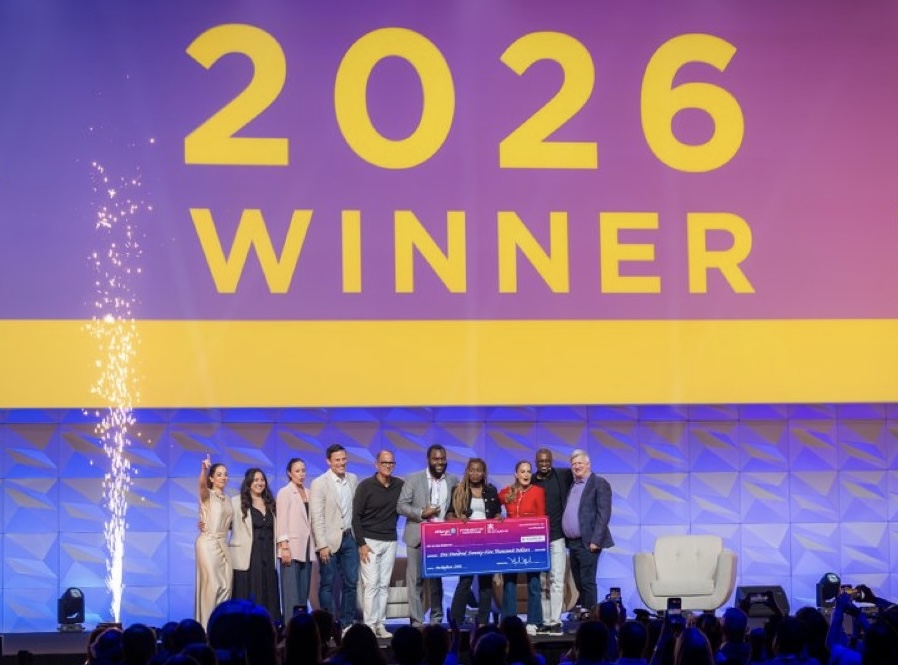
And the Startup Showcase Grand Prize winner is …
Continuing an annual tradition at eMerge, 0ne-hundred startups from around the world qualified for the Startup Showcase and over the course of the conference, judges narrowed the field to five finalists for the grand finale of the pitch competition. Like other years, the contest was an appropriate closing celebration to eMerge Americas because, as Melissa Medina often says, startups are the heart and soul of their mission.
The finalists pitched on the main stage in front of a hundreds in the audience, and of course eMerge’s three judges this year: Marcus Lemonis, the host of The Fixer on FOX, Marcus Bodet of B.I.G Capital, and Andinrew Lane of J.P. Morgan. The grand prize was a $125K investment from eMerge Americas and B.I.G. Capital, plus $80K of pro bono legal services from Holland & Knight. The startups that placed second (Grid) and third (Miami-based Remedian) received $60K and $40K of legal services, respectively.
And the grand prize winner was … drumroll please …. Nigerian startup Toluwai, which offers real-time production intelligence for the energy sector. “We help operators to produce better, faster and smarter,” pitched co-founder Tosin Joel, whose team has 60 years of energy operations experience.
Mark your calendars: eMerge Americas is coming back March 2-4, 2027.
Nancy Dahlberg contributed to this report.
READ MORE IN REFRESH MIAMI:
I am a Miami-based technology researcher and writer with a passion for sharing stories about the South Florida tech ecosystem. I particularly enjoy learning about GovTech startups, cutting-edge applications of artificial intelligence, and innovators that leverage technology to transform society for the better. Always open for pitches via Twitter @rileywk or www.RileyKaminer.com.
Source link