
European defense technology appears to have been turned upside down by the announcement that Helsing, the Munich-based AI startup, is in the process of closing an enormous $1.2B funding round. This newest injection of capital, led by intrepid venture capital firms Lightspeed Venture Partners and Dragoneer Investment Group, would push the company’s worth to an estimated $1.8 billion, one of the largest private raises in the history of European defense tech.
Established in 2021, only a couple of years ago, Helsing has already become a cornerstone of Europe’s technological defense. The company designs software platforms that can be used alongside existing hardware to provide new frontline capabilities. So it doesn’t build the tanks, jets or drones, but it focuses on “the brain” of these pieces of machinery; programs for battlefield information in real time, automated target identification and electronic warfare countermeasures.
A Strategic Pivot for European Venture Capital
This investment model is what makes Lightspeed and Dragoneer special. In the past, the world’s best Silicon Valley and global venture funds were largely pulled away from defense because of the ethical implications of the field and the delivery cycles and processes by which government contracts need to be completed. Now, due to the changing geopolitical situation in Europe, that calculus has also shifted. The continued conflict in Ukraine shines the spotlight on the importance of fast software iteration in warfare and the increased presence of AI in war, leading to a rush of “defense tech” startups who need to move faster than aerospace companies.
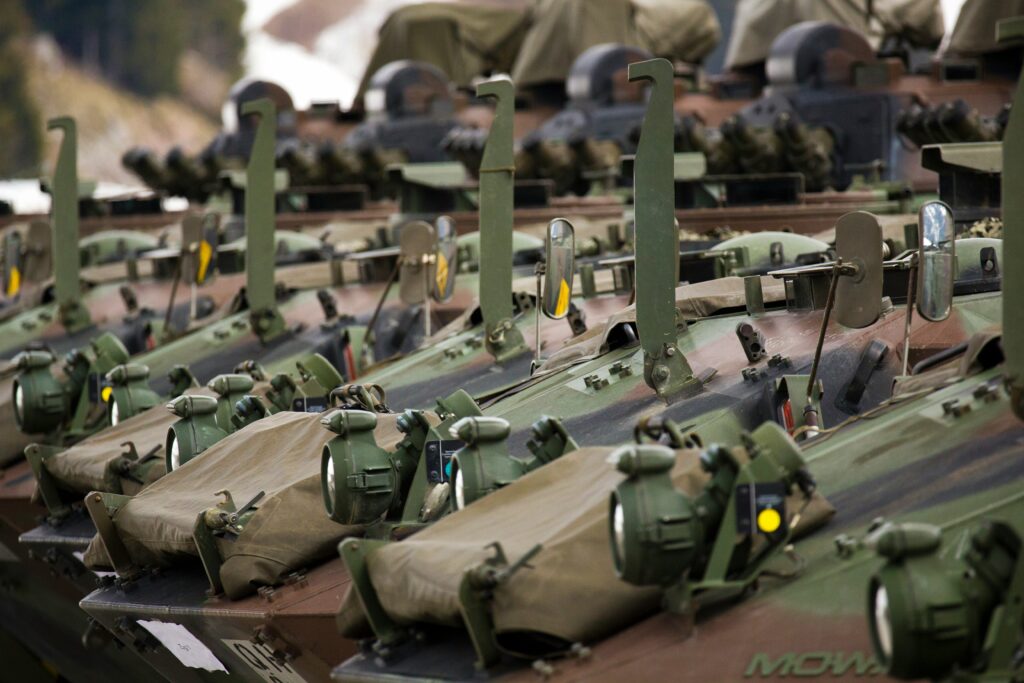
Source: Unsplash
Helsing has branded itself as the “sovereign” alternative for European countries and has made sure that the AI application defending the region will be created within Europe rather than imported from the US or China. This obsession with digital sovereignty has obviously earned the company huge support from the German, French and British states, all wishing to retain sovereignty over their strategic data and defense algorithms.
More News: Corgi Raises $160M to Expand AI Insurance Platform
Accelerating Production and R&D
The $1.2 billion in new capital is expected to be used to scale Helsing’s operations across its core markets. A primary focus will be the continued development of the company’s AI platform, which is designed to be hardware-agnostic. This allows the software to be deployed across a variety of platforms, from the Eurofighter Typhoon to autonomous land vehicles and naval fleets.
The funding will also support the company’s efforts to expand its presence in Ukraine. Helsing has been active in providing AI capabilities to Ukrainian forces, using the feedback from the front lines to iterate on its technology at a pace previously unseen in the defense industry. This “battle-tested” feedback loop has become a core part of the company’s value proposition, proving that its software can survive and thrive in high-intensity electronic warfare environments.
Disrupting the Traditional Defense Industry
Helsing’s rise represents a direct challenge to the traditional “prime” defense contractors. For decades, the industry was dominated by hardware-centric companies that viewed software as a secondary component. Helsing’s model flips this hierarchy, arguing that software and AI will be the primary determinants of success on the future battlefield.
By raising such a significant amount of capital, Helsing now has the “dry powder” necessary to compete for massive, long-term government programs. It also allows the company to hire top-tier engineering talent from the commercial tech sector. Talent that might otherwise go to Big Tech firms is being offered the opportunity to work on mission-critical national security projects.
Source link