“Once the Medical Technology Training Institute and the Startup Support Center open this year, Daegu will emerge as a hub leading innovation in the medical industry.”
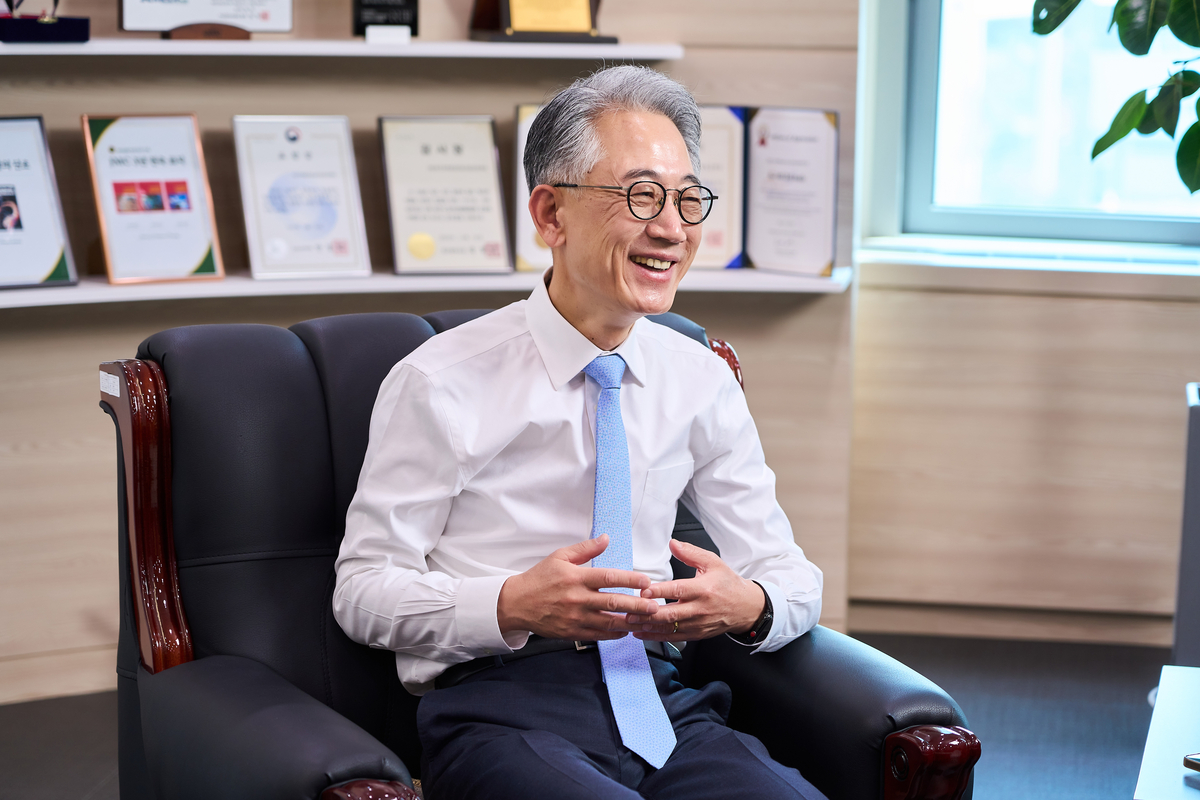
Park Koo-sun, Chairman of the Daegu-Gyeongbuk Medical Innovation Foundation (K-Medi Hub), made the remarks in a recent interview with Seoul Economic Daily, adding that the foundation is “accelerating infrastructure expansion and the advancement of research and development equipment to help Korea become a medical powerhouse.” A public research infrastructure and industrial ecosystem expert, Park previously served as Vice President of the Korea Institute of S&T Evaluation and Planning and Chairman of the Osong Advanced Medical Industry Promotion Foundation. He took office in January last year for a three-year term as K-Medi Hub chairman.
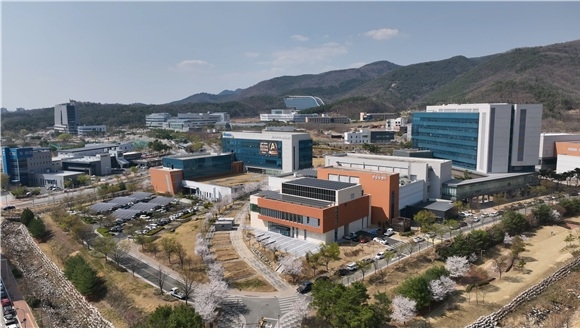
K-Medi Hub is a public institution under the Ministry of Health and Welfare, established to foster the medical industry as a next-generation national growth engine. It supports the entire lifecycle of the industry, from the development of new medical technologies to corporate growth.
The Medical Technology Training Institute, set to open in September, is a specialized facility for training and national certification exams aimed at strengthening the expertise of medical professionals such as doctors and nurses. It will feature simulation training rooms built to a level nearly identical to real operating rooms. The institute plans to operate training programs for both domestic and overseas medical professionals, promoting the competitiveness of K-medical technology globally.
“We are in discussions to host various medical academic conferences at the institute,” Park said. “If major events such as the Asia-Pacific Anti-Aging Conference, held annually in Daegu, take place here, the status of ‘Medi City Daegu’ will naturally rise overseas as well.”
The Startup Support Center, scheduled to open in December, is a business incubation hub specialized in emerging medical technology fields such as digital therapeutics and AI-based drug discovery. Based on the foundation’s advanced infrastructure, it aims to provide one-stop support across the entire cycle, from technology development and regulatory approval to commercialization. The foundation plans to maximize synergy by linking the center with the Public Innovation Factory, set to open next month.
“The Public Innovation Factory is an open research space where anyone with an idea can create prototypes using research equipment such as 3D printers and scanners,” Park said. “When the two infrastructures are organically connected, they will bring great vitality to the region’s medical startup ecosystem.”
K-Medi Hub is also accelerating its AI and digital transformation efforts. “The medical industry is the field where the introduction and convergence of cutting-edge technologies are most active,” Park said. “Since the advancement of research infrastructure is not a choice but a necessity, we are concentrating the foundation’s capabilities and resources on new industry sectors.”
Last year, the foundation established dedicated units for AI-based drug discovery and digital healthcare device development, creating an environment focused on cutting-edge technology research. This year, it plans to begin introducing top-tier advanced research equipment to support these efforts.
The foundation is also participating in the “Regional Hub AX (AI Transformation) Innovative Technology Development Project,” centered around Suseong Alpha City, jointly developing core technologies for customized advanced medical devices with companies. With Kyungpook National University, it is building an automated experimental platform for AI drug discovery through the “AIx Bio Innovation Research Hub Pilot Project.” Under this model, AI predicts viable drug candidates, which the foundation immediately verifies, a process expected to dramatically reduce the time and cost of drug development.
K-Medi Hub received an A grade for seven consecutive years through last year in the Ministry of Health and Welfare’s management performance evaluation. Last year, it ranked first in overall score among 23 other public institutions, demonstrating its competitiveness at home and abroad. “We will grow alongside companies and establish ourselves as a medical industry innovation hub with competitiveness in the global market,” Park said. “To achieve this, Daegu also needs a medical-specialized industrial complex capable of commercializing medical technology and attracting large corporations, like the Osong Bio Valley.”
Source link