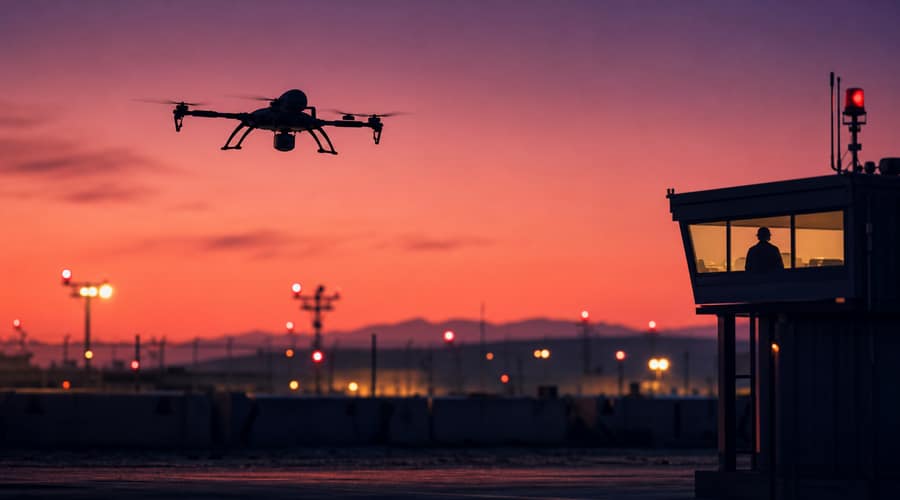
Shield AI’s latest safety controversy is not just a company problem. It is a warning for every investor treating defense-tech speed as if it comes without operational cost.
The defense-tech boom has been sold on one simple promise: move faster than the old contractors and get critical technology into the hands of soldiers sooner. Shield AI now shows the harder side of that promise, because drones are not software dashboards and military testing is not a demo day.
According to Reuters, a Romanian Navy official had her hand caught in the propeller of Shield AI’s V-BAT drone during a May 12 training exercise off the Texas coast, severing two fingers and fracturing a third. The report also said the V-BAT has crashed more than 50 times over the past 18 months, citing interviews with former employees, industry executives and investors, as well as legal and whistleblower records.
Shield AI disputes the broader picture. The company told Reuters it has a strong safety record and said operational mishaps are common for a drone like V-BAT, which it said has accumulated 18,000 flight hours since 2019. That response matters, because military hardware always carries risk. But it does not close the issue. When a startup is valued at $12.7 billion and selling into allied militaries, safety becomes part of the product, not an afterthought.
Startups are built to iterate. That works beautifully when the product is an app, a database tool or a marketing platform. Ship, measure, adjust. In defense hardware, the same rhythm can become dangerous if it outruns training, maintenance, documentation and field discipline. A drone crash is not a bug report. A propeller injury is not a customer support ticket.
This is the tension running through the new defense economy. Shield AI raised $1.5 billion in Series G funding in March at a $12.7 billion post-money valuation, alongside $500 million in fixed-return preferred equity. It also announced a deal to acquire simulation company Aechelon. That is a serious capital base, and it reflects serious investor confidence in autonomous aircraft, AI pilots and the Pentagon’s appetite for faster modernization.
The V-BAT sits right at the center of that story. Shield AI markets it as a vertical takeoff and landing aircraft for intelligence, surveillance and targeting missions, with a ducted-fan design, long endurance and a smaller logistical footprint than larger drones. Those features are exactly why militaries are interested. They are also why operational discipline matters. A system designed to launch from tight spaces, ships and field environments has to be safe not only in the lab, but around tired crews, unfamiliar partners and imperfect conditions.
That is where many startup cultures face a hard lesson. Urgency is useful. It gets people moving. But urgency cannot substitute for the slow, boring work of safety engineering, incident review and institutional memory. In civilian tech, moving fast can embarrass a company. In defense technology, it can injure people and put public contracts at risk.
Investors have a new diligence problem
For the past two years, venture capital has moved back into defense with unusual force. PitchBook data cited by Defense News showed defense-tech venture deal value reaching a record $49.1 billion in 2025, up from $27.2 billion the year before. Anduril’s valuation has climbed to $61 billion after a $5 billion round, while Shield AI has become one of the most watched companies in autonomous military aviation.
That wave has changed the conversation. A few years ago, many venture firms worried about whether defense was ethically acceptable, politically exposed or too slow for venture returns. Those questions have not disappeared. But the more immediate question may now be operational: can these companies build and test dangerous hardware with the discipline expected of a prime contractor while still behaving like startups?
Limited partners should care about that distinction. A defense startup can have excellent technology, strong demand and a patriotic mission, yet still carry risk if its safety systems are immature. Workplace injuries, whistleblower complaints and repeated crashes can slow procurement, trigger investigations, damage recruiting and give traditional contractors an opening to argue that the new entrants are not ready for scale.
That does not mean investors should walk away from defense-tech. The market opportunity is real. The Pentagon and allied governments need better drones, autonomy tools and AI-enabled systems, especially as conflicts in Ukraine and the Middle East have made unmanned systems central to modern warfare. But it does mean diligence has to go beyond contract pipelines and valuation marks.
Investors need to ask how incidents are tracked, who can stop a test, how safety concerns are escalated and whether leadership rewards restraint when restraint is needed. They should also ask whether customers are getting a clear picture of product limitations. In military markets, trust compounds slowly and breaks quickly.
Shield AI may yet prove that its systems are improving and that the V-BAT’s problems are manageable in context. The company is still winning attention, contracts and investor backing. But the broader signal is already clear. Defense-tech startups cannot just borrow Silicon Valley’s appetite for speed. They have to earn the right to move fast in environments where mistakes have consequences. That will be the next serious test for the sector, and the investors funding it should treat safety as a core business metric, not a compliance footnote.
Also read: Microsoft’s Scout leak has turned AI stickiness into a boardroom risk • Revolut’s next share sale puts private fintech on notice • AI token costs are forcing startups to rethink how they scale