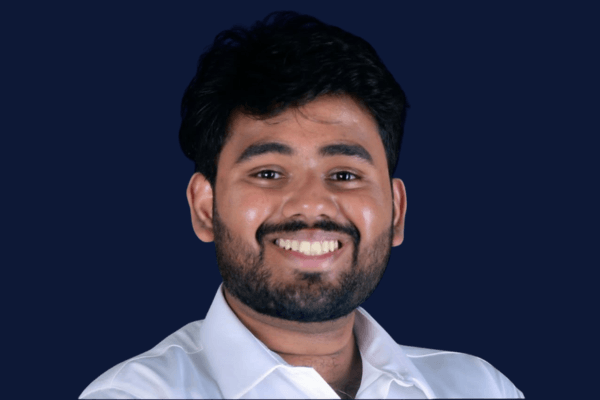
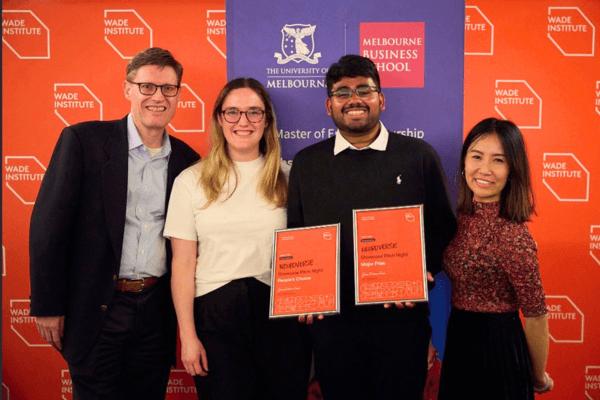
Despite completing a Masters degree aged 18, Kaushal Ottem never really liked school.
Temporarily bedridden at the age of seven after being hit by a bus, Ottem was cut off from his friends and education, and told he would have to repeat a year.
Feeling the pressure of the Indian education system, and bored to tears by lying in his room all day, he turned to his computer, teaching himself how to code a rudimentary cricket game.
“It became survival mode for me – I had to find different, out-of-the-box ways to ensure that I would be able to have a career or do what I like,” he remembers.
Little did he know that game would be downloaded by over 3 million people, sparking a career in computer science that has gone from innovation to innovation.
Having now won the 2026 7NEWS Young Achiever Award VIC for Luminary Tech Visionary, he reflects on his unconventional path to success, driven by his own health struggles.
“I also had my own health battle to overcome. To make this kind of progress, I had to make a lot of sacrifices, particularly around my diet and fitness, to make sure that I don’t cease,” says Ottem.
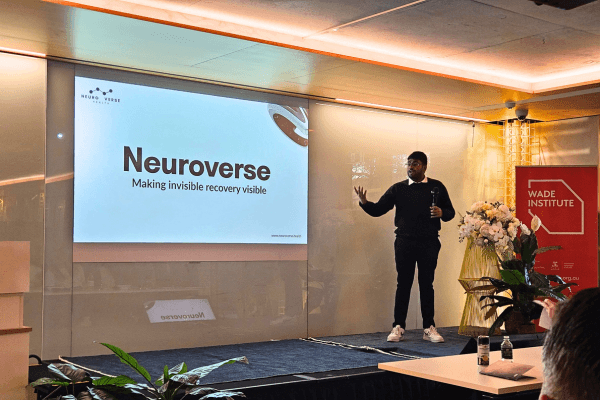
After finishing his Masters in Computer Science at RMIT University, Ottem started to feel the aftershocks of his childhood accident, experiencing severe epileptic seizures that put him in hospital. It was here the idea for his latest startup, Neuroverse, emerged.
“I had to go to neurological rehab. It really annoyed me the rehab happened the same way it had 15 years ago – no technological developments, there was nothing in the preventative health space,” he recounts.
“One in three people in their lifetime will go through a neurological condition – there’s a significant aging population. That tells you how big that entire landscape is; I knew something had to be done.”
Frustrated at the lack of accessible platforms to track neurological markers and monitor brain health, he set out to remedy this major healthcare gap.
“It’s such a multidisciplinary field; research in this field has always been in universities, but nothing translated commercially,” says Ottem about why there’s been so few neurological tech innovations. “Hardware was also bulky, clunky. But machine learning models have made it easier now for people working in this space to look at commercialising that research and bringing something to life that makes an impact for people.”
Kaushal Ottem
From strokes, to Parkinsons, to Cerebral Palsy, Neuroverse has the potential to transform patient recovery by making it easy to track the efficacy of intervention and rehabilitation efforts.
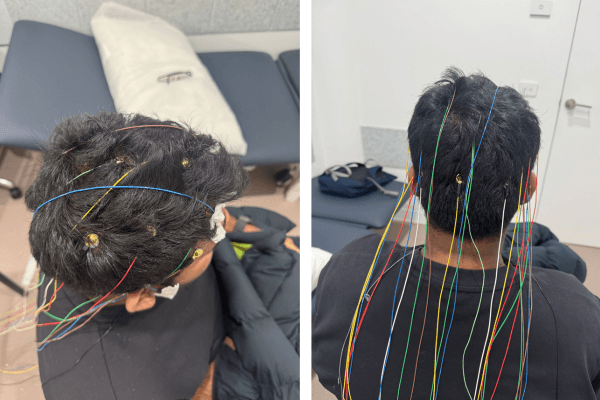
“A rehab centre would put this on a patient and then the patient and clinician gets the app, and they’re able to see things like fatigue, tremor rate, control rate, muscle activation rates – tap into different brain regions, biomarkers and things like that,” explains Ottem on how the technology works.
“One key factor is we do it in a real life simulation; it allows the physios and the clinicians to be able to see [in real time] if exercises they’ve prescribed to patients are actually hitting the right part of the brain, and by doing that they’re able to make changes on the go.”
With the ambition to eventually create an ‘alternative to the Apple watch that tracks neuro health’, over the last year Ottem has experimented heavily to reach a prototype, including flying to Asia to form hardware partnerships.
“That’s just been the philosophy, right – you move fast, you fail fast, you learn faster,” he says.
So far, he’s successfully created a less cumbersome piece of headgear which can be used without electrode gel, and he hopes to keep innovating towards a more discreet, wearable patch suitable for home care.
“For me, it’s not about just simply launching headgear; it’s launching a meaningful piece of technology and data-driven metrics because it’s a very complex field we’re working on,” Ottem says.
“Instead of a startup, I like to call it more of a research idea. That’s how I would like to put it at this stage.”
Having embraced the digital world around him, Kaushal Ottem encourages other young innovators to take advantage of the unlimited information available to them.
“Any career that you want to take, there’s so many resources available online,” Ottem says. “You can just start now, there’s nothing really stopping you.”
READ ALSO: Veer Tangri: Golden Wickets, golden heart
Source link