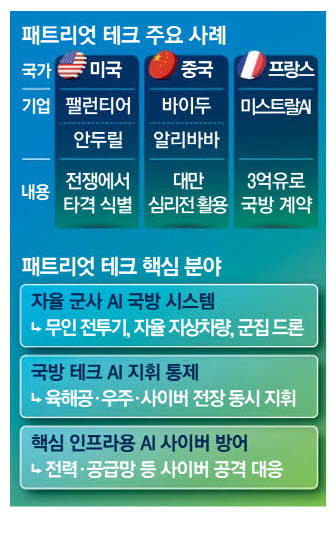
Even in Silicon Valley, which once recoiled from ideology and nationalism, more startups are now cooperating on defense. Representative examples include big data analytics company Palantir and defense tech startup Anduril Industries. The two companies have showcased AI-powered advanced warfare technologies in the field, changing the landscape of modern military operations. The defense AI strategy of the Donald Trump administration centers on embedding generative AI models into military classified networks, and the two firms are playing a central role in that effort.
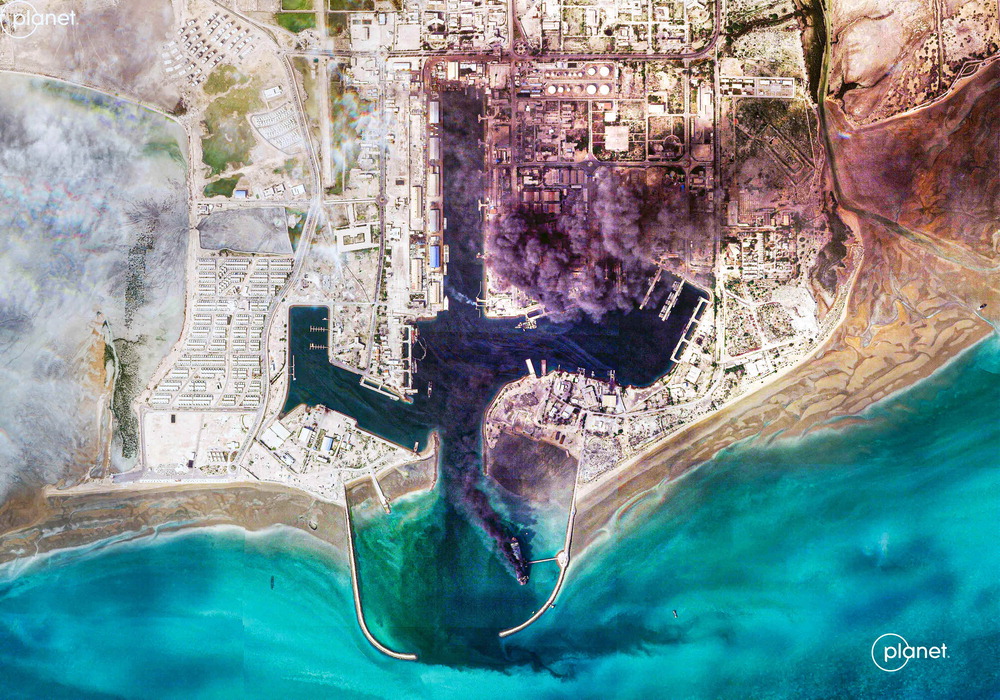
In the United States-Iran war that broke out in late February, Palantir effectively served as the U.S. military’s ‘brain.’ The company took command of battlefield operations through ‘Maven Smart,’ a system that combines Palantir’s Gotham analytics platform with Anthropic’s large language model Claude. This was the first time AI has taken the lead on the front lines of war.
Maven Smart reportedly analyzed massive volumes of satellite imagery and intercepted communications to identify more than 13,000 strike targets in real time and rank them by priority. Anduril handled strike and defense missions in the war using its own AI operating system, Lattice. As the ‘AI commander’ has proven itself in combat, The Asahi Shimbun reported on the 26th that the Japanese government is also reviewing a plan to introduce Maven Smart into JSDF command and control.
China is countering the U.S. move with its ‘military-civil fusion’ strategy. It is using Chinese tech companies such as Baidu, Alibaba Group, Tencent and DeepSeek for military purposes. For example, Unit 61716 of the People’s Liberation Army, which conducts psychological operations targeting Taiwan, is said to have used a DeepSeek-based AI system in military operations. Alibaba Group and Tencent are carrying out thousands of data-fusion and battlefield decision-support contracts requested by the PLA through their cloud infrastructure.
As geopolitical risks intensify worldwide, Patriot Tech is expected to expand further. According to market research firm MarkIntello, the AI-based defense industry market is projected to grow from $18.5 billion last year to $62.4 billion in 2034. That would represent annual average growth of 14.7%.
NATO member states, which have been harshly criticized by U.S. President Donald Trump for not joining the United States-Iran war, are also joining the Patriot Tech trend. The French Ministry of the Armed Forces has partnered with Mistral AI, France’s flagship AI startup. Under the agreement, the French army, navy and air force, defense agencies and public institutions will be allowed access to Mistral AI’s latest models, software and services.
German defense AI company Helsing has installed its AI software on 15 Eurofighter Typhoon jets used by the Bundeswehr. Swedish defense contractor Saab AB has integrated Helsing’s AI agent Centaur into its Gripen E fighter jet. The strategy is to unite NATO members, as no country can survive on technology alone anymore.
[Kang Young-woon]
This article has been translated by GripLabs Mingo AI.
Source link