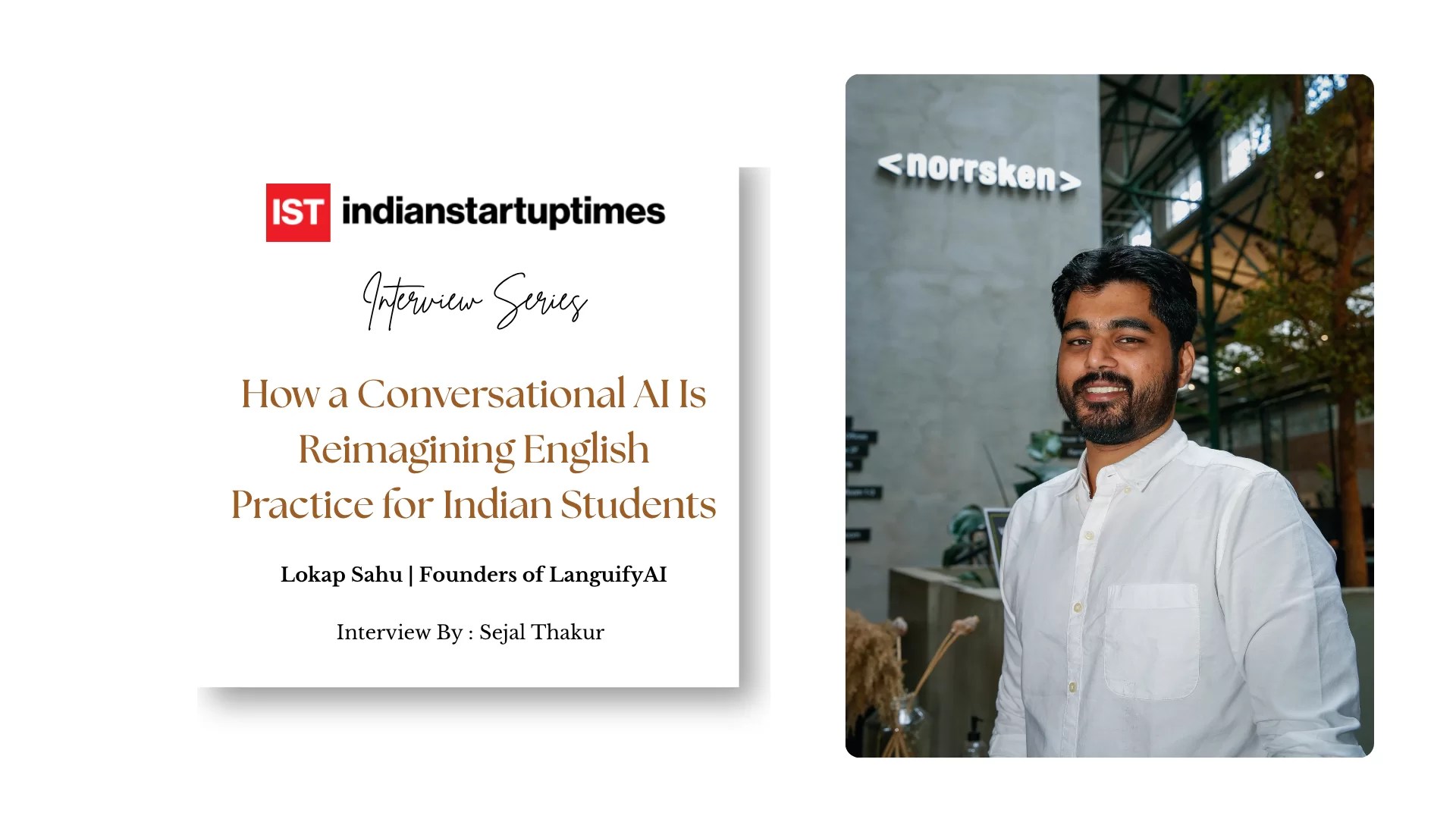
When the COVID-19 lockdown pushed learning online, many founders spotted gaps in how students were practicing core life skills. For Lokap Sahu, co-founder of LanguifyAI, the gap was personal: a struggle with spoken English after moving to a new city at the start of college. That experience seeded a simple but ambitious idea—use conversational AI to create low‑risk, high-frequency speaking practice that builds confidence and employability.
From lockdown prototype to 2 lakh learners
Founded during the lockdown by an IIT Bombay alumnus, LanguifyAI set out to simulate the daily practice students rarely get in classrooms. Instead of group activities that reward the confident few, the product focuses on individual conversation practice with instant feedback. In six years, the startup says it has worked with over 2 lakh students and attracted investors from India and Europe. Sahu stresses one practical lesson from the early days: prototype fast, sell before you build. “Show results early,” he says—institutions respond when a tool clearly saves costs or improves measurable outcomes such as placement rates. That pragmatic approach helped LanguifyAI get pilots in colleges and iterate based on real classroom needs rather than hypothetical features.
Design choices driven by outcomes, not novelty
LanguifyAI’s roadmap reflects a balancing act familiar to edtech founders: adopt new AI capabilities cautiously, but focus product decisions on tangible learning gains. Sahu recommends piloting new features for two to three months to confirm an educational and financial return on investment before wide rollout. The team prioritized daily-practice mechanics and session‑level feedback over flashy capabilities that did not move the needle for students or administrators. This outcome-first mindset applies to sales too. In the education sector, decision‑makers are often layered—department heads, placement cells, top management—and value propositions must address both learning outcomes and institutional ROI. LanguifyAI’s early customer acquisition leaned heavily on community outreach, personal trust and strong pilot evidence, rather than broad advertising.
Resourcefulness in the founding phase
LanguifyAI’s journey began with limited capital and heavy reliance on community support, interns and mentors. The first outside cheque—roughly INR 15 lakh from an IIM Ahmedabad connection—helped formalize the effort. From there, the founding team kept allocations deliberate: product and AI research, hiring core talent, and customer acquisition took priority. Sahu highlights that founders should build only what customers need and be ruthless about cutting features that don’t drive value.
People management as a core leadership challenge
As the startup scaled, Sahu learned that managing people—especially remote teams—is as critical as the product. Hiring diverse profiles meant cultivating new management skills and setting clear processes. Continuous learning in people management and marketing became a leadership priority, alongside technical progress.
A role for AI in making NEP targets real
Looking ahead, Sahu believes LanguifyAI is well‑positioned to support the National Education Policy (NEP) goals through 2030. He predicts heightened demand as institutions strive to meet NEP mandates around employability and skill development. In his view, government policies that incentivize or penalize institutions based on outcomes would accelerate adoption of solutions that demonstrably improve student readiness for the workforce.
Vision: conversational homework for every classroom
LanguifyAI’s long‑term ambition is straightforward: embed a conversational layer into every school and college. Replace rote homework with repeated, personalised speaking practice that builds fluency and confidence. The startup believes that giving every student an individual practice channel—rather than projects that reward only the best speakers—will democratize chances to improve and, ultimately, support better placement outcomes.
What this means for founders and institutions?
- Prototype early, validate with paying pilots, and sell before you overbuild.
- Prioritize measurable learning outcomes and ROI over feature lists.
- Use short pilots to test new AI features before scale.
- Invest in people management as the team grows, especially with remote contributors.
- Leverage community and personal trust to open institutional doors.
Interview By : Sejal Thakur