The Overture co-founder and COO began with a video game for composition, then changed direction as schools searched for a safer way to teach children about AI
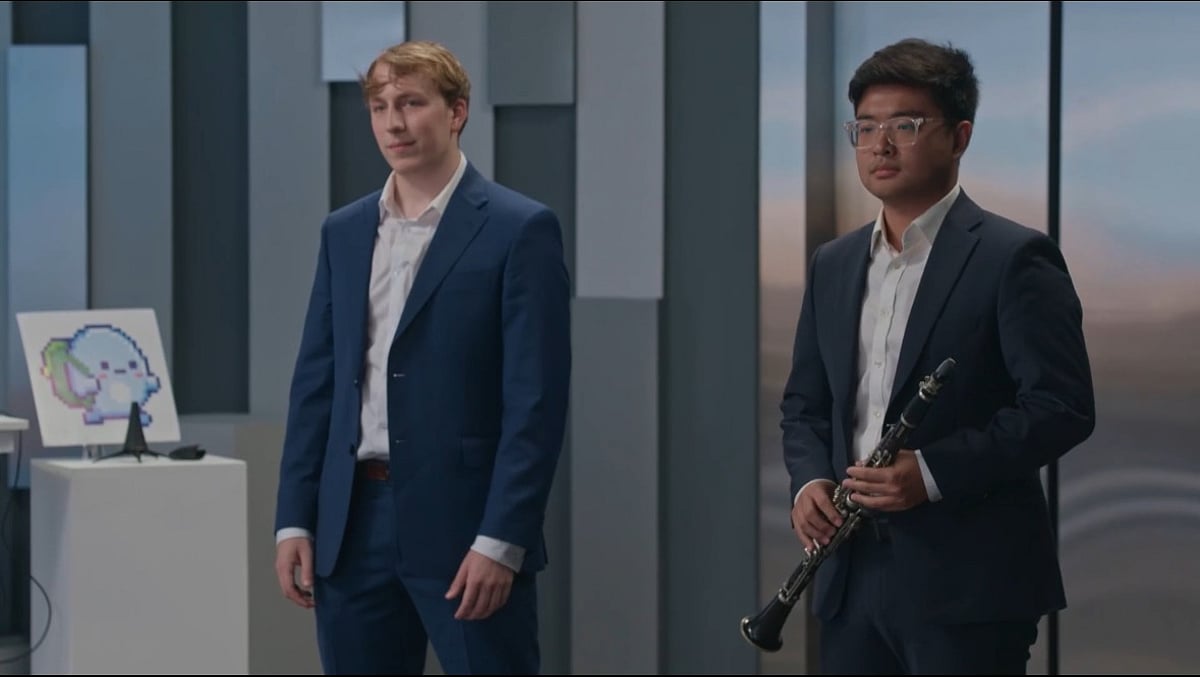
Before Overture became an AI education company, was thinking about music. He and co-founder Aspen Buckingham met while studying music at Northwestern University, and the first version of their company looked nothing like the school enrichment programs Overture runs today. It began in 2022 as a video game designed to help kids compose music.
That beginning still matters.
The company has changed, but Steven does not see the early music work as a false start. It taught him something that later shaped Overture’s AI programs: children learn more deeply when they are making something, not just listening to someone explain it.
“My co-founder and I both come from backgrounds in music, so we approach AI very differently. We teach kids to create with it, to make cool things. That’s rooted in how we think as artists: using your imagination and critical thinking to build something awesome. AI just magnifies what a kid can do and help them become superheroes,” he says.
Steven studied in Northwestern’s dual degree program with music and economics, a combination that now feels unusually suited to the company he is building. Music gave him a creative foundation. Economics gave him a way to think about systems, access, and scale. Overture eventually pulled both sides of that background into the same mission.
At first, the mission was composition. Steven and Aspen wanted to make music creation more approachable for children through game-based learning. Then AI moved from a topic for technologists into something schools were suddenly expected to understand. Administrators knew it mattered. Parents were hearing about it. Students were already encountering it. Still, many schools had no clear way to introduce AI to young children responsibly.
That was the moment Overture began to change.
“We did not pivot because AI was a trend,” Steven says. “We pivoted because schools were telling us they had a real problem and no safe framework for solving it.”
One meeting stayed with him. A school administrator described feeling afraid of AI, not because the school doubted its importance, but because there was no obvious way to bring it into the classroom for younger students. The fear was not theoretical. It was practical. What should children be taught? How should adults explain it? How could a school introduce AI without handing kids tools they were not ready to use?
Steven heard the gap clearly.
“The demand was there,” he says. “The interest was there. What was missing was the how.”
That question became the new center of Overture. The company moved from music education into AI enrichment, building hands-on programs for schools and community-based organizations. Today, Overture partners with schools and youth centers across Illinois and Massachusetts, with more states on the roadmap. It currently runs programs in more than 50 schools across Chicago and Boston and is on track to serve more than 120 programs across multiple states, reaching thousands of students.
The numbers show growth, but the pivot was not only about scaling. It required Steven and his team to rethink what kind of company they were building. AI education for children could not simply be a set of lessons posted online. Schools needed something usable, safe, and structured. Families needed to trust it. Instructors needed training. Students needed activities that matched their age and attention.
Steven did not want Overture to become another company selling the newest tool. He wanted it to answer the school administrator’s original concern: how do we teach this responsibly?
“Schools were not asking us for hype,” Steven says. “They were asking for help making sense of something that was arriving faster than their systems could respond.”
That answer eventually became Overture’s paper-and-pencil AI model for young children. In this story, the method matters less as a teaching philosophy than as evidence of the pivot itself: Steven and his team were no longer building around one product. They were building around a school problem.
The company’s creative roots are still visible in that choice. The first Overture product was about helping children compose music. The current programs are about helping children understand AI. Those may sound like separate ideas, but Steven sees a connection between them. Both are built around active learning. Both ask children to participate. Both treat creativity as something students practice, not something adults perform for them.
“We still run music-based programs, just with a different approach now. Our artistic background is something we take real pride in, and we’ve carried it into everything new we build,” he says.
Overture’s own path also grew quickly. The company went through Techstars while Steven was still in college, giving the team a sharper view of how to build and communicate the business. Steven has since been named to Forbes 30 Under 30 and Inno 25 Under 25. He has also spoken at Tulane University and Northwestern University.
Those recognitions helped, but Steven talks more often about the classroom lessons that came after the pivot. He describes himself less as someone with the final answer and more as a practitioner working inside an unsettled debate. Experts still disagree about what children should learn first: prompting, conceptual understanding, creativity, or how to spot AI’s errors. Steven is comfortable saying the field is early. He is less comfortable with schools waiting until every answer is settled.
“If we wait for perfect agreement, children will still be encountering AI without guidance,” he says. “I would rather build carefully, learn from real classrooms, and keep improving.”
The pivot also created a broader community around the company. Overture has created more than 50 part-time teaching jobs, many for local educators, community members, artists, and musicians. For a company that began with two music students, that part carries meaning. The same creative communities that helped shape Overture’s beginning are now part of how its programs reach children.
Steven’s long-term goal is to bring high-quality AI education to every state through mission-aligned partners. That ambition is large, but the story behind it is specific: a music education startup met a school problem it could not ignore.
For Steven Jiang, the company’s evolution has not been a break from its origin. It has been a widening of it. Overture began by asking how children could make music in a new way. Now it keeps answering the practical question that changed the company: how can schools help children meet AI responsibly?