Theo Baker was seventeen, a Stanford freshman and student newspaper reporter, when he began investigating the university’s president. His reporting uncovered scientific misconduct and data manipulation that ultimately forced Marc Tessier-Lavigne (MTL) from office.
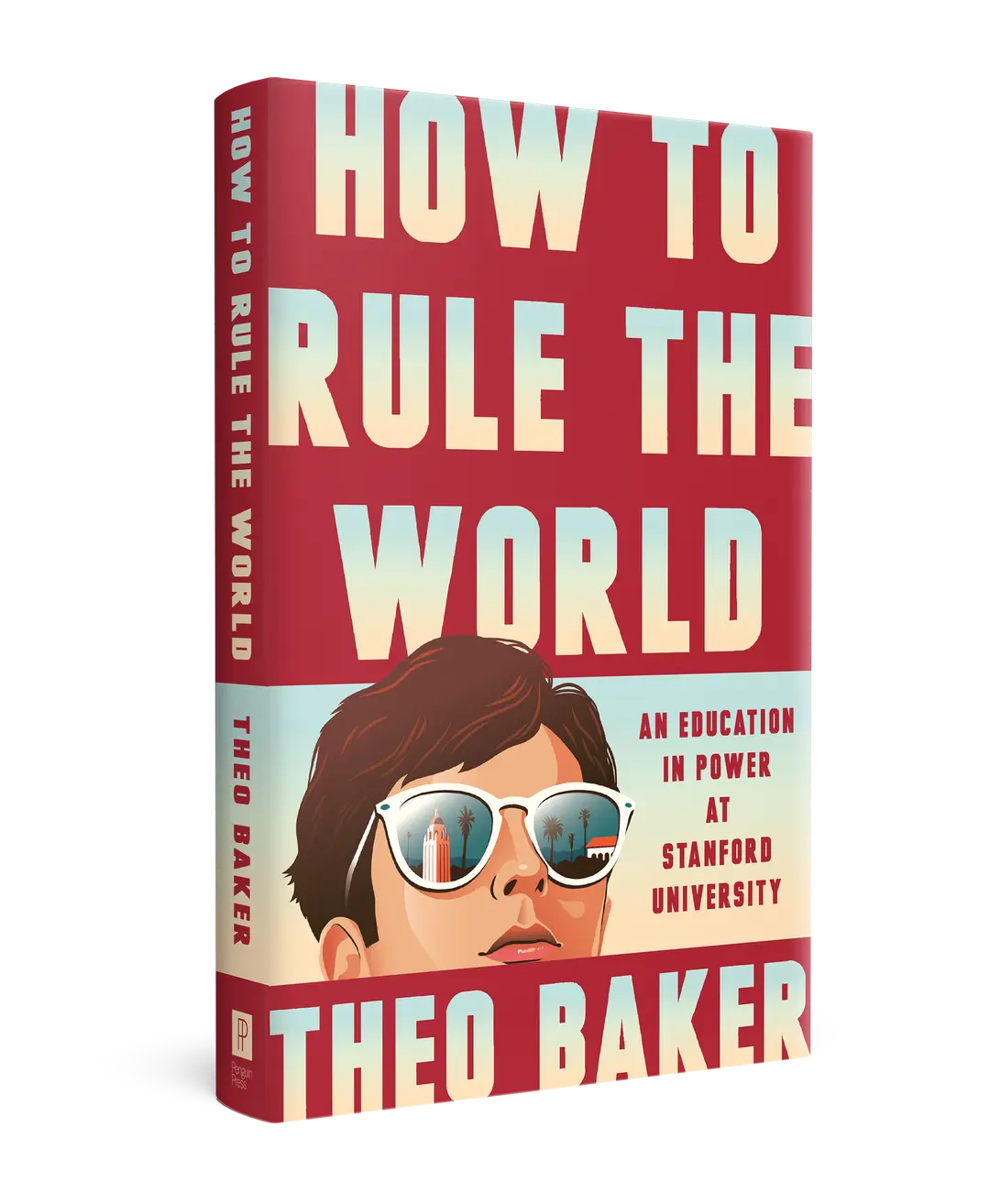
This is the true story at the heart of How to Rule the World: An Education in Power at Stanford University, published this May. It’s part investigative journalism, part memoir, and entirely essential reading for anyone curious about how power actually accumulates at Stanford and in Silicon Valley.
I found it totally absorbing. A perfect summer read – especially for founders, startup CXOs and tech literati.
A Young Journalist Finds His Voice
Baker’s investigation into MTL showcases something rare these days: rigorous, fearless reporting conducted by someone barely old enough to vote. In an era when intimidation has become journalists’ constant companion, this book reminds us of what journalism can be: methodical, empathetic, and genuinely consequential. Just like Woodward and Bernstein back in the day.
Baker’s ability to make complex scientific concepts accessible without oversimplifying them is also impressive. He walks readers through the mechanics of data manipulation, the dysfunction in academic publishing, and the systemic pressures that incentivize corner-cutting in research. You don’t need a PhD to understand the problems he exposes; you just need to pay attention.
Stanford’s Secret Curriculum: How Power Is Distributed
But the book is much more than a single higher education scandal. Baker uses his investigation as a lens to examine something far larger: the machinery through which Stanford systematically produces Silicon Valley’s elite.
The portrait he paints is, frankly, unsettling. VCs arrive on Stanford’s campus almost as soon as freshman move in, actively scouting the most promising students like agents at a professional sports draft. Internships leads-to funding leads-to startups leads-to wealth leads-to cultural influence. The system is efficient, self-reinforcing, and almost completely invisible to outsiders.
Baker traces the ecosystem with precision: elite universities → venture capital → technology companies → extraordinary wealth → political and cultural power. It’s a closed network, and Stanford’s undergraduate campus is one of its most critical nodes. What’s shocking isn’t that it exists; it’s how young people act in it, how quickly, and with what assumption of destiny.
Why This Matters Now
The stakes of Baker’s observation feel particularly acute in 2026. As AI, startups, and VC reshape society at accelerating speed, understanding how the next generation of power brokers is selected, financed, and socialized becomes essential.
Baker’s reporting addresses the key subjects anyone following tech should care about: AI development, startup culture, VC dynamics, and the shifting power base of technology itself. But he goes deeper than the headlines. He shows howyoung people gain access to these worlds, and why it matters that access is so unequal.
The Verdict
This is absorbing, important work. Baker, despite his youth, demonstrates maturity as both a writer and a thinker. His investigation ultimately contributed to a university president’s resignation, which alone would make this book notable. But what makes it essential is the larger vision: a clear-eyed, deeply researched look at how America’s next generation of technology elites are chosen before they’ve had a chance to get to know themselves.
If you care about technology, journalism, how elite institutions actually work, and power, How to Rule the World belongs on your summer reading list.
How to Rule the World: An Education in Power at Stanford University by Theo Baker was published in May 2026.