
A plethora of AI-enabled tools were launched and showcased at IBC 2026 in Amsterdam earlier this month.
Here are some of the best apps we came across while traversing the halls of the Rai. All of these were developed using AI and wouldn’t have been possible only a few years ago.
The rate of change in the industry, driven by AI, is astonishing, and all the products below are great examples of the positive impact AI can have on product development.
However, it’s also a truism that AI has opened the floodgates to a multitide of products that all appear to do very similar things. It might be advisable for the next evolution of AI-enabled products to focus on creating apps that are less homogeneous and more distinct in their features and capabilities.
Promotool.ai
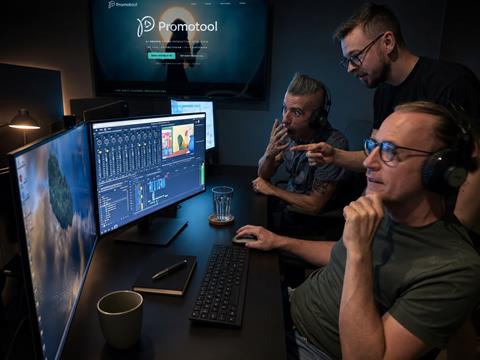
Promotool used IBC to launch its AI-powered automated broadcast promos creation tool.
Promotool analyses your content and generates promos from it. One of the three options the software offers is Studio, which automates up to 70% of the edit to deliver a rough cut for your promo.
It creates a structured, editable timeline to Premiere (with Avid and DaVinci available soon) so you can continue to tweak the promo, editing the pacing, styling and detail.
The second option of Promotool is Express, which provides high volume automated promo production.
The software’s third option is Recarting, which is used for repurposing. It turns existing promo campaigns into new versions, formats and market variants rather than rebuilding them manually.
Promotool has been developed by Budapest-based post-production specialists Umbrella Collective, which combines AI innovators working in film production, senior marketing automation specialists and experienced broadcast on-air promo executives.
Attila Kristof is chief product and strategy officer at Promotool and is a former HBO and MTG executive.
He said: “Promotool was not built to replace creative people but to stop wasting them. Broadcasters and streamers do not only need outstanding promos. They need fewer late nights rebuilding the same promo in six languages, four formats, three dates and two completely different moods.
“Users can choose between our different offerings, tailoring it to their needs, whether it is used for high visibility, brand critical campaigns, or for high-volume, fast-turnaround channel feeds.”
Promotool is already live and rolling out at a pan-European broadcast group, whose producers are evaluating the platform on real promo briefs. Three further major media groups are in the pipeline, with partner announcements to follow.
Lingopal
Another company using IBC to promote its AI-driven software was live translation and localisation specialist Lingopal.
The latest version of Lingopal extends its coverage to more than 130 languages and introduces enhanced customisation and analysis capabilities.
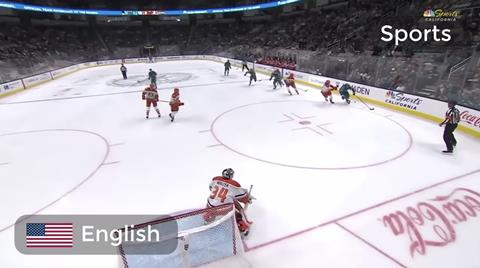
The software enables sports and other live productions to enable large-scale multilingual distribution without having to manually provide separate commentary, dubbing and captioning workflows for every market.
Lingopal addresses this through a suite of AI-powered solutions for low-latency speech-to-speech translation, captions and subtitles with workflows that integrate seamlessly into existing broadcast and streaming infrastructures.
The platform translates speech into multilingual audio with low latency while retaining the characteristics of the original speaker, including tone, cadence and emotional delivery.
Customers can also select or create synthetic and branded voices, enabling organisations to extend localization to programming and languages that would previously have been uneconomical to support.
Lingopal says a regional sports network saw a 23% increase in average watch time after introducing local language support for new markets using the platform.
A new analytics feature called Signal was introduced at IBC to enable users to measure translation performance across languages and content types, including text-to-speech naturalness, background noise, and voice complexity, quality, and clarity.
Lingopal also announced upcoming advances in its live synthetic commentary to generate original dubbing, tailored to the consumer and unlocking new audience engagement opportunities.
“Real-time AI translation is changing the economics of localisation. Some of the biggest sports and streaming platforms are proving that multilingual content can be created cost-effectively at scale through AI,” said Casey Schneider, CEO of Lingopal. “The conversation is moving beyond whether to use AI for localisation, it’s now about how much content you can translate, how many more markets you can reach in a bespoke way, and measuring your localisation’s relative performance in each market. Our latest advances help every piece of content work harder for rights holders – delivering new subscription, advertising, and sponsorship revenue, while preserving the voice, energy, and emotion that made it compelling in the first place.”
Kaltura
Kaltura used IBC to demonstrate its new real-time AI avatars. These “lifelike digital experts” see your screen, understand your intent, and respond in milliseconds with personalised guidance.
The company added AI avatars to its portfolio of services after acquiring a company called eSelf.ai, which developed the Agentic Avatars. The avatars are real-time, conversational AI agents that see what’s on screen, listen, and respond.
Integrated into Kaltura’s AI Video Experience Cloud, they enhance existing products like Work Genie and Class Genie, turning them into visually expressive, interactive companions.
At IBC, Kaltura demonstrated the experience of interacting with its Agentic Avatars, which have real-time emotional intelligence that reads tone, facial cues, and adjusts expression for more natural, responsive interactions.
The AI avatars can be used in a wide range of products or services. A streaming platform could, for example, use the Agentic Agents to provide users with a straightforward way to discover content and access customer support.
Virtual hosts could also moderate live broadcasts, curate VOD recommendations, and engage viewers with interactive, personalised content experiences.
The avatars can communicate in over 30 languages, offering human-like engagement, says Kaltura.
Black Goblin
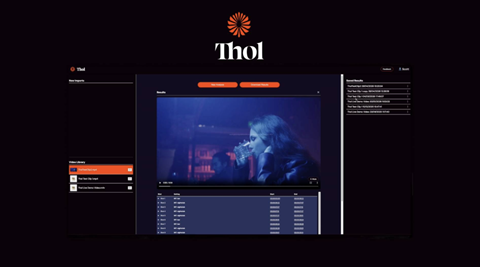
Another interesting AI product at IBC was audio tech startup Black Goblin’s AI-assisted video cue spotting tool Thol.
Thol has been developed for professional sound designers, eliminating one of audio post-production’s primary administrative bottlenecks – manually spotting video footage for audio cues.
Traditional visual event logging typically takes 8 to 20 times the runtime of a video edit. When combined with department cue sheets, library searches, and DAW session preparation, setup tasks can use up to 30% of a project’s total schedule.
Instead, Thol uses computer vision to analyse visual edits in a single pass, automatically identifying physical movement and visual triggers to generate time-coded sound cue sheets and editing markers.
It integrates directly into major Digital Audio Workstations (DAWs) including Avid Pro Tools, Steinberg Nuendo, Cockos Reaper, and Apple Logic Pro.
Black Goblin says Thol is engineered specifically to automate repetitive administrative friction rather than displace human artistry.
It has been recently used by the BBC, through its MyWorld Amplifying Imagination programme, and saved over 200 hours of manual setup labour across the post-production team for a single 90-minute film.
In another ongoing trial of the software, with Posta Vermaas, Thol generated precise, automated editing regions for Foley artists and sound editors directly within Pro Tools.
“Automated Spotting is exactly where AI belongs in the creative industry: it takes over the time-consuming, repetitive work so that human effort can go where it matters, the creative side of post sound,” said Casper Molin at Posta Vermaas. “That’s why Thol’s idea resonates with us. It reflects how we think collaboration between creatives and AI should work: assistance with the non-creative tasks, more time for the creative ones.”
“Post-production deadlines are tightening across broadcast and streaming, this comes at an enormous toll; nearly a third of sound post teams’ time goes to manual setup, this takes them away from the tasks that ensure quality and narrative remain at the centre” said Ana Betancourt, founder and CEO of Black Goblin. “Having proven Thol in open beta with hundreds of award-winning designers, IBC is about showing how AI tools can be designed ethically and help teams reallocate valuable setup labour back into iconic sound designing.”
Qvest
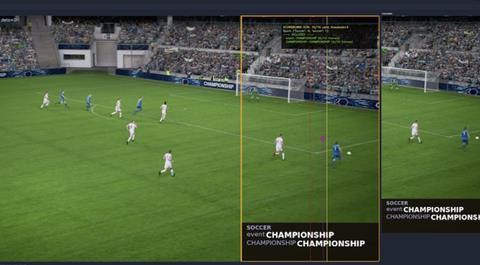
Qvest also focused on AI, presenting the oddly titled V-Cropper Blueprint powered by NVIDIA for the first time at IBC. The application was one of many at IBC that crops horizontal video into different aspect ratios, including vertical formats that are optimised for mobile and social media.
Turning horizontal sports and live content into vertical formats for social media currently requires significant manual editing. The V-Cropper Blueprint automates the process by tracking relevant subjects and sports scenes in motion – such as athletes, players, and balls – and keeping the action in frame.
It is possible to adapt the apps tracking behaviour to different sports and content scenarios.
V-Cropper Blueprint can run locally or in cloud environments. It will be made available through NVIDIA Build as an open-source foundation that media organisations can adapt to their own workflows and requirements.
“For media organisations, the value of AI is not the model itself, but what it enables within real production workflows,” said Fares Birke, principal – practice lead applied AI at Qvest. “Especially in sports, speed matters. Monetising the moment means turning live action into engaging content while it is still relevant. Our V-Cropper Blueprint does exactly that while giving organisations control over how and where their AI workflows operate.”
“Live moments evolve by the second, yet adapting horizontal video for mobile audiences remains time-consuming and manual,” adds Richard Kerris, vice president and general manager of media and entertainment at NVIDIA. “Built with NVIDIA AI, Qvest’s V-Cropper Blueprint turns that bottleneck into an adaptable workflow, helping media teams bring sports and live content to every screen faster while retaining control of their content and infrastructure.”
Source link