India has emerged as the world’s third-largest startup ecosystem, with more than 150,000 DPIIT-recognised startups contributing significantly to innovation, employment, and economic growth.
At the same time, the country produces nearly 1.7 million engineering graduates every year from over 3,500 engineering institutions.
Yet a fundamental question remains about why are there a few engineering campuses consistently producing successful technology startups?Every year, engineering colleges produce thousands of final-year projects, prototypes, patents, hackathon solutions, and research publications, yet only a handful ever reach the marketplace.
Most conclude with academic evaluation, are archived in laboratories, and are never revisited. The challenge is not a lack of talent or ideas but the absence of a structured pathway from innovation to entrepreneurship.
Works with student entrepreneurs, faculty innovators, government agencies, and industry partners points to several structural barriers.
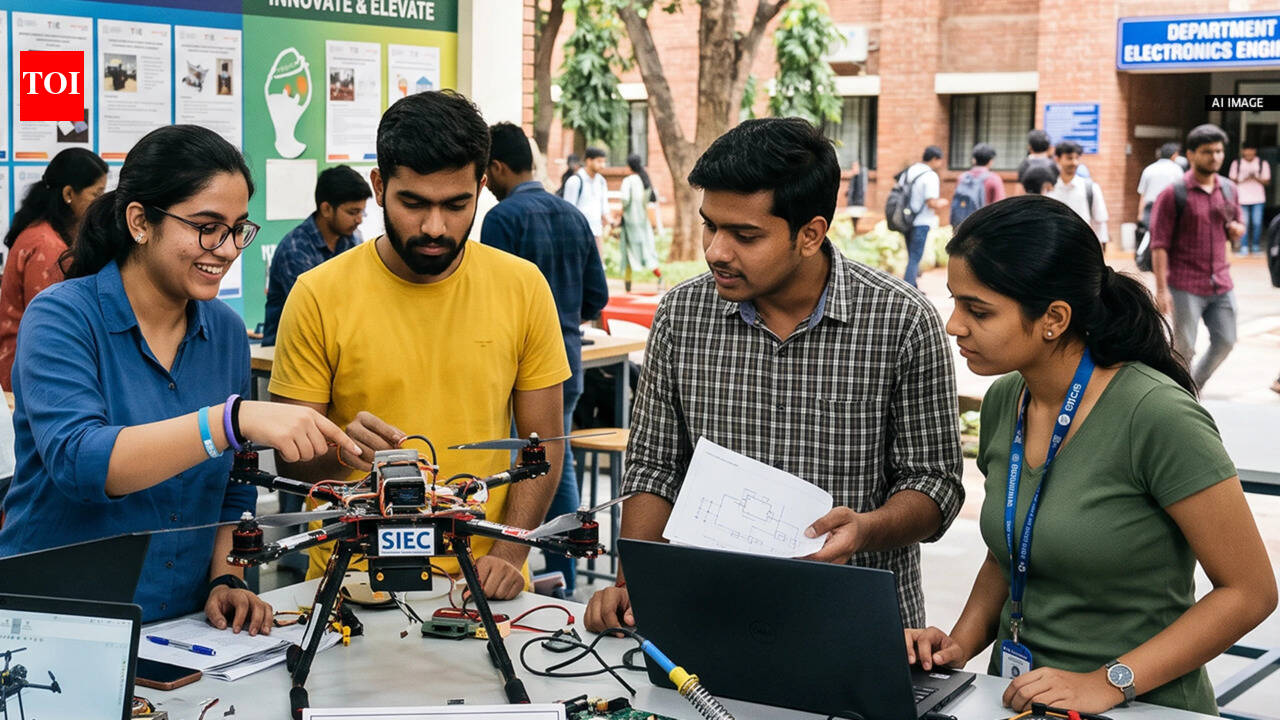
Despite these challenges, engineering institutions are positioned to drive innovation because they bring together a continuous pipeline of young innovators, advanced laboratories, maker spaces, testing facilities and research infrastructure.
Their faculty offer deep domain expertise to validate emerging technologies, while institutional credibility can help build partnerships with government and industry. Equally important is the multidisciplinary environment, where engineering, management, design and science can converge to turn ideas into viable solutions. The real opportunity, therefore, lies not in creating more incubators, but in embedding entrepreneurship across the academic journey and enabling students to move from experimentation to innovation and, eventually, enterprise.
The opportunity lies not in creating more incubators but in integrating entrepreneurship throughout the academic journey.
India’s aspiration to become a global innovation leader cannot rest solely on startups from metropolitan cities or corporate R&D laboratories. Engineering campuses must become the country’s largest innovation factories. While NEP 2020 provides the educational vision, the Ministry of Education’s Innovation Cell (MIC) and the National Innovation and Startup Policy (NISP) provide the operational framework.
Institutions must now move beyond compliance towards implementation, integrating entrepreneurship into academics, commercializing research, strengthening industry and government partnerships, and building a seamless pipeline from classroom ideas to market-ready enterprises.
If engineering institutions can address these four Cs, they can transform themselves from centres of education into engines of innovation and enterprise.