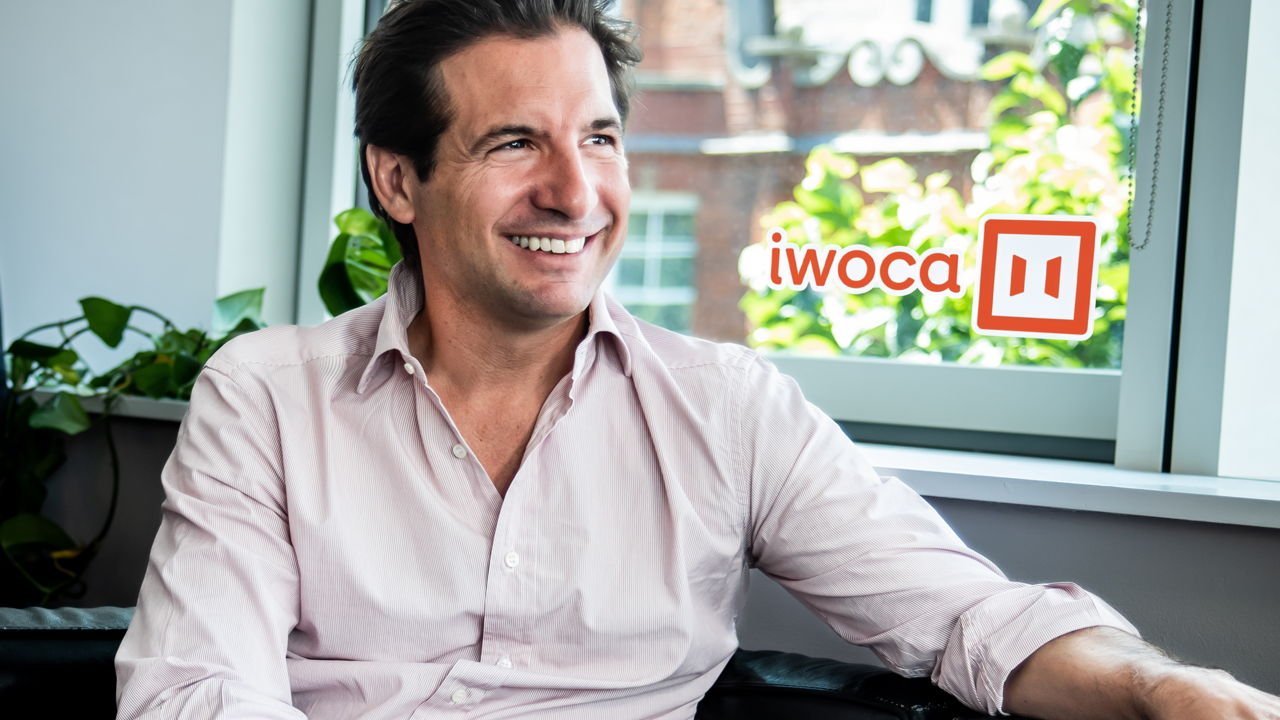
“I will never forget it,” says the long-standing CEO and co-founder of UK small business lender Iwoca, describing his meeting with one of the high priests of the European venture capital world. Christoph Rieche is a careful, measured speaker, so when he says “I will never forget it”, one tends to lock in.
Rewind to 2010ish, and Rieche, then a well-paid thirtysomething Goldman Sachs executive with itchy feet to launch a startup, met with Index Ventures co-founder Neil Rimer.
Rieche says: “Index was at the time already a pretty famous fund. I was in Geneva for business. Neil happened to be based there. I told him ‘I can tell you about my world. Why don’t you tell me more about the VC world?’ We were sitting in this meeting, and he said ‘we just did an investment, but we haven’t announced it yet. It’s in a company called Funding Circle, and they provide lending to small businesses.’”
The revelation appears to have kick-started Rieche, who had been mulling launching his own Funding Circle AKA Iwoca, into action, as soon after Iwoca was born.
Turning the clock back
Tech.eu is sat opposite Rieche, who is German, in Iwoca’s newish, fresh-smelling London offices (all creams, soft furnishings, and overhanging plants), as the 46-year-old winds back the clock to Iwoca’s early days.
Back then, he says, fintech wasn’t a thing; Revolut and Monzo weren’t about and the brands of the day were Spotify and LoveFilm while Rieche was a habitué of Meetup.com (now part of Bending Spoons) where he met his co-founder.
Rieche has now been CEO at Iwoca for nearly 15 years, which, he admits, is a long stint steering a startup or scaleup. But could it all be coming to an end?
Iwoca up for sale?
Sky News reported in June this year that Iwoca, which has raised around £70m in equity and is backed by Augmentum and Commerzbank’s CommerzVentures, was up for sale.
It had hired tech investment bank Qatalyst Partners to oversee the auction, with a sale value of over £1bn.
Rieche says: “We have shareholders that have been with us for 15 years, some of them. Our last financing round was in 2019, so our youngest shareholder is seven years in. They are all VCs.
These kinds of people naturally look for liquidity. It’s quite likely that we will find them some liquidity. But it doesn’t have any impact on our strategy.”
Does that mean an outright sale, IPO or secondary share sale? “I don’t know, these conversations happen literally all the time.”
Iwoca’s launch
You might not have heard of it, but Iwoca is one of the UK’s fastest-growing small business lenders, providing funding for tens of thousands of businesses every year.
It launched in 2012, when Rieche and his co-founder, James Dear, a former Deutsche Bank quant trader (who is stepping down this year), spied an opportunity in the ruins of the financial crisis, which saw banks retreat from SME lending.
Rieche says he was enticed by helping underserved SMEs, the overall market opportunity, and disrupting the legacy banks with tech and data. Today, Iwoca (whose name derives from its mission brief: instant working capital, so I-wo-ca), employs around 400 staff, with offices in London, Leeds, Berlin and Frankfurt.
Iwoca’s offering
Iwoca’s flagship product is SME loans, which range from £1,000 to £1,000,000 in the UK and up to €500,000 in Germany. Loan origination leapt from £952m to £1.5bn in 2025, driving up revenues by 56 per cent to £366m in 2025, Iwoca’s latest financial figures show.
Profits, meanwhile, nearly doubled from £59m to £113m in the period.
Its jump in revenues comes amid incumbent banks retreating from SME financing, with challengers like Iwoca eating up market share.
Iwoca, which uses open banking to speed up loan applications, likes to trumpet the speed of its loan approval process, which is largely automated (its record is two minutes and three seconds from a standing start for an approval).
Starling deal
Iwoca also offers loans to Monzo, Starling and Tide customers and other businesses through partnership deals.
On its recently announced deal with Starling, Rieche said: “It’s been a long time in the making. I met Anne Boden about this more than 10 years go.
I have been doing this for 15 years now. One thing I have learnt is that things take time. You can’t break through everything in a couple of days.”
One of the big trends in fintech in recent years has been the rise in stablecoin technology but Iwoca says it has no plans to leverage the tech in its lending offering.
Amid observers saying that Iwoca had too narrow an offering, it has recently expanded its product portfolio.
Flushed with “excess liquidity” and “more cognitive energy”, Iwoca has launched a credit score product, business credit card, and an M&A platform to help business buy and sell businesses.
Sanctioned shareholder
In Iwoca’s latest financial results, under the regulatory risk category, there is a reference to London-based VC Redline Capital, which is one of Iwoca’s longest-standing shareholder and owns around a 10 per cent stake in Iwoca. Redline was funded by Vladimir Yevtushenkov, a Russian oligarch, whose daughter Tatiana Evtushenkova has served as its CEO.
In 2023, Redline’s investment in Iwoca was placed under an asset freeze due to sanctions imposed by the UK government related to Yevtushenkov, the billionaire founder of Sistema, the Russian telecoms and media conglomerate
This caused “quite a big headache” for Iwoca, Rieche says. Evtushenkova, who stood down as director of Redline in 2023 according to filings, was removed from the UK sanctions list in 2025.
Rieche says: “These are the great experiences you go through when you are building your own company.
Very fortunately for us, that person in the end was removed from the sanctions list last year, so we don’t have any sanctioned shareholders anymore. So, it’s a solved problem.”
Will Iwoca carry out future funding soon? Rieche says no, pointing to Iwoca being profitable.
Running a startup
German stereotypes aside, Rieche is initially a reserved interviewee and appears a methodical man (he did nine months “solid” startup and VC research and two work placements before launching Iwoca).
But once he gets going, he speaks fluidly about the ups and downs of his job (“there are times obviously when you are more motivated than others”), why he’s swerving conferences these days, and London losing its lustre as a fintech hub. Typically, Rieche works from 8.30am until around 8pm, with half his time on Iwoca’s UK business, the rest divided up between its German business and new initiatives.
Of late, he has pulled back on overseas work travel, as he has attending conferences.
He said: “There’s too much to do with the team. The ROI on these events, I think is reasonably low.
I spend most of my time with the team and significantly less with the external world.”
Outside work, Rieche, who has two children, spends weekend driving his children around, as well as having an interest in London’s cultural scene.
London losing its appeal
On London as a fintech hub, he says, it has “probably got worse” since he started Iwoca, pointing to an increase in tax and pulling back of entrepreneurs’ incentives (the interview takes place the Autumn Budget).
He says: “Wherever I am looking, things got less flexible for businesses.”
That said, London will remain Iwoca’s headquarters and London “is still a phenomenal city and a magnet”.
The future
Iwoca has hitherto served more than 100,000 SMEs with loans, but its big ambition is to serve one million.
Whether it will get there and remain independent remains to be seen.
What is apparent is that Rieche has retained an entrepreneurial mindset, albeit with a heavier workload in light of his co-founder exiting. Rieche says his role is “constantly changing” with “different challenges”.
He says: “Now we have started these new initiatives; it really does add a completely new chapter for us.”
