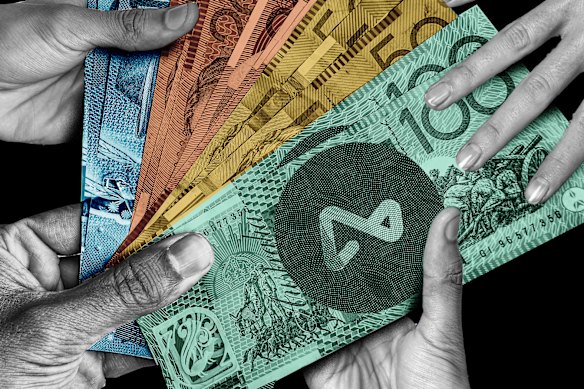


The numbers are staggering. Late last year, $700,000 a minute, $42 million an hour, and $1 billion a day moved through the financial network of one Australian-founded start-up, Airwallex.
The true scale of the financial services company, unreported until now, shows why it has become a darling of Australia’s start-up world, a candidate for a multibillion-dollar sharemarket listing and a tentpole holding for some of the country’s biggest technology investors.
But that volume of cash moving between so many countries causes problems. It has taken a toll on some of the company’s workers, according to years of reporting on its intense workplace culture. Then there rumours about its business in China, which one Silicon Valley titan made concrete last year when he claimed Airwallex could expose customer data to the Communist Party. And on Thursday, Airwallex suffered a hammer blow. Australia’s financial crimes agency, AUSTRAC, ordered an audit of the company’s legal compliance because it suspects that hidden among the vast amount of money flowing through Airwallex’s systems are payments by criminals for child sexual abuse material.
Those claims have not been proven, and Airwallex says its financial integrity systems are world class as it moves money between the accounts, payment terminals and cards of its customers across the more than 120 countries where it can make local transfers.
But if AUSTRAC’s worst fears are borne out, the consequences for Airwallex could be dire: Westpac was fined $1.3 billion in 2020 for its own grand scale breaches of anti-money laundering rules.
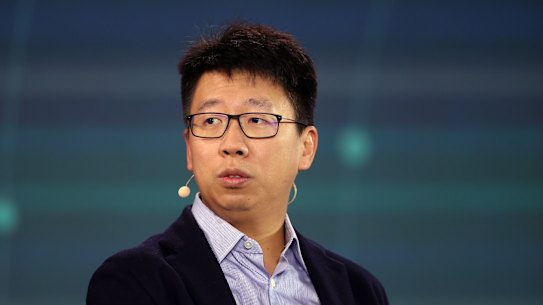
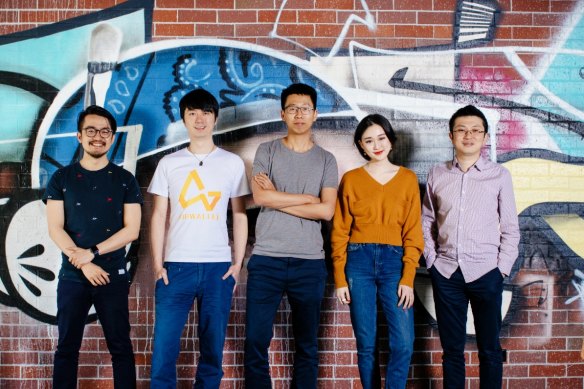
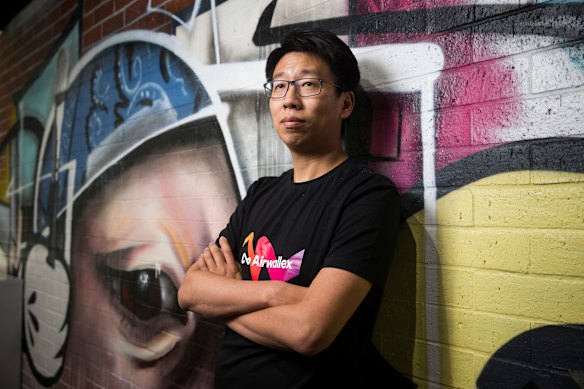
Airwallex was founded in Melbourne just over a decade ago by its chief executive Jack Zhang and four others, Max Li, Lucy Liu, Xijing Dai and Ki-lok Wong.
Since then, the payments start-up has set up registration in the Caymans, dual headquarters in Singapore and San Francisco, and additional offices in China as it defies the fracturing of ties between Western countries led by the United States and the world’s second-largest economy.
Airwallex’s founding goal was simple: making it easier to move money across borders for small and medium-sized businesses. According to the company’s oft-repeated founding narrative, Zhang and three of the co-founders were running a café in Melbourne and struggling to pay for packaging from overseas.
“We calculated there was something like a 5 or 7 per cent cost that we got charged on top of the packaging,” Li said on a podcast in 2022. “With a small kind of budget, 5 per cent, 7 per cent was crazy.”
The group decided to do something about it. Hundreds of millions of dollars of investor funding later, their initiative has paid off.
In the fourth quarter of last year alone, Airwallex recorded $US61 billion in payments volume, up more than 100 per cent on the previous year, according to unreported quarterly financial results relayed to this masthead by a person familiar with the business.
Annualised revenue lifted 79 per cent by the end of that quarter, to about $US1.1 billion, and the company booked a gross profit of almost $US150 million, up 60 per cent year-on-year. After most costs were factored in, it made a small loss.
But in the world of start-ups, it’s the gross profit that matters. For its investors, the rosy numbers (on which Airwallex would not comment) represent an opportunity to finally realise returns from the years they have spent ploughing more than a combined $1 billion into Airwallex via a stockmarket listing.
“We are going to get IPO ready in the next two years,” Zhang said in January 2024.
A listing would be a modest event for some of the company’s major Chinese backers, which include the giant internet conglomerate Tencent and investing powerhouse HongShan Capital. But it would be huge for its Australian shareholders. The country’s three biggest venture capital outfits, Blackbird Ventures, Airtree Ventures and Square Peg Capital – which accounts for the largest stake in Airwallex – all have shares in the company.
But even before the AUSTRAC audit, the path to a listing has been far from smooth.
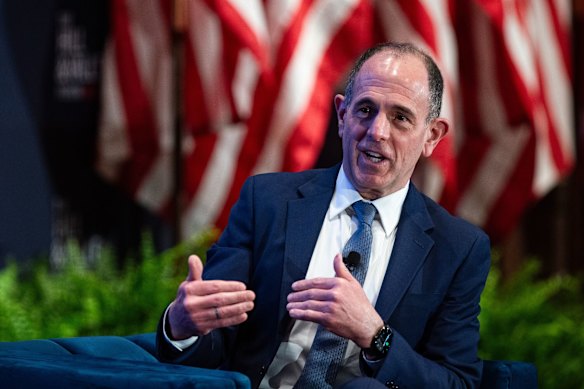
In early December, Zhang posted on X to hit out at prominent Silicon Valley venture capitalist Keith Rabois, who had accused Airwallex of exposing sensitive US data to surveillance by the Chinese government. Like many countries, China has sweeping national security laws allowing the government to access data. Unlike many Western democracies though, the safeguards on that power and transparency on its use are essentially nil.
Zhang denied the allegation, saying Airwallex’s Chinese engineers had no access to foreign user data. He accused Rabois of “circulating inaccurate claims” for the benefit of one of his portfolio companies and he challenged him to provide evidence. But the exchange was not the end of the matter.
The following week, on December 8, the Australian Financial Review reported that an executive at Airwallex had raised concerns that the company’s employees in China were requesting greater access to the payments giant’s customer data.
Airwallex had enlisted one of the Australian market’s highest-profile corporate communications firms, Cato & Clive, to manage its response to reporting like that, according to two people familiar with the matter.
The firm, led by Sue Cato and her business partner Clive Mathieson, are no strangers to major public relations crises, including the PwC tax scandal and cricketer Tim Paine’s departure as captain of the national team.
But the firm’s relationship with Airwallex soured quickly. By the close of business on December 8, the firm had walked away, sources familiar with the matter said.
Exactly why the pair – who declined to comment – walked is unknown, but the departure of such a hard-bitten firm shocked observers in the tech and media worlds. (A month later, Cato & Clive announced it was disbanding after Mathieson received a major new job.)
In their place arrived global public relations firm Sefiani, whose clients over the years have included big four consulting firm EY, and aerospace company Airbus. As Airwallex started work on a fresh media strategy under the advice of new counsel, it extended its public relations offensive to the world of social media.
In a callout on the influencer marketing platform Partnar, first reported by this masthead, Airwallex said it was seeking influencers to post clips from a podcast featuring Zhang on LinkedIn or X that portrayed him as an “aspirational operator”.
The company brought in high-profile law firm Mark O’Brien Legal to issue legal demands to the Australian Financial Review, The Sydney Morning Herald and The Age.
The firm said five articles published by those newspapers should be removed because they were allegedly based on leaked internal documents, amounting to “an indefensible breach of confidence”. The stories remain online.
“Like many other high growth, global companies, Airwallex works with a number of communications and marketing agencies at any one time,” an Airwallex spokesman said.
It has also gone direct.
In a post on LinkedIn this week, Zhang hit out at the media, saying stories were moving faster than the facts. He said reporting on the company’s ties to China had got things wrong, and that other coverage had relied on out of date information.
“I’ve also noticed that some narratives are built on information from several years ago. That context can be useful historically, but without acknowledging how much has changed, it can distort what’s actually true today.
“This is how narratives drift,” Zhang said. “Context gets stripped away, scope gets inflated and nuance disappears.”
In a separate post, Zhang said Airwallex’s culture was strong according to internal surveys. “As we’ve grown, we’ve stayed deeply aligned on why we’re here, and we’re getting better at how we lead, communicate and operate as one global team.”
The timeline for Airwallex’s possible float, however, has become increasingly unclear. In 2024, Zhang told CNBC that the company was working to be “IPO-ready in the next two years” so it can decide whether to proceed. Since then, the company has softened that language, and is not planning to consider an IPO until at least next year.
“We have no set timeline for listing and there are no plans to do so this year. Right now, Airwallex’s focus is on sustaining profitable, high-quality growth by expanding our global financial infrastructure, launching new products, and supporting our customers,” an Airwallex spokesman said.
On Thursday, AUSTRAC dealt those ambitions a major blow when it said it had ordered the appointment of an external auditor to assess whether the company was doing enough to abide by anti-money laundering and counter-terrorism financing laws.
AUSTRAC deputy chief executive of regulation Katie Miller said the sector was exposed to money-laundering risks, and that Airwallex was one of several companies the agency has looked at. One of AUSTRAC’s key concerns is the use of the platform by so-called “money mules”, who create fake accounts to move money for criminal activity, such as online child sex abuse.
“We know that when we tighten controls in one part of the industry, that money-launderers will move to other places in the industry. And so payment platforms are an attractive service provider. It’s because of their speed,” Miller told this masthead.
“[Airwallex] bring their customers on almost entirely remotely, through digital channels, and there’s not a lot of friction. All of the things that make the service attractive to legitimate users are, unfortunately, the things that make it attractive to money-launderers and criminals. So we do see this as a high-risk channel to move illicit funds in and out of Australia.”
The auditor will have 180 days to report their findings to AUSTRAC. The scope of the audit will be determined by AUSTRAC, the agency said, but it will be run at Airwallex’s expense.
So far, Miller said Airwallex had co-operated with the agency. She said the firm had provided information that had been requested, and in responding to the agency’s concerns, it had identified a “range of changes and improvements” that had been made to their operations.
Asked if the company could be doing more to co-operate, Miller said: “They’re providing us with the information that we need.”
If Airwallex is found in breach of anti-money laundering or counter-terrorism financing laws, the company could face steep fines. Worse still, the audit’s findings could set off a contagion across other jurisdictions where the firm is working to establish a foothold, and it could invite similar action from AUSTRAC’s global counterparts.
For its part, Airwallex said it was committed to “the highest standards of regulatory compliance.”
“We have zero tolerance for financial crime or illicit activity of any kind on our network. We maintain robust compliance requirements and any customer unable to comply is promptly terminated from our platform,” the company said.
“We expect that this upcoming external audit will validate that our framework is robust, comprehensive and market-leading.”
With billions of dollars on the line, the company’s investors will be hoping so. Blackbird, through a spokeswoman, declined to comment. AirTree did not respond. A Square Peg spokeswoman said the venture capital firm was aware of Airwallex’s discussions with AUSTRAC.
“Airwallex operates in a highly regulated industry across many jurisdictions, and we know they take their regulatory and compliance obligations incredibly seriously,” the spokeswoman said.
“Any issues related to AML in particular are incredibly important issues. As board members across many of our portfolio companies, we are informed of compliance processes and audits, and we provide guidance and oversight as appropriate. We take our governance responsibilities very seriously.”
The Business Briefing newsletter delivers major stories, exclusive coverage and expert opinion. Sign up to get it every weekday morning.
Source link