Job seekers often have to jump through hoops throughout the recruitment process. At Anduril, they’ll have to fly through courses—drone courses, to be exact. The defense tech company is offering engineers the opportunity to secure a job interview and compete for a cash prize of $500,000 in the AI Grand Prix, a new racing competition that challenges participants to build self-flying drones.
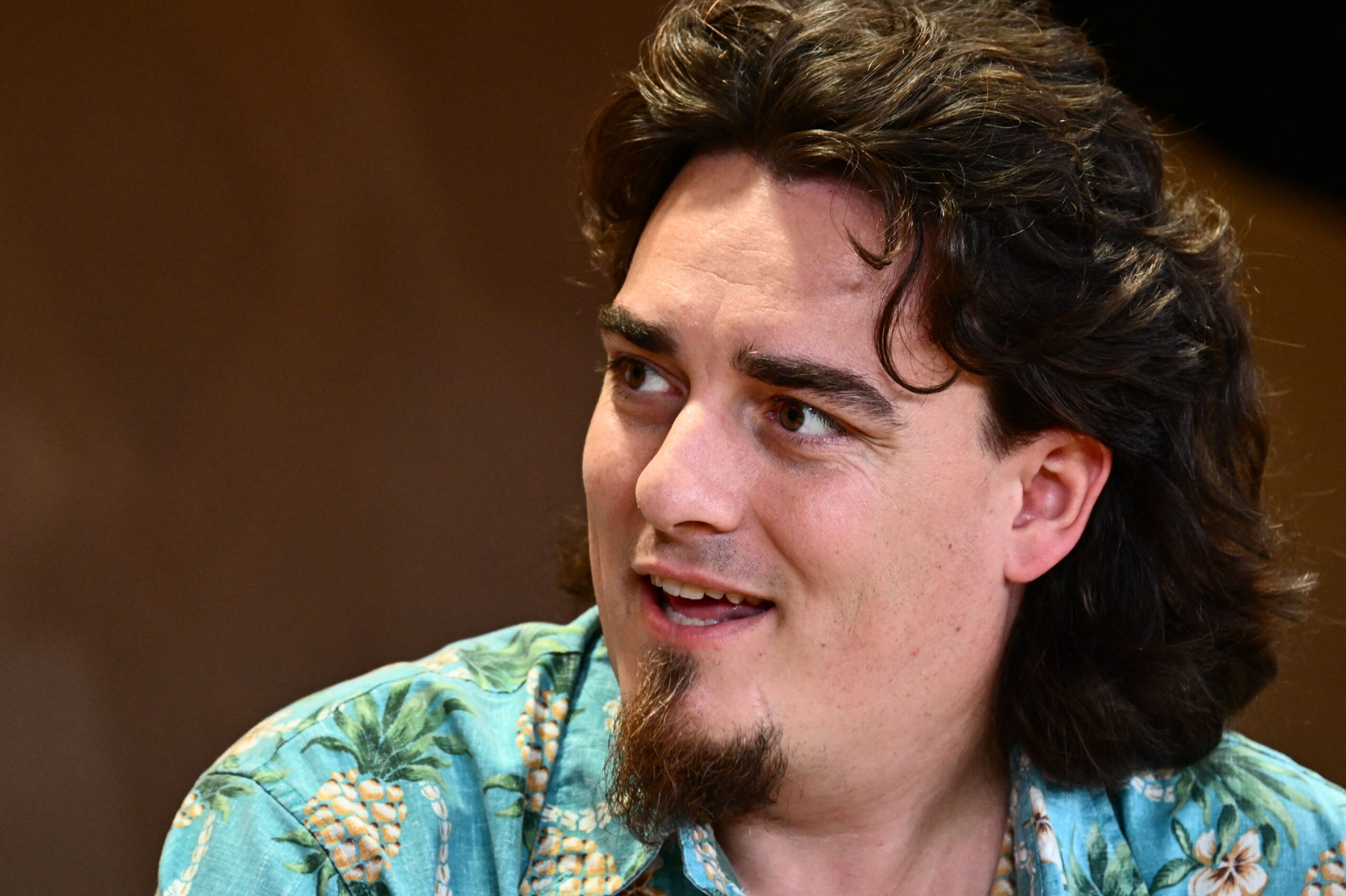
“This is an open challenge. If you think you can build an autonomy stack that can out-fly the world’s best, show us,” said Palmer Luckey, founder of Anduril, in a statement.
The contest will see competitors race autonomous drones built by Neros Technologies, another defense tech company, and is open to university and independent teams globally. It’s already received more than 1,000 sign-ups, according to Luckey. Virtual qualification rounds will take place between April and June, followed by an in-person qualifier in September and a final race in November.
The competition is the brainchild of Luckey, who launched Anduril nearly a decade ago with a mission to create autonomous weapons protecting Western nations. The 33-year-old previously founded Oculus VR, a virtual reality company sold to Facebook (now Meta) for $2 billion, and worked at the company between 2014 and 2017.
Over the past few years, Anduril has become a major force in military tech, signing lucrative contracts with the U.S. Department of Defense (DoD) and other government agencies. Its products include autonomous software, drones and A.I.-powered helmets. The Costa Mesa, Calif.-based company was most recently valued at $30.5 billion last year following a $2.5 billion funding round.
Anduril is currently building a new five-acre manufacturing facility, Arsenal-1, in Ohio, which will host the AI Grand Prix’s finale in a race organized by the Drones Champions League, a professional drone racing league. Future editions of the annual competition are expected to take place across Asia, the Middle East and Europe.
The AI Grand Prix’s highest-scoring teams, which can include up to eight members each, will split a prize pool of $500,000. In addition, the top 1o performing teams at the finale will be guaranteed prizes of at least $5,000.
The top performer, however, could walk away with more than just prize money. The highest-scoring participant—or a single member of the highest-scoring team—will also be eligible to receive a job offer for relevant open roles at Anduril. To qualify, candidates must be at least 18 years old; those who aren’t eligible or decline the offer will instead receive an additional $10,000 in prize funds per team member. Beyond that, top-performing university teams that reach the in-person qualifier stage will be screened for potential internship and entry-level roles at Anduril.
The AI Grand Prix is the latest addition to a growing list of lucrative—and occasionally quirky—A.I. challenges. The Vesuvius Challenge, launched in 2023 by investors Nat Friedman and Daniel Gross and computer scientist Brent Seales, awarded $700,000 to a team that used A.I. to recover ancient papyrus scrolls buried in volcanic ash. The Coller Dolittle Challenge, meanwhile, promises $10 million to whoever develops technology capable of interspecies communication, while the ARC Prize offers $1 million to teams that surpass certain benchmarks in A.I. reasoning.