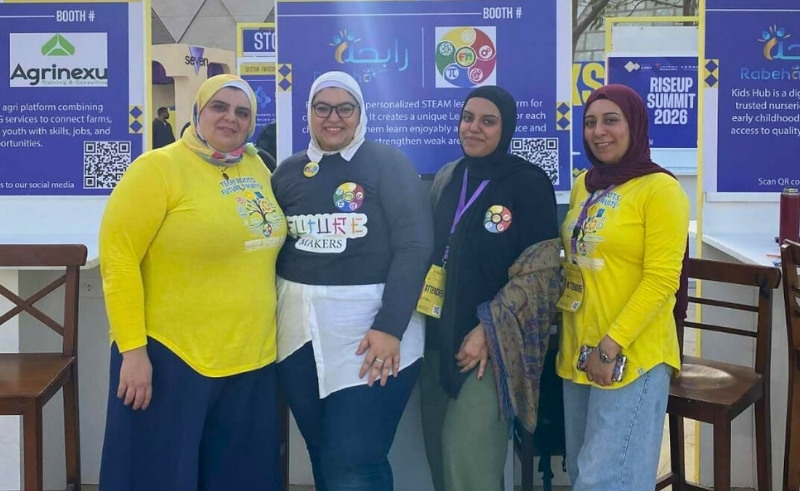
The EdTech venture is on a mission to turn children from technology consumers into creators by blending AI, gamification, and behavioural analysis.
FM STEM is an Egypt-based education technology startup rethinking how children learn science, technology, engineering and mathematics outside the traditional classroom. Originally launched under the name Future Makers, the startup has evolved into a platform-driven venture that combines AI, gamification and personalised learning paths to help students discover their strengths early and engage with technology in a practical, hands-on way.
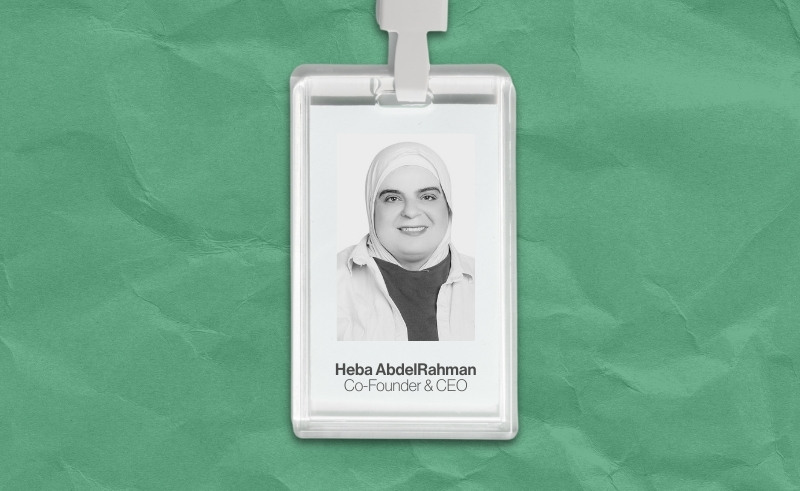
Founded by Abdallah Saeed, Heba Abdelrahman and Mai Malek, FM STEM did not begin as a conventional startup. Its roots trace back to 2011, when Saeed, then an engineering student, visited China and came across structured STEM education systems and technology-integrated classrooms years before the concept had gained visibility in Egypt.
What began as informal training sessions for children within family circles gradually developed into a business idea in 2013, officially taking shape as Future Makers around 2015, and later rebranding as FM STEM as the team shifted toward scalability and platform development.
“At that time, STEM education hadn’t really reached Egypt yet,” Saeed explains. “I saw technologies in 2011 that we only started seeing locally years later.”
A gap in the market for learning beyond the classroom
FM STEM’s founders believe that the core issue in education today is the gap between theoretical learning and practical application. In addition, they believe there is a widespread lack of awareness among parents about skill-based education outside the school system.
Many children, the founders note, spend decades searching for their interests or entering career paths by default rather than through conscious and informed choices. FM STEM aims to shorten that journey by helping students identify their strengths early through applied STEM activities and adaptive learning tools. The team says that education for many parents still equals school only, but children already have skills and interests that need nurturing.
The challenge, according to them, is as much behavioural as it is educational. Convincing families that learning can and should extend beyond textbooks remains the startup’s most persistent obstacle.
A platform built around ‘DNA learning’
At the centre of FM STEM’s model is its proprietary digital platform, developed during the early wave of AI adoption. Rather than replacing school curricula, the platform supports after-school programmes that complement theoretical learning with experimentation, simulations and real-world problem solving.
The founders refer to the personalised model as ‘DNA Learning’, a system that analyses behavioural and educational data to customise learning paths for each child. Parents are given dedicated accounts to provide insights into their child’s habits, academic performance and daily activities, which are then translated into adaptive learning recommendations.
To maintain engagement, the platform incorporates gamification mechanics such as points and interactive challenges. The goal goes beyond teaching STEM subjects and into shifting children’s relationship with technology from passive consumption to active creation.
Another feature includes an AI-driven companion that interacts with students through guided questions and experiments rather than direct answers. This, the founders say, goes toward encouraging curiosity and critical thinking for children. Parents can also interact with this digital companion to better understand their child’s development patterns.
Targeting parents while serving students
FM STEM’s primary paying customer is the parent, while the primary end user is the student. The startup works with learners from Kindergarten through Grade 12, emphasising skill-based progression rather than age-based limitations. Students move between tracks according to ability, not grade level.
Geographically, the company’s early focus has been Egypt and the Arab region, with reported interest from countries including Saudi Arabia, Kuwait and Qatar, as well as inquiries from North America. Expansion, however, is framed less as rapid internationalisation and more as sustainable scaling driven by platform accessibility.
“This was something we started out of love for the education sector,” says Malek. “We want to expand this beyond Cairo and the big cities into the areas of Egypt where these sorts of technologies may not be easily accessible.”
A lean team with growing impact
The company operates with a three-founder leadership core, supported by a small but expanding operational team that includes more than five trainers and two dedicated parent-support staff. Notably, many of the instructors are former students who progressed through the programmes and later returned as coaches, a cycle the founders see as proof of long-term impact.
FM STEM remains largely self-funded, which has required the founders to wear multiple hats and keep operations lean. Despite this, the venture has maintained continuous development of its platform and programming.
Defining success through scale and a shift in mindset
For FM STEM, success is not framed through financial metrics alone. The platform’s awareness and the ability to usher a generational change in how people view education are what they say are their targets. Among the goals outlined by the founders: