Technology is moving quickly, and South Florida is determined not to be left behind.
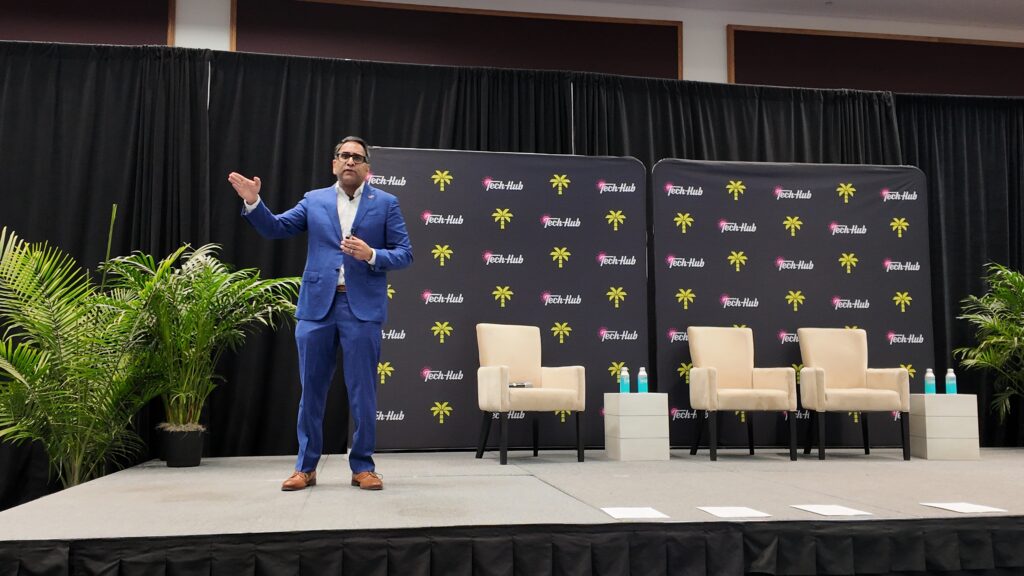
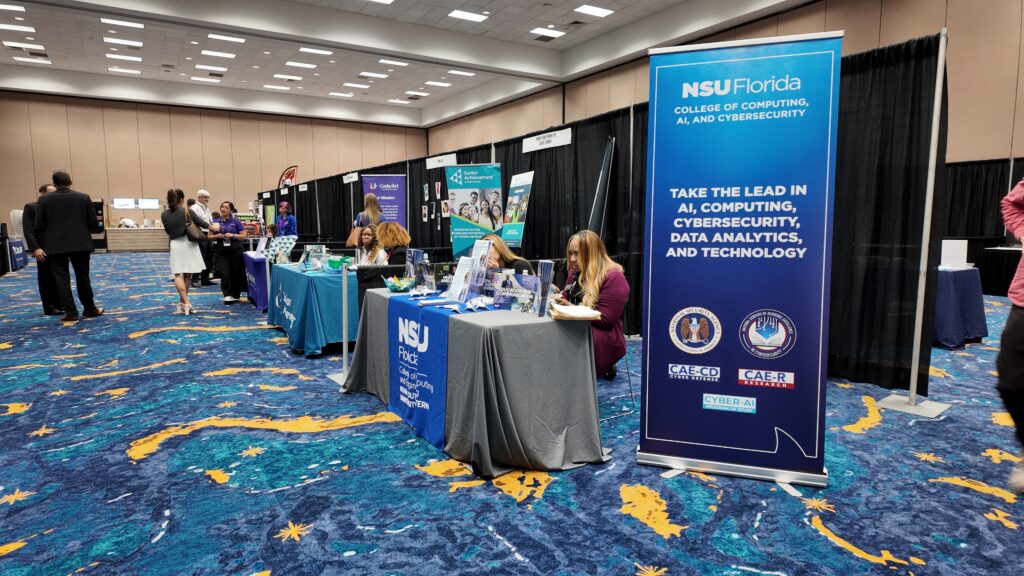
At this year’s Tech Hub Pulse produced by South Florida Tech Hub on Thursday, hundreds of founders, investors and civic leaders gathered at the Broward County Convention Center to hear how the region plans to evolve as a technology hub. During his keynote, Saif Ishoof, founder of Lab22c, took the audience back to what he described as the spark that ignited the current era: former Miami Mayor Francis Suarez’s 2020 tweet, “How can I help?” That four-word message helped draw significant capital to the region. As major firms such as Blackstone and Apollo Global Management established a presence in South Florida, the geography of wealth began to shift. Brickell transformed into what Ishoof described as a financial hub, while Palm Beach emerged as what he called a “control room for capital” among limited partners.
Ishoof said the days of Florida founders constantly traveling to raise capital are fading. The region now has access to investors locally, reducing the need for founders to fly to New York or Silicon Valley to secure funding.
Ishoof then turned to the future, describing what he called the “2026–2030 economic super cycle,” a period when the region will shift from attracting capital to deploying it.
He predicted a surge of investment in space and defense technology, noting that Florida is the only state with three combatant commands and new designations for local spaceports such as Homestead and potentially Kendall Executive Airport. With the current administration encouraging early-stage founders to reshore American supply chains, Ishoof also predicted the region could see three to five large initial public offerings within the next 60 months.
Ishoof concluded by asking the audience whether South Florida would be ready if Nvidia CEO Jensen Huang “pulls up tomorrow.” He said the region must prepare for rapid infrastructure growth, talent recruitment and economic expansion.
Ultimately, he said, the winners in this next phase will be those willing to learn and adapt to emerging technologies.
Envisioning South Florida’s future
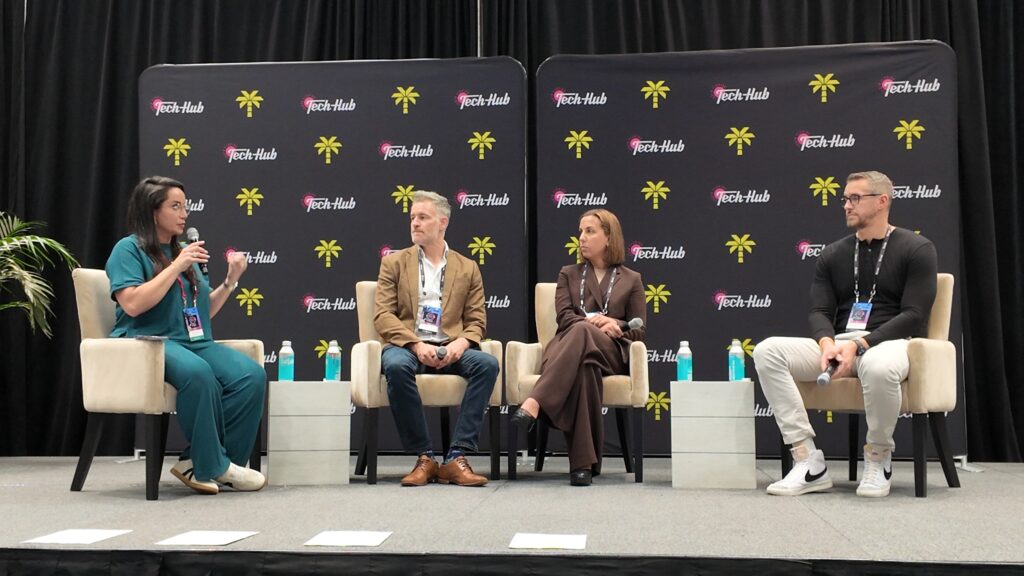
Panels throughout the day explored what a more technologically advanced South Florida could look like. During the “Drones: From Takeoff to Flight Transformation” session, speakers discussed how drones are increasingly capable of making autonomous decisions in real time. Michael Brubaker, vice president at Skydio, described how drones are already being used as first responders. When a 911 call identifies a specific location, drones can automatically launch from docking stations and reach the scene before human responders. “They have full situational awareness on that particular event long before your men and women in blue ever show up on scene,” Brubaker said.
Speakers also said drones are becoming essential safety tools because they can collect large amounts of data before human crews arrive. Using thermal sensors, drones can detect heat anomalies and generate maps showing whether an area is too hot, too cold or within safe operating conditions. Because drones collect large volumes of high-definition video and live streams, Chris Nielsen, CEO of Levatas, said reviewing that data manually is no longer practical.“It doesn’t even make sense for a single human or a team of humans to do all the review manually,” Nielsen said. Instead, companies increasingly rely on artificial intelligence and computer vision systems to identify potential hazards and direct responders to the areas where help is needed most.
Rethinking mobility in South Florida
The conversation later shifted from the sky to the streets during a panel on transportation challenges across the region. Panelists said the area’s current transit systems, many designed decades ago, are struggling to meet growing demand. Brian Gettinger, senior vice president of growth at Glydways, pointed to the financial imbalance within existing transit infrastructure. “Miami spends over $100 million a year operating Metrorail, and they collect $13 million in fares,” Gettinger said.
To address these challenges, panelists highlighted several emerging mobility solutions. One concept, developed by Glydways, involves small four-to-six passenger vehicles operating on narrow guideways separated from traditional traffic. These vehicles, known as Glydcars, could transport up to 10,000 passengers per hour, comparable to heavy rail but at a lower cost, according to the company. The system uses artificial intelligence to coordinate vehicles, manage routes and prevent traffic conflicts across fleets ranging from 10 to 500 cars.
Another approach comes from REGENT, which is developing all-electric “seagliders,” or wing-in-ground-effect vessels. These vehicles operate in what the company calls a “float, foil, fly” sequence: starting in the water, lifting above waves at low speeds and eventually flying just above the ocean’s surface at speeds of up to 180 mph. Because they remain within a wingspan of the water, they are classified as maritime vessels rather than aircraft.
The final concept focused on premium transportation through Blacklane, a global chauffeur service that uses technology to modernize luxury ground transportation. By integrating artificial intelligence into its operations, Blacklane automates processes such as vehicle verification and cleanliness checks to maintain service standards.
Tools for the next phase of growth
The event’s final sessions focused on practical tools needed to support the region’s continued growth. One panel introduced an “AI Playbook” for small and medium-sized employers, developed by CareerSource Broward to help businesses adopt artificial intelligence more effectively.
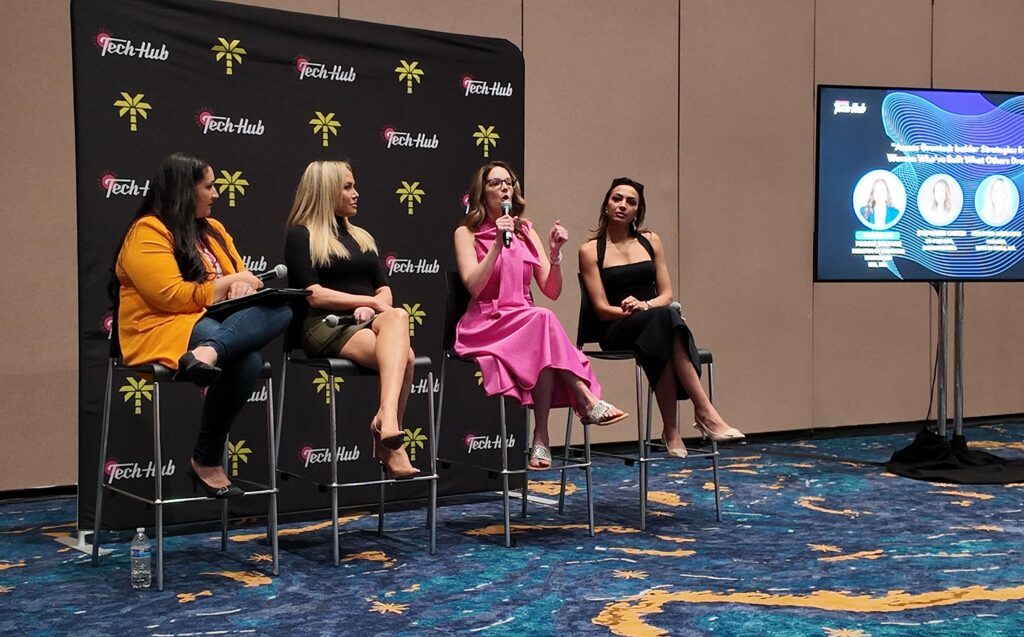
That focus on practical execution carried into a women’s leadership panel, where speakers shared strategies for advancing within the South Florida tech ecosystem. Rather than offering broad motivational advice, panelists encouraged founders to identify specific obstacles and push beyond their comfort zones to reach the next stage of growth.
Reflecting on the event, Imran Siddiqui, CEO of South Florida Tech Hub, said the gathering demonstrated the region’s progress. “Today wasn’t about any one organization or individual. It was about the ecosystem,” he said. “After a two-year hiatus, the turnout and the level of leadership on display made it clear that South Florida is ready to move into its next chapter as a connected and collaborative tech community.”
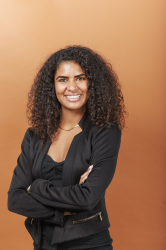
Pictured at the top of this post: Meggie Soliman (DSS Inc.), Heather Monahan (Boss in Heels, LLC.), Stephanie Cartin (Entreprenista), Iman Oubou (Vocable.ai).
READ MORE IN REFRESH MIAMI:
[email protected].
Source link