



This article is part of Fintech Leaders, a newsletter with 90,000+ builders, entrepreneurs, investors, regulators, and students of financial services. I invite you to share and sign up. If you enjoy this conversation, please consider leaving a review on Apple, Spotify, or Youtube.
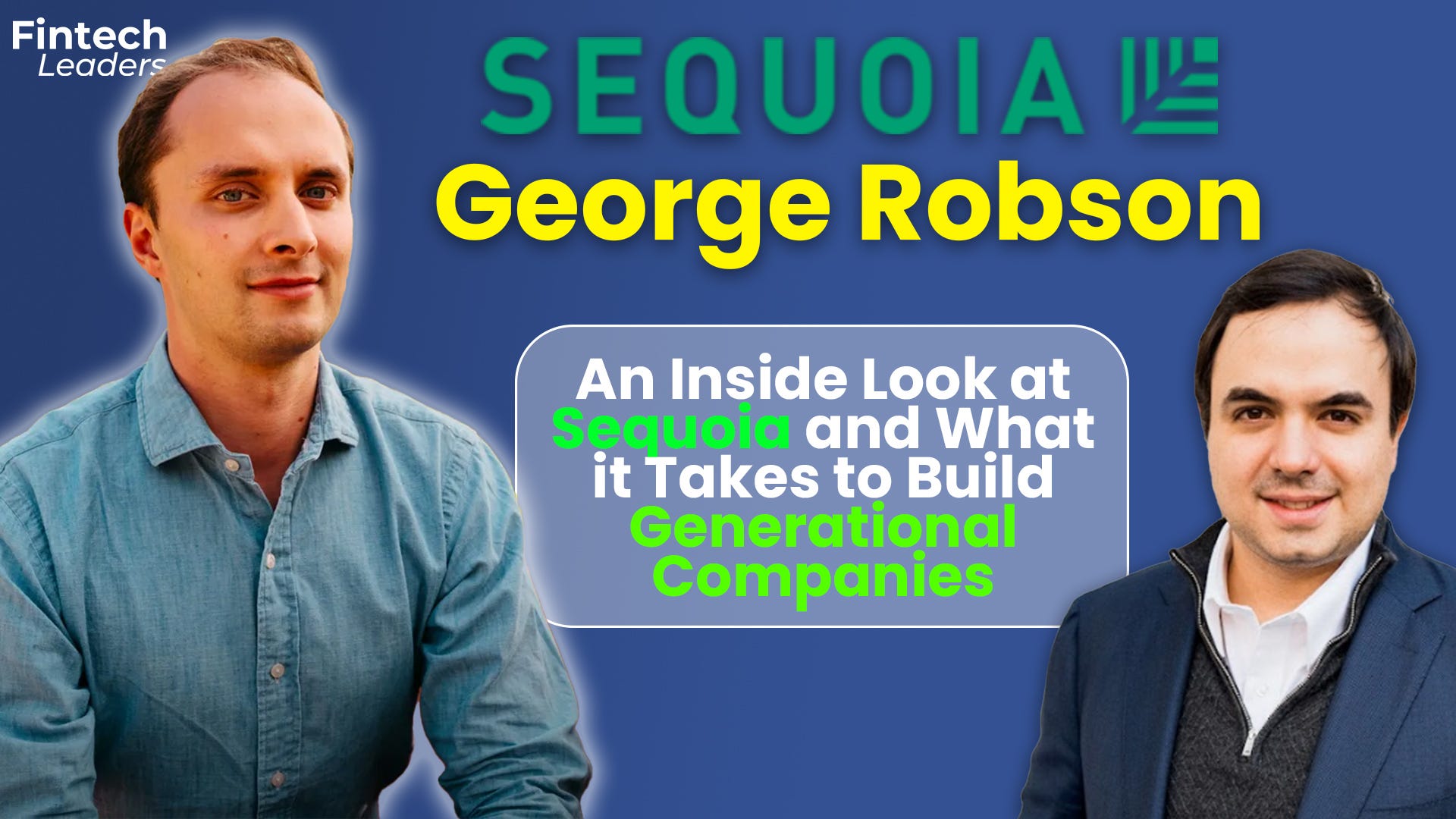
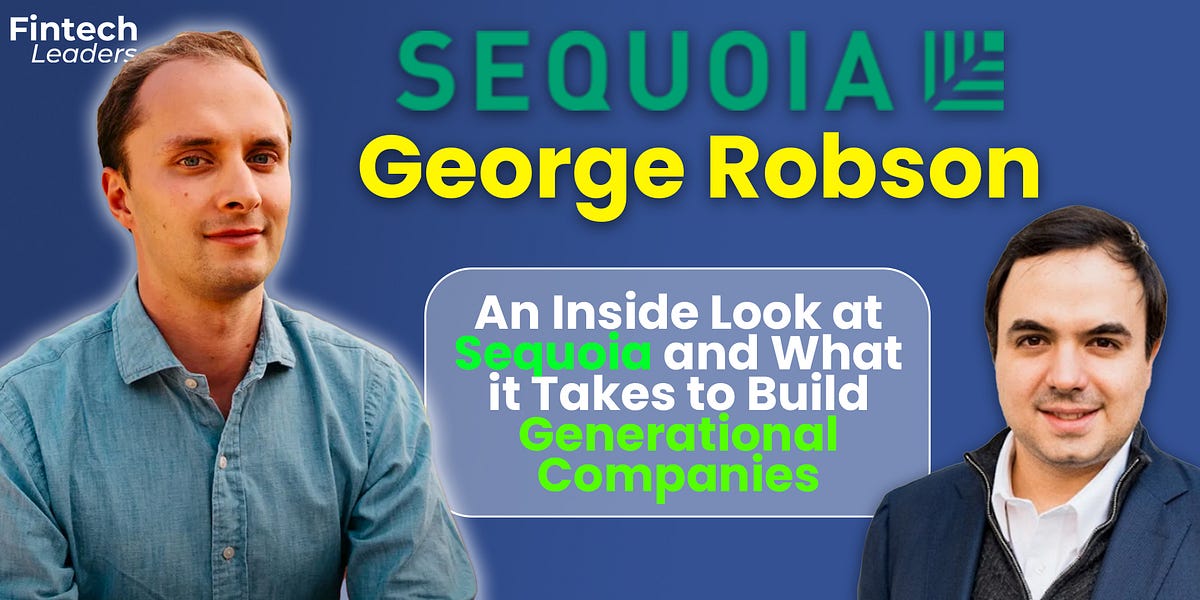
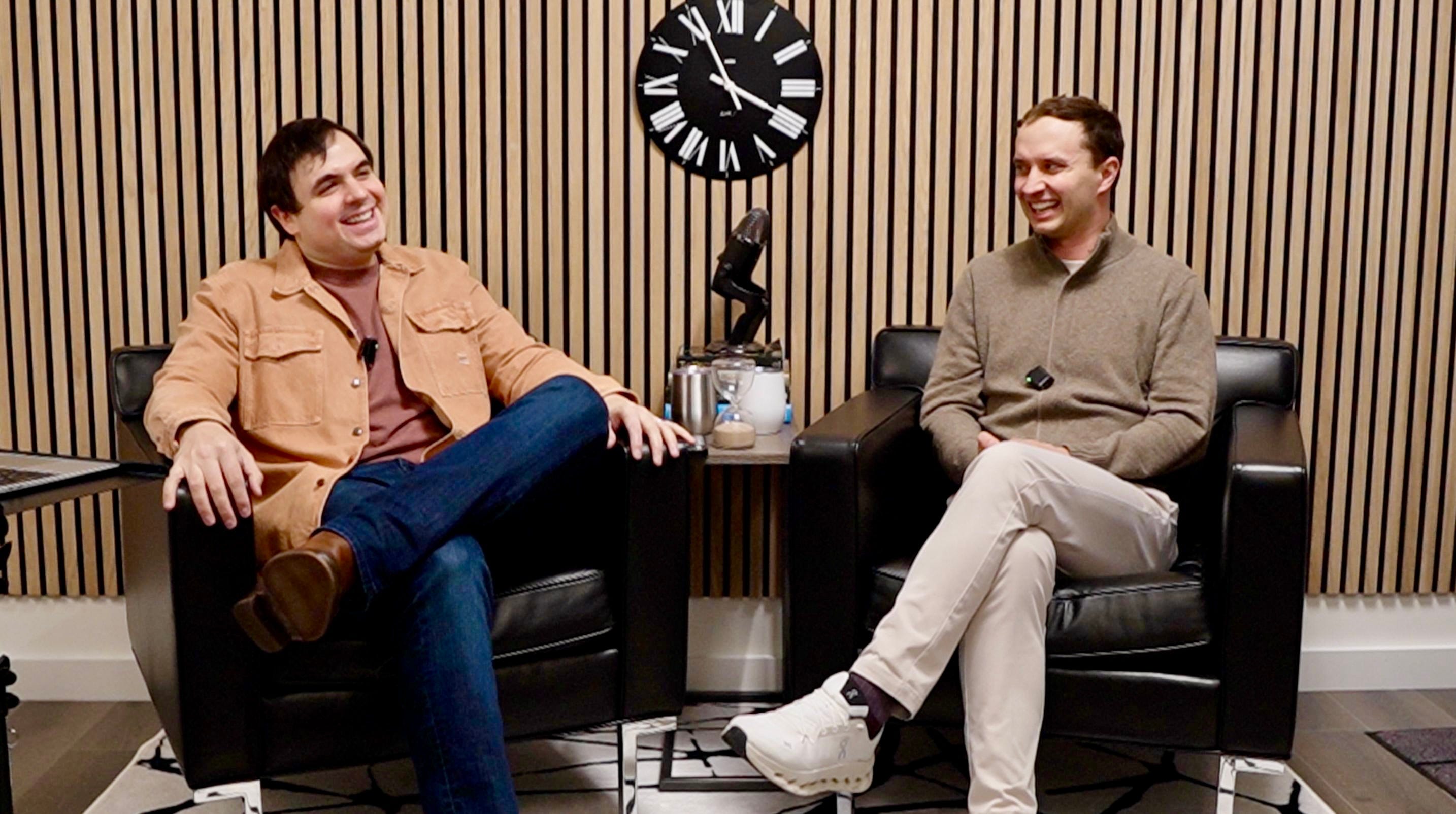
I sat down with George Robson, Partner at Sequoia Capital, one of the most legendary venture firms in the world. Founded in 1972 by Don Valentine, Sequoia has backed some of the most successful tech and fintech companies in history including Nvidia, Apple, Google, Nubank, and Stripe. Sequoia-backed companies make up over 25% of the Nasdaq’s market cap, and add up to $13+ trillion in market cap.
George is one of 19 investing partners at Sequoia and was previously a product manager at Revolut. We discuss how Revolut built a multi-product machine by treating every team like a startup, how Sequoia uses storytelling to calibrate its investors on what generational founders look like, and why the next wave of fintech winners will be full stack companies that internalize the technology instead of selling it to incumbents.
Sequoia makes only two to three investments per partner per year. That constraint is a forcing function to build meaningful conviction behind every commitment. Every partner is trained to ask themselves one question before committing: is this one of the 10 to 15 decisions that will define your career? With that kind of bar, the evaluation process has a high bar.
One of the less visible but more powerful practices inside the firm is that every partner is pushed to define what a “George company” or a “Jess company” or a “Doug company” actually is. Most investment firms never force their investors to articulate their own archetype, but Sequoia does and they push each partner to update that definition over time. When George first joined, his archetype was unconsciously the Revolut mold. He was drawn to founders who moved with the same intensity and aggressiveness as Nick Storonsky, but the problem was that he tried to impose that template on every founder he met. He quickly recognized there are many paths to building something extraordinary and just like there is a Nick Storonsky, there is also a Brian Chesky (AirBnb) and a Patrick Collison (Stripe). A CEO’s job is not to read a book about Elon Musk and try to copy that culture. It is to find the best team, put them on the field, and build a culture that is authentically theirs.
When it comes to evaluating a company, Sequoia has an internal framework built around two words: unique and compelling. It sounds deceptively simple, but George breaks it apart in a way that reveals a full business model assessment embedded in two concepts.
Unique implies differentiation, which implies gross margin. If you are truly different from everyone else in the market, you can charge a premium.
Compelling implies better, which implies revenue growth. If you are meaningfully better than the alternatives, customers will come to you and keep coming.
So the question Sequoia is really asking with those two words is: can this company charge premium prices and grow fast at the same time? That is a rare combination that separates a good company from a generational one.
But the evaluation starts before any framework gets applied. Storytelling is one of the core competencies Sequoia looks for in early stage teams. Founders should know that storytelling is how you sell to your first investors, recruit your first hires, and win your first customers. When someone sends a cold email or walks into a first meeting, Sequoia is watching for whether the founder gets it.
Do they understand how competitive the world is?
Can they express very succinctly why they exist, who they are, why they have a right to win, what is differentiated about their solution, and what is driving the timing of the opportunity?
It is not about being polished. It is about clarity of thought. George has made investments from cold emails sent to him. What mattered was not the introduction, but whether the founder carved out their own space. Not just better, but different.
Sequoia also cares deeply about market dynamics, but not in the way most people think. They are not looking at total addressable market as a static number. They are asking whether the market is on the right side of history. Are there trends that will support a small number of very large companies in this market? Is there a clear reason why this opportunity exists right now? For Aspora, one of George’s portfolio companies, it was a combination of regulatory changes opening up remittance corridors, the possibility for stablecoins to make moving money dramatically cheaper, and a customer experience that was simply undeniable compared to the status quo. The market was not large yet, but the direction of travel was clear and it pointed in one direction.
“Praise in public, critique in private”
The first thing Sequoia does with a new portfolio company is build a 90 day plan. It is a two way contract. On the founder’s side, it might include getting clarity on pricing, signing a certain number of design customers, or making a few critical hires. On Sequoia’s side, it might include activating the firm’s talent team to help recruit specific roles, getting the customer partnerships team to make introductions to enterprises, or coordinating the fundraising announcement. The plan forces both sides to stack rank priorities and agree on what actually matters in the first three months. It helps reorient the engine because when you are building a company there are always dozens of competing priorities, and the real question is always which ones come first. Some companies find the 90 day plan so useful that they keep refreshing it for years. It becomes a rolling operating rhythm that holds both the founders and Sequoia accountable, which is a very different dynamic from the typical investor relationship where a board member shows up four times a year and asks how things are going.
The board itself is another area where George has strong views. Sequoia has an internal cultural value that I really love: praise in public, critique in private. George believes that principle extends directly to how board meetings should work. A perfect board meeting, in his view, has a tension between two things. It has to cover the backward looking governance, things like budget approvals and compliance decisions. But more importantly, it should be forward looking, focused on the big strategic bets that will put the company on a path to market dominance. The problem is that most board meetings, especially for first time founders, fail on a very basic level. New information gets introduced at the meeting itself, and suddenly the people who are supposed to help make critical decisions are processing data instead of debating the merits. A basic board management practice is to make sure every board member has the same set of information before they walk into the room. That means doing the work ahead of time. Call each board member individually. Walk them through the potentially controversial topics. Reduce the number of surprises to zero. When everyone arrives already informed, the conversation becomes about strategy and trade offs, not about catching people up.
George also makes the point that the relationship between investor and founder has to be built on mutual coachability, not friendship. Being friends is a nice to have, but what matters is respect, truthfulness, and the ability to accept conflict constructively. Sequoia wants to work with founders who are open to learning from the firm’s pattern library of generational companies, the same stories that get shared during Friday story time sessions inside the partnership. The ideal dynamic is one where the investor can be direct without being destructive, and the founder can push back without shutting down.
Venture capital is an apprenticeship business, and Sequoia takes that very seriously. The challenge is statistical: generational founders are extraordinarily rare, and the risk is that a young partner sits across the table from one and does not realize it because they have never seen a generational founder before. They are uncalibrated. So how do you fix that when the very thing you need to learn to recognize almost never appears?
For Sequoia, the answer is storytelling. The firm runs a practice called Friday story time, where partners take turns leading deep sessions on the arcs of specific companies and founders. These come in two flavors.
The first is the business arc: how a company hit a crucible moment, how they rebounded, what decisions around a new market, a second product, or a key hire reshaped the trajectory.
The second is the founder arc. George describes partners sharing stories of founders who were exceptional through the Series A but drowning between the A and the B. They felt overwhelmed. But then something changed. The people around them rose up, or they found a new gear, or they made one decision that reoriented everything. The lesson is not that the founder was limited. It is that the setup was hard, and recognizing that pattern helps Sequoia’s investors see the same potential in founders they meet today.
These stories are recorded and shared with the entire partnership, building an institutional library of what greatness looks like across hundreds of contexts.
The firm also reinforces calibration through precision in communication. They have specs for evaluating companies, but these are not arbitrary yardsticks like “market size greater than X.” They are properties of good markets and emerging characteristics of interesting businesses. The vocabulary, combined with the storytelling tradition, is how the partnership moves quickly and with conviction when the right opportunity appears.
George Robson was an early product manager at Revolut, and he describes an organizational design unlike anything you will find at a traditional bank or even most tech companies. First of all, speed and pain are table stakes as part of the Revolut experience. Everyone there knows they have to move very fast and that it won’t be a comfortable gig. When it comes to organizational design, Every team lead at Revolut operates like the CEO of a seed stage company. They agree on a KPI with Revolut’s founder Nick Storonsky, receive a cross functional team with engineers, data scientists, designers, marketing, and partnerships all embedded in the unit, and then they have a finite runway to hit that target. If they hit the KPI, their part of the company’s universe expands. If they don’t, it contracts. There is no ambiguity about the social contract.
Nik Storonsky also rejected the traditional product manager title entirely. In his mind, calling someone a PM was an excuse to care about product metrics but ignore the financial ones. If you own the P&L, you are not a product manager. You are a general manager. That distinction changed everything about how Revolut allocated responsibility and accountability.
This structure also explains something all great companies get right: becoming multi product. George makes the point that being multi-product and multi-line revenue is not a strategy you bolt on later. It is a culture you build from the beginning. Companies that wait too long to diversify their product set end up calcifying around their cash cow, and it becomes almost impossible to build anything meaningful next to it. Storonsky understood this early and was aggressive about launching new business lines early on, from consumer subscriptions to business banking to payments and acquiring. That is a rare instinct and many founders fall into the trap of thinking they will get to diversification eventually. Revolut treated it as a condition of survival from day one, and that is a major reason the company is now valued at over $70 billion with truly diversified revenue streams.
George’s thesis on where fintech is heading comes down to a single idea: the companies that will win are not the ones selling technology to incumbents. They are the ones replacing the incumbents. The argument starts with a pattern George has noticed across his portfolio. He likes businesses going after very big markets that are characterized for being markets where high talent density is missing, industries where the existing players are not particularly technical and the operations still run on emails and PDFs (or worse). When a founder comes from outside that industry with a high intensity culture and a real technology edge, the mismatch creates what George calls cultural alpha. That was the Revolut playbook. Nick Storonsky was not a traditional retail banker. He was a total outsider, a trader who attacked the market with a speed and intensity the incumbents could not match. George sees the same dynamic playing out now in insurance, commodities, and wealth management.
The shift that makes this moment different from five years ago is AI. AI has expanded the number of venture backable markets faster than the domain expertise of founders can keep up. Building technology for a new industry used to require years of learning the regulatory landscape, the customer workflows, and the competitive dynamics. AI compresses that timeline dramatically. But it also creates a gap: there are many talented builders coming out of great companies who know how to apply technology to hard problems but are brand new to the industries where the biggest opportunities exist. George sees part of Sequoia’s role as bridging that gap, shining a light on specific problems in specific industries and connecting outsider talent to insider markets. In some cases, Sequoia will spend three to six months working with founders before an investment, converging on a thesis together.
The laws of gravity inside financial services are being rewritten. Every company has constraints: regulatory requirements, balance sheet obligations, the size of the compliance team, the speed of product releases relative to the engineering base. Many of those constraints are now being loosened by AI. Starting from zero with no legacy systems is meaningfully easier than trying to retrofit a hundred year old institution, and founders should be excited about taking on the companies worth hundreds of billions of dollars, because it is now more realistic than ever to go out and compete with them.
“Sapiens” by Yuval Noah Harari, which George describes as deeply humbling. He says it puts a lot of life decisions in context and is worth reading.
Business Breakdowns podcast, in the venture world you can get sucked into only learning about companies built in 24 months. Many of the best companies in the world were built over generations and decades, and George believes it is important to be humbled by those stories as an entrepreneur.
Miguel Armaza: George, let’s get started with your background. You were an investment banker briefly at Morgan Stanley, then you went to Revolut as a product manager, and you’ve been investing at Sequoia for over five years. How did you land at Revolut, and was building in fintech always part of the grand plan?
George Robson: Yeah, I think everybody finds their own route to different companies. I’m obviously British. I grew up in and around London and I studied at the London School of Economics. The most important project that brought me to Revolut was an accelerator I set up with some friends in my final year. I was on a panel talking about it in our Student Union, and one of the people sat next to me was a guy called Alan Chang, who was like the first or second employee of Revolut. It was still a pre-seed company. It was the first time I’d heard of the company and the first time I really thought about the reality of building in financial services. Not many people wake up thinking they want to work in retail banking, right? But what stuck with me was this notion that I wanted to work on a project where I had a lot of agency. I wanted to be part of a small, exceptional team trying to take on some behemoth. I joined about a year later after my brief stint at Morgan Stanley, and I remember going to meet Nick, the founder and CEO. Nick basically put it to me that coming here is like going to the gym: if it doesn’t hurt, you’re not doing it right. I remember thinking, who would say that in an interview? And realizing I’d found my people. In financial services, you basically have two variables you get to control: in what order you build stuff, and how quickly, which is basically cultural. Nick was driving that to the max.
Miguel Armaza: Let’s zoom in on the building of Revolut. Today it’s a $70 plus billion company. The expectations are that this could easily be a multi hundred billion dollar company. Take us behind the curtain. How is it structured? What’s special about it?
George Robson: I’d call out two pieces. One is that at Revolut, product is a horizontal layer and all these different functions report into it. I ended up building the consumer subscription business. In a traditional company, you’d be a product manager, but Nick had this dislike of that notion. It was an excuse, in his mind, for people saying “I care about the product metrics but I don’t care about the financial metrics.” We are a financial company, so you need a more holistic view. If you’re a PM who has P&L ownership, you’re not a PM really, you’re like a GM for a business unit. So you’d staff a team with the full set of functions: full stack engineering, design, data analysts, a data scientist, product marketing, business development and partnerships. The social contract was you could agree a KPI every six months, but you had all the resourcing you needed to be self-sufficient. If you think about that problem statement, it’s pretty similar to a seed stage company. You raise some money, recruit a cross-functional team, and if you run out of runway, you don’t always get more time. Nick had a similar ethos. Hit your KPI, your part of the universe may expand. If you don’t, that may be a problem. The second piece is that there aren’t many fintechs at $10 billion plus scale that are truly multi-line revenue. Being multi-product and multi-line revenue is actually a culture. Many companies leave that too late. They calcify around their cash cow and it’s very hard to add things next to it. Nick was a very early believer in that, and was very aggressive in making sure it wasn’t going to happen.
Miguel Armaza: When you’re looking at a new company or advising one as a board member, do you find yourself biasing towards a Revolut type of structure?
George Robson: That’s a very important question, and it gets to a deeper question of what is a “George company,” which is something that internally at Sequoia we always push each other to have a definition of. When I joined Sequoia, unconsciously, the bias was the Revolut mold. It was people that moved with that intensity and aggressiveness, who put product velocity at the core. I tried to impose that archetype on lots of different types of founders. There were two mistakes. One, there are many paths to Nirvana. Not everybody needs to be a Nick. There’s a Brian Chesky, there’s a Patrick Collison. Different archetypes who build culture in different ways. And two, it meant I was probably negatively biased against people who didn’t have that. But your job as a CEO is not to see Elon Musk speak on stage and emulate that. Your job is to find the best team, put them on the field, and build a culture that is authentically yours. I misunderstood that for a period of time.
Miguel Armaza: What have you learned at Sequoia, or where have you changed your mind in the last five plus years?
George Robson: I think Sequoia is very good at making things explicit. We recognize that humans are not very good with ambiguity. It shows up in lots of bits of our culture. We’re very specific around how we communicate about entrepreneurs, around decision-making for investments. We have effectively specs that we evaluate companies against, and those specs are not arbitrary yardsticks like “market size is greater than X.” They’re more like properties of good markets, or emerging properties of interesting businesses. But the more resonant thing is that companies have so many lives. You’re an entrepreneur going out with little resources, no products, no customers, potentially no team, and in every case, that is a heroic journey. You’re doing it because you see a version of the world where the future is here but it’s not evenly distributed. The best entrepreneurs ride a contrarian belief that is ultimately right, and they ride it to the market timing. There was a level of persistence and heroic effort that I had underappreciated.
[Youtube]
Miguel Armaza: How does investing at Sequoia work? Walk us through the Espora investment as an example.
George Robson: Per partner, per year, we probably make two or three investments, which is a relatively small number. The push is: is this one of the 10 to 15 decisions you want to make that will define your career? Espora was introduced to us by one of our friends, David Dioto, and also by Hummingbird, who’d invested in their seed round. What stood out about Parth as an entrepreneur was his story. He grew up in Abu Dhabi, was torn between playing cricket for Abu Dhabi, being a child actor, and going to Stanford to study physics. Made it to Stanford and then decided to drop out after six months to found a company. That level of agency is very important. Six to twelve months after founding the business, his co-founder decided the company had no prospects, flew back from India to the US, and sent an email to all their investors saying they were going to return capital and shut the company down. Parth was like, what is happening? That is still the company that has now raised a great Series B. Seeing that grit and perseverance, combined with a very interesting technical unlock of using stablecoins for remittance and attacking different diasporas around the world, that was what came together. But it starts with the entrepreneur.
Miguel Armaza: How does information sharing work at Sequoia? It’s an apprenticeship business. How do you pass down knowledge across the partnership?
George Robson: If you think about our business, you hope to partner with a generational company. But meeting a generational founder at any point is hard because of how rare that is. The risk is you do and you don’t realize it, because you’re uncalibrated. So how do you get up the curve? The answer is storytelling. My partners spend a lot of time and energy telling two flavors of stories. One is on the business itself: some companies have great starts, then there’s a crucible moment. If it’s bad, how did they rebound? What were the critical decisions around entering a new market, launching a second product, making a key hire? But there’s also the founder arc. If you’re going to back a company that will grow exponentially, you need to believe the entrepreneur will grow at least as quickly. Some founders were exceptional to the Series A, but between A and B they were drowning. It was so difficult. But how did we fix that? How did the people around them rise up? These stories are told routinely. We record them and share them with future partners. It’s effectively Friday story time. It anchors the culture.
Miguel Armaza: Let’s talk about picking. You get bombarded with really good deal flow. How do you sift through it? What makes a team stand out?
George Robson: One of the core competencies of early stage teams is storytelling. It shows up in how you sell to your first investors, first hires, and first customers. We have this notion internally that you need to be not just better, but different. It starts from the first interaction. It’s great if you can get a warm introduction to Sequoia, but it’s not important. Our emails are on our website. I’ve made investments from cold emails. When people send you a note, it’s about getting a sense of: do they get it? Do they understand how competitive this world is? Can they express very succinctly why they exist, who they are, why they have a right to win, what is differentiated about their solution? Then what we combine that with is our appraisal: do they have a unique and compelling insight? Unique, implying different, implying gross margin. Compelling, implying better, implying revenue growth. And are they operating in a market that has positive dynamics? For us, that’s not about total TAM today. It’s very much about: is this market on the right side of history?
Miguel Armaza: What processes work best for you when it comes to board management?
George Robson: We have an internal cultural value at Sequoia, which is praise in public, critique in private. I think it extends to the board. The board, if run perfectly, should focus on governance aspects but more importantly on big strategic bets. It should have that tension of backward-looking governance but certainly forward-looking, positive path to market dominance. The most important piece is that everybody has the same set of information when they go into those conversations. A lot of the stuff that is most impactful, particularly for first-time founders who are not used to teeing up big decisions to people with different amounts of information, is making sure they are level-setting everybody in the right way, so that when you get to the board meeting, everyone who has to help contribute to a decision isn’t receiving new information. They are discussing the merits of the information they already have. That’s the biggest life hack.
Miguel Armaza: Beyond investing, you also do some incubating. Share about that angle.
George Robson: Entrepreneurs own getting the company to product-market fit. But there are certain opportunities we become aware of where we can build a pretty opinionated view on the problem being exposed in a particular industry. We may not have the answers on the solution. So our job is to shine a light on that, to go out and maybe find or help activate entrepreneurs who may not be aware of that problem. In today’s world, that’s become more common, because AI has increased the number of venture-backable markets faster than the domain expertise of founders. You have many people coming out of great companies who are deep functional experts, who know lots about technology, but they’re potentially very new to the domain. What we’ll often do is work with those entrepreneurs for three to six months. I made an investment last year where we wrote a memo, the entrepreneurs had a different memo on a different problem, and we spent probably six months arguing about the merits of each other’s memos, converging on something that looked like a business in the same zip code as both ideas.
Miguel Armaza: Where are you spending your time when it comes to the next five to ten years of fintech?
George Robson: I tend to like businesses going after very big markets that are naturally quite low talent density, and often entrepreneurs that come from outside that industry who have unnatural expectations for the intensity they’re going to attack that market with. The edge is cultural alpha. Think about the investments we’ve announced recently: Anterior, selling into health insurance plans doing prior auth; Coverage, building an insurance business taking on companies like Marsh; Nevis, building in wealth management. They’re all different businesses, but the unifying force is the team is high talent density going after markets that are pretty low talent density. So what does that mean for fintech? There are plenty of markets where selling infrastructure into incumbents should work, but the technology needs to be great and incumbents need to be good enough at using it. Typically, that’s the piece that falls down for cultural reasons, risk reasons. When that happens, sometimes you should take that technology and vertically integrate. Instead of selling compliance automation to a bank hoping their team gets smaller, you should just build a bank with less employees. Insurance is bigger than banking, payments, and credit combined, but it’s pretty low talent density. Why not build a full-stack insurer? I think we’re starting to see a pretty big shift toward people taking a higher pain threshold route, but being able to do it in less time, often with less capital.
Miguel Armaza: Does that unlock happen thanks to AI tooling of the last couple of years?
George Robson: I think it does, or it should, because there are lots of laws of gravity inside financial services companies. Some are financial because you may be carrying a balance sheet. Some are regulatory. But a lot of it is about different levels of productivity that ladder up to an output of how big is your customer support team, your compliance team, how quickly can you release products versus the size of your engineering base. Many of those laws of gravity are being rewritten. Doing that from a clean room, starting with no technical debt, no cultural debt, is meaningfully easier. But you need to balance this tension of speed and innovation, which always exists in regulated industries. If you can navigate that well, the prizes are ginormous, because now you have logos of companies on stock markets worth hundreds of billions of dollars being meaningfully impacted by pretty accidentally existential questions of what will AI do to my business. Now is the first time where you should be very excited about taking on those logos, because it’s now realistic you can actually go out and achieve them.
Want more podcast episodes? Join me and follow Fintech Leaders today on Apple, Spotify, Youtube or your favorite podcast app for weekly conversations with today’s global leaders that will dominate the 21st century in fintech, business, and beyond.
Don’t forget to subscribe so you don’t miss big conversations and insights with the giants of Fintech.
Michael Calvey: The Investor Behind Multiple $20+ Billion Companies
Ryan Graciano, Credit Karma Co-Founder – Scaling to 140 Million Users, Turning Crisis into Opportunity, Leading Product Innovation From CTO to CPO
Jack Zhang, CEO of Airwallex – A $5.5 Billion Powerhouse Solving Global Payments for Companies
Nigel Morris, QED and Capital One Co-Founder – Transforming Financial Services for a Billion People
Why Zerohash Rejected a $2Bn Offer to Build the Future of Financial Infrastructure – Edward Woodford, CEO
Art Levy, The Brex Growth Strategy: From Startup to Multibillion Fintech
David Haber, a16z General Partner – Building Fintech Giants, Leading With Software, What Makes a Truly Great VC
Source link