


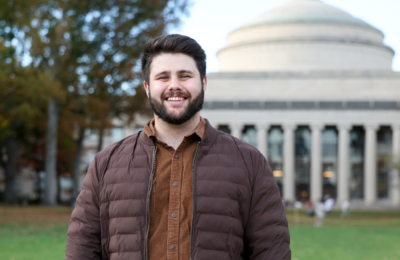

A startup is often rooted in something deeply personal. That was the case for Jiaxin Zhang, an entrepreneur and 2025 MBA graduate of Columbia Business School. Growing up as an immigrant, Zhang endured ridicule for her struggles with English. She wasn’t alone. Her co-founder Jonathan Shi, a PhD AI researcher, suffered from a disorder that hindered him from speaking as a child. Even a third co-founder, Weiji Huang, struggled with pronunciation before becoming a Meta engineer.
These experiences cemented a common purpose among the team: making speech practice “more accessible, consistent, and enjoyable for children who might otherwise fall through the cracks.” Together, they launched Sara Technology, which Zhang describes as an “AI-powered speech articulation platform” designed to help children “practice speaking clearly and confidently.”
CONSTANT REFINEMENT TO ACHIEVE MEASURABLE PROGRESS
Jiaxin Zhang, Columbia Business School
“Speech therapy can be repetitive and turning those drills into something that feels engaging while keeping clinical accuracy has taken a lot of iteration and care,” Zhang tells Poets&Quants. “To find that balance, we’ve worked closely with speech-language pathologists and product designers to create short, interactive sessions with positive feedback and progress rewards that keep children motivated to practice every day.”
The marketplace has been equally enthusiastic about Sara Technology. Supported by over $100,000 in grant money, the venture reached the final 8 in the 2025 Hult Prize Competition. For context, the Hult Prize has been described as the “Nobel Prize for students” with over 15,000 ventures competing last year alone. At the same time, Sara Technology has signed 37 pilots, including one with one of New York’s largest providers, the Buffalo Hearing & Speech Center. Long-term, Zhang plans to expand the concept beyond the English language and United States. Looking back at her startup’s progress, Zhang is quick to credit Columbia Business School for laying the groundwork for its success.
“Columbia Business School has been a cornerstone of Sara’s growth. Through the Lang Center and the Summer Startup Track, we received non-dilutive grants and hands-on guidance that helped us test our business model and fund early pilots. The Columbia Build Lab connected us with talented and motivated student engineers who helped accelerate product development at no cost. Beyond that, the Columbia network has opened doors to advisors, therapists, and alumni founders through ongoing events and introductions that continue to shape our journey. It’s been both a launchpad and a community that keeps us accountable and inspired.”
TOP STARTUPS AT THE TOP BUSINESS SCHOOLS
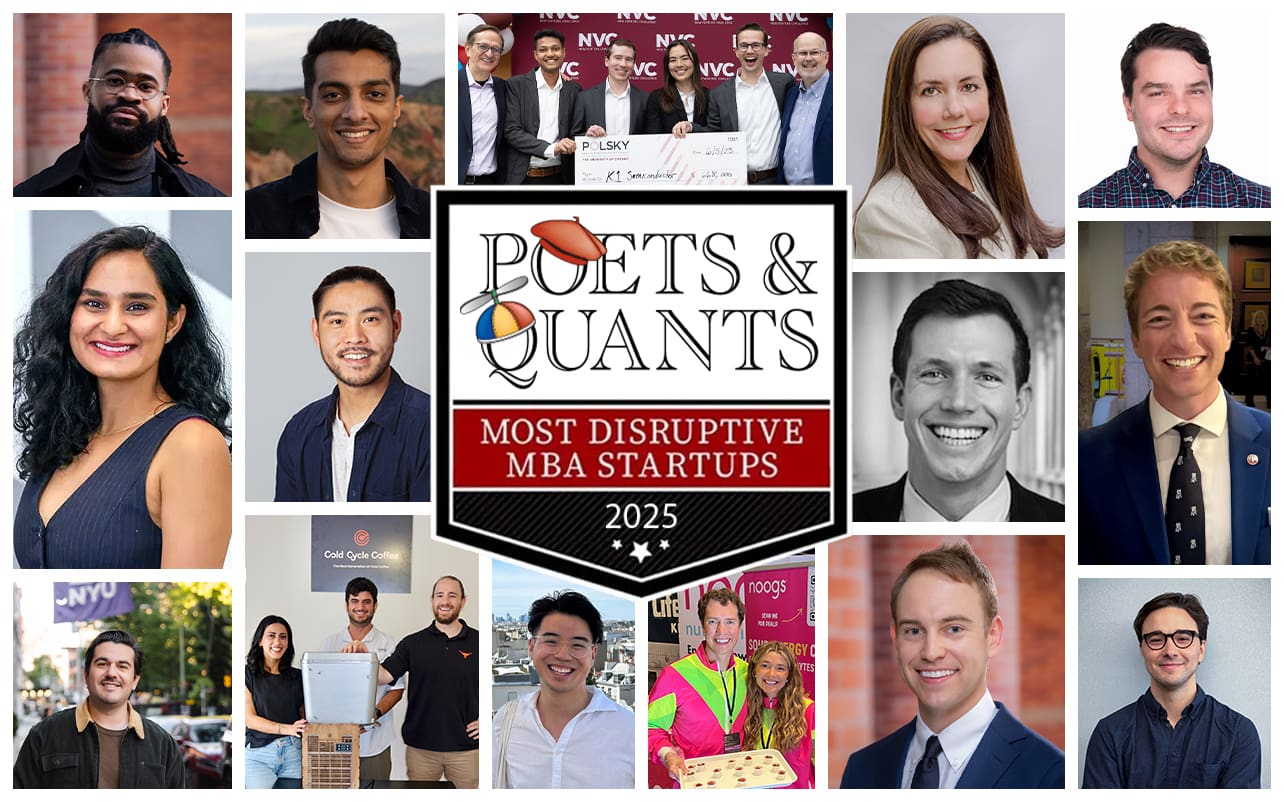
Sara Technology is among the 40 student startups honored in P&Q’s 7th annual “Most Disruptive MBA Startups” feature. This year, P&Q invited 46 business schools to submit nominations for ventures “with the highest potential for lasting beyond business school.” They may include startups that have generated heavy investment, infused cutting-edge technology, or claimed top prizes in national competitions. In fact, there are 11 ventures that have raked in a million dollars or more between venture capital, winnings, and grants in the 2025 class.
Overall, there are 32 MBA programs participating in the 2025 iteration of “The Most Disruptive MBA Startups,” including Harvard Business School, the Wharton School, INSEAD, University of Chicago’s Booth School, and MIT’s Sloan School of Management. To qualify, a school nomination must feature at least one founding member from their MBA Class of 2025 or 2026.
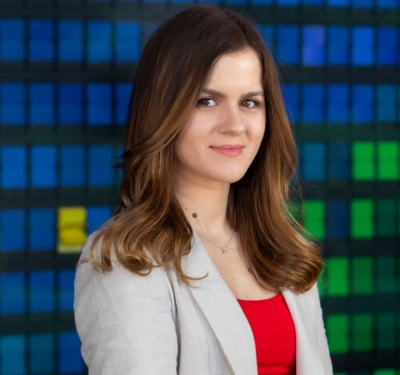
Mara Steiu, Stanford GSB
Like Sara Technology, Journify Learning has established itself as an AI solution in the education space. Launched out of the Stanford Graduate School of Business by Mara Steiu, Journify Learning addresses both the growth of special needs students and the increasing demands of compliance with legal mandates. According to Steiu, special needs teachers are often devoting half of their time to completing paperwork. In other words, they are being pulled away from students when they are needed the most.
An AI assistant, Journify Learning has already attracted nearly $1.2-million in investment. Since its founding a year ago, Journify Learning has been adopted by over 35 school districts across 10 states. It also earned 1st place in the K-12 track for the Tools Competition, the world’s largest ed-tech competition. In fact, Journify Learning has made such an impression that it was represented alongside firms like OpenAI and Microsoft in the White House AI Education Workforce Group last September.
“Journify maximizes the efficiency and effectiveness of special education teams, Steiu explains. “It saves educators’ time by automating progress tracking, compliance paperwork, and data integration among all the support providers, while driving student outcomes through personalized instruction and evidence-based practices.”
INNOVATIVE STARTUPS INCREASINGLY DRIVEN BY AI
Looking for a theme among this year’s MBA Disruptive Startups? Think AI-powered or Analytics-driven. And you’ll find these solutions seeping into every industry. For example, Timothy Daniel, a UC Berkeley Haas School MBA and Y-Combinator alum, has garnered $1.4-million for Rimba, a compliance tool that automates reporting and auditing processes for industrial firms. At MIT’s Sloan School, three MBA graduates founded Otomo Health, which has already amassed $2-million from investors. CEO Mike Sanchez describes the solution as an “AI-native control tower” that automates “outreach, reminders, follow-ups, and scheduling” for specialty clinics and health systems.” The venture originated from the founders teaming up in a pharmaceutical case competition three years ago as first-years. However, the solution gained urgency as Sanchez watched his father’s struggles during a “difficult diagnostic journey.”
“Seeing firsthand how hard it was for patients and families to navigate the healthcare system pushed us toward the problem we’re now solving at Otomo: closing the gap between clinical capacity and patient needs through better engagement,” Sanchez continues.
Jon Kokot, Wharton School
Moving to the public sector, Wharton alum Jon Kokot has turned his experience on Capitol Hill into a venture. His parent company, Civic, has developed Revere, an AI platform that he says “automatically batches and tags constituent messages, assists with legislative research and office operations, and surfaces real-time sentiment and trend insights.” Not only has his venture raised $1-million from investors, but is nearing approval for use in the U.S. House of Representatives.
“I watched talented staffers spend most of their day triaging thousands of emails in systems that felt 30 years out of date,” Kokot tells P&Q. “At the same time, I saw how a single missed constituent case or a slow response during a crisis could permanently damage trust in an elected official. Civic is my attempt to fuse that experience with modern AI.”
FROM SHIPPING TO MANUFACTURING
Turning to the shipping sector, Salik Tehami and Chansam Kim Johnson, 2025 graduates of the Cornell Tech MBA, are among the founders of SAIL. Through AI, SAIL users can determine their import duties and compliance paperwork in minutes – a service that Kim Johnson says will help shippers recoup millions in savings.
“We met dozens of trade compliance directors across energy, chemicals, and industrial manufacturing who all said the same thing: “We’re guessing million-dollar decisions.” We were shocked to learn that even Fortune 500 importers still rely on manual document review, email chains, and spreadsheet-based classification, despite billions of dollars at risk. With our combined backgrounds in industrial operations, AI, and product development, we saw a clear opportunity to build the first AI-native execution layer for global trade.”
Adi Prasad, Harvard Business School
Harvard Business School MBAs have been particularly adept in launching AI-driven startups. Take Argus Systems, the winner of the school’s 2025 New Venture Competition. It operates in the intersection of autonomous vehicles, robotics, sensory data, and AI, collecting $3-million in investment to start. Adi Prasad, a 2025 HBS alumni, also staked his claim in AI and advanced manufacturing. His venture, Make Matter, uses an operating system – MatterOS – that “unifies design, procurement, automation, quality, and factory operations into one intelligent layer.” The founding team, Prasad says, boasts production experience at Apple, Tesla, Intel, Johnson Controls, and Rivian, and has raised $20-million through an oversubscribed seed round.
“[We] saw how outdated and fragile global manufacturing has become — despite the rise of robotics, electrification, and AI,” Prasad explains. “Matter exists to rebuild the system: an AI-powered, software-defined manufacturing network that can turn ideas into real products at the speed of software and reindustrialize the West.”
PLATFORMS BRINGING PARTIES TOGETHER
As a whole, technology platforms were particularly popular among ambitious MBA entrepreneurs. At Clemson University’s Powers College, Jackson Wisecarver is bootstrapping CaseHug, a platform that automates both internal workflows for attorneys and external submission requirements for clients – all while protecting attorney-client privilege.
“I launched this venture after my experience as a 21-year-old intern at a family law firm, where I saw attorneys struggle with clients failing to provide proper discovery, causing stress and delays,” says Wisecarver. “At the same time, I noticed that clients often felt overwhelmed or emotionally paralyzed, making it difficult for them to organize and submit the information their attorneys needed. I realized there was an opportunity to bridge this gap.”
Clyde Anderson, MIT (Sloan)
Clyde Anderson, Raj Shrimali, and Sam Hall found their inspiration in real estate. 2025 graduates of MIT’s Sloan School, the trio started GrowthFactor, an operating system that has helped clients open over 500 stores, including brands like Books-a-Million and 16 Handles. Call it an all-in-one platform that connects tenants, brokers, and landlords. The benefit of GrowthFactor, says Anderson, is that it helps retailers ‘separate the signal from the noise.” That way, all parties can better collaborate to ensure a successful store opening – a decision that can involve millions of dollars. During business school alone, the firm grew to 11 employees and expanded from 2 to 17 clients. Among them, Anderson points to Cavender’s, which had envisioned an ambitious expansion plan under new ownership.
“We built a full process for evaluating any number of sites, prioritizing the best ones, and understanding how every site in their portfolio would perform with each decision. Through our work with Cavender’s, they have tripled their expansion rate – from 9 new stores in 2024 to 27 new stores in 2025.”
A FULL CIRCLE MOMENT
Brandon Huang, a 2025 Wharton School MBA, envisions his GoodRun solution becomingthe “Airbnb for gyms and sports facilities.” Part of his Simply Good Software venture, GoodRun “monetizes unused court time.” The idea took shape in 2021, when Huang took a leave of absence from Wharton to teach himself coding and build the first iteration of GoodRun, a marketplace for pickup basketball. Upon returning to Wharton in 2024, he discovered a deeper issue that would expand his venture’s scope.
Brandon Huang, Wharton School
“Facility owners would sometimes ignore emails about pre-authorized booking requests that, with one click, would generate incremental profit,” he tells P&Q. “When I dug deeper, I discovered they were drowning in operational chaos: Excel spreadsheets, fragmented systems, double-bookings, payment issues, and manual processes to run their core operations.”
In response, he enhanced GoodRun to provide “tools built for 2025, not 1995.” Among Huang’s innovations, he offered free tools and software to expose users to how GoodRun could make running their businesses easier. He also implemented a “sell-before you-build” approach, where he would implement feedback as he went rather than pursuing perfection from the outset. However, Huang’s biggest win didn’t come from growing his business or even landing a six-figure client. Instead, it was something that hit closer to home.
“A few months ago, I closed a new facility sale near my childhood hometown in Southern California. When I called the manager to handle a booking detail, we eventually realized we already knew each other. Eighteen years earlier, he’d given me my first paycheck for mopping and sweeping his gym floors on Saturday mornings so I could practice basketball alone afterward. Now I was selling him software to run his facility.”
USING SPACE-X TECHNIQUES TO BUILD HOUSES
Joseph McDonald and Muhammad Hashaam Asif have built their startup around the semiconductors that ultimately power Huang’s software. At the University of Chicago’s Booth School, McDonald and Hashaam Asif found their big idea in chip manufacturing. Their wafer splitting technology, McDonald says, “allows for reuse of advanced, expensive semiconductor wafers up to 20 times, while also delivering a generational 20% performance gain.” As a result, McDonald continues, non-silicon compound semiconductors can be incorporated into a wider range of industries through their K1 Semiconductor venture, which has already piled up $1.4-million in investment.
“Demand for next-generation semiconductors is skyrocketing as they become essential for mobility, AI infrastructure, energy systems, defense, and advanced communications,” adds McDonald. “Meanwhile, supply is constrained by outdated, wasteful wafer manufacturing. This makes advanced substrates costly, scarce, and heavily dependent on foreign sources, posing economic and national security risks. We launched K1 Semiconductor to directly address this growing gap and imbalance in the market.”
For Nicholas Callegari it was a contradiction that inspired his Verustruct venture. Growing up, he witnessed his father devote over 30 years to being a wall laborer, coming home “exhausted from dangerous, physically exhausting work in the Florida heat.” In contrast, Callegari earned a master’s degree in Mechanical Engineering before joining SpaceX. Working on the Dragon 2 Spacecraft, he became perplexed by how SpaceX was using “robotics, automation, and precision engineering” to build ships for space, yet housing constructing still relied on the “manual, fragmented, high-risk processes” used by his father. In response, he applied his education and experience to providing housing that can be completed “better, faster, and cheaper” than more traditional construction methods.
“Verustruct is developing a suite of robotic construction devices to deliver affordable, sustainable, and safe housing,” continues Callegari, a 2025 MBA graduate of the Yale School of Management who has raised $2.56-million in funding. “We’re taking a different approach to traditional construction…utilizing patent-pending translational slip form (TSF) technology. This allows us to extrude load-bearing walls on-site with electrical harnessing, plumbing, and insulation (MEP) routed within the walls, all without utilizing large and expensive printing support structures. TSF devices, coupled with separate Verustruct robotic devices that communicate with each other, leverage machine learning, and perform other construction related tasks, such as placing trusses, lintels, and laying foundations.”
Next Page: Favorite Entrepreneurship Courses and Professors
Page 3: Profiles of 40 Disruptive Startups from Harvard Business School, Chicago, Booth, INSEAD, and More.
© Copyright 2026 Poets & Quants. All rights reserved. This article may not be republished, rewritten or otherwise distributed without written permission. To reprint or license this article or any content from Poets & Quants, please submit your request HERE.
Source link