
This story was made possible through support from TEDCO, the Maryland Technology Development Corporation, which enhances economic empowerment growth through the fostering of an inclusive entrepreneurial innovation ecosystem. TEDCO identifies, invests in, and helps grow technology and life science-based companies in Maryland. Learn more at tedcomd.com.
Startup profile: Pirl Technology
- Founding team: Kobby Osei-Kusi
- Year founded: 2016
- Headquarters: Rockville, MD
- Sector: Energy
- Funding and valuation: $745,000 at an undisclosed valuation
- Key ecosystem partners: TEDCO, Maryland Energy Innovation Accelerators, Techstars
Pirl Technology pivoted hard in 2021.
Founded in 2016, the Rockville-based company was fully bootstrapped in its early years, developing a USB phone charger that sold about 2,400 units. But the battery market proved difficult to penetrate, according to CEO Kobby Osei-Kusi, prompting the team to change course.
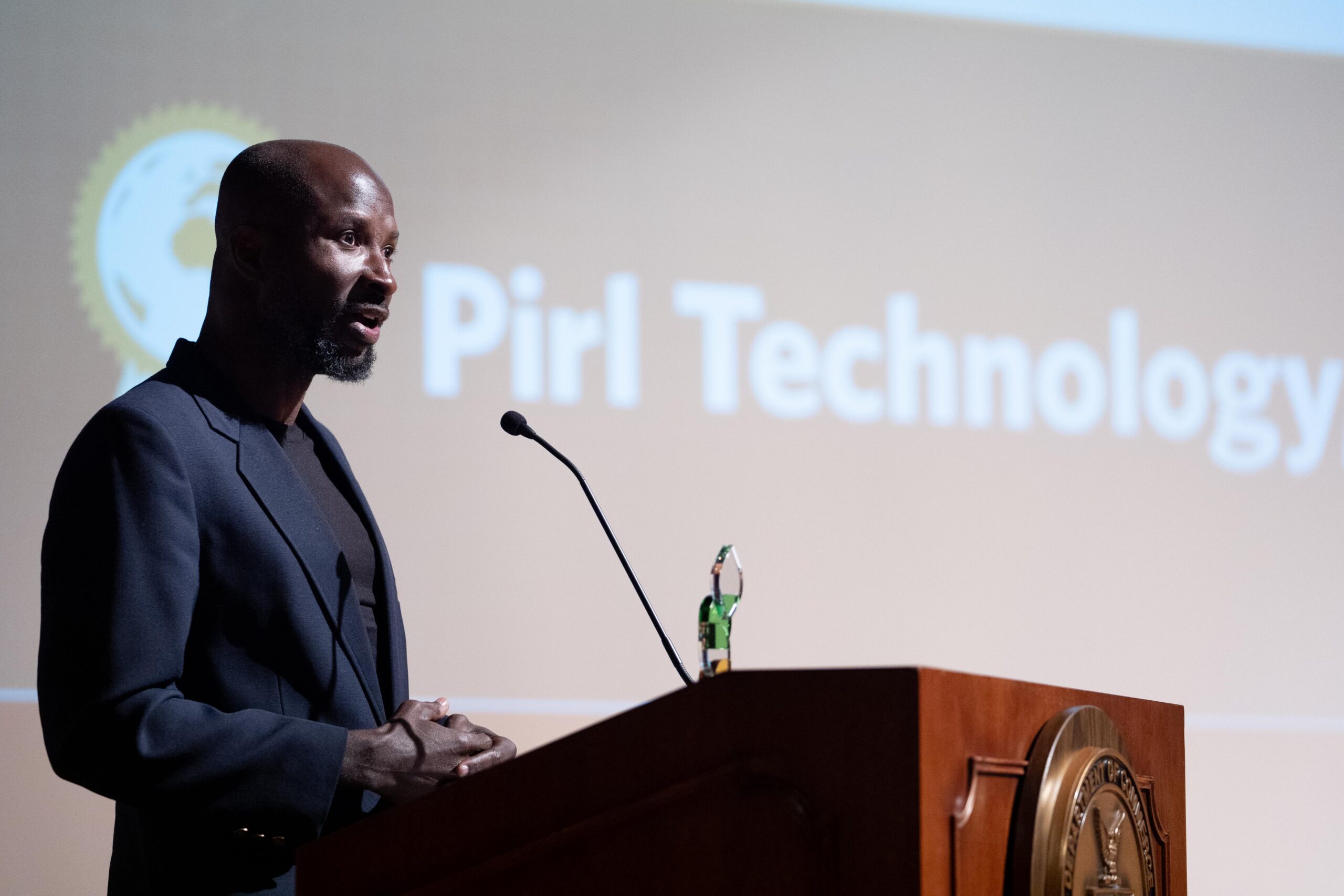
“The USB market is very small,” Osei-Kusi told Technical.ly. “We decided to use that experience to move into vehicles.”
“When a light bulb is out, you don’t throw away the whole apparatus — you just replace the bulb.”
Kobby Osei-Kusi, Pirl Technology
At the time, electric vehicles were soaring in popularity. So, Pirl updated its tech to develop electric vehicle, or EV, charging systems instead. Now, it’s aiming to launch by early next year.
Pirl’s stands out from most EV chargers because of its patented approach to modular design, according to the startup. While many chargers require full replacement when issues arise, Pirl’s system lets users upgrade components rather than replacing the entire unit.
Customers will be able to send their chargers back to Pirl for repair, or buy replaceable modules to fix it themselves.
“When a light bulb is out, you don’t throw away the whole apparatus — you just replace the bulb,” Osei-Kusi said.
The team also secured a patent for its work in 2024, which the US Patent Office recognized among its top green energy issues that year.
Tough time for EVs
Pirl plans to target the residential and commercial markets. However, it’s entering the space at a challenging time.
The One Big Beautiful Bill scrapped federal EV tax credits last fall, ending a $7,500 subsidy that had made the vehicles more accessible.
That’s not dissuading Osei-Kusi.
“Funding works in cycles,” Osei-Kusi said. “There’s a cycle where your product is really popular … but now’s not the hottest time for EVs.”
Luckily, Osei-Kusi said, he’s found support for climate tech work at the state level. He secured $100,000 from TEDCO last fall and took part in local accelerators, including the Maryland Energy Innovation Accelerator and Towson University’s StarTUp program.
“There’s a really strong, cohesive network,” Osei-Kusi said. “It doesn’t make the headlines like other places, but people have built really exciting things locally.”
Source link