


Plus: This Canadian company almost hired an AI candidate.
Canada strengthened economic ties with new global partners this week after Cohere announced it had functionally acquired German AI company Aleph Alpha.
It might seem unthinkable for Canada’s AI champion, backed by full-throated government support, to partner with a foreign firm. But maybe it was inevitable.
Sovereign AI is now a strategic component of national security. The US, at best a volatile global actor, is home to nearly all of the world’s most powerful AI technology companies. This month, AI company Palantir posted a manifesto touting not only the virtue of American power but the inevitability of AI use in warfare.
Beyond the political context, consolidation is starting to hit the exclusive club of global LLM builders. The only other major non-US and non-Chinese LLM builder, France’s Mistral AI, has reportedly entered into partnership talks with Elon Musk’s SpaceX, which has an option to buy AI coding giant Cursor. With consolidation at the top, what are middle AI powers to do?
Alex Konrad, former senior editor at Forbes and founder of Upstarts Media, has heard from Europeans who see the acquisition as a “welcome step to shore up AI sovereignty…on a Canadian-European axis that doesn’t depend on the US or China.” And if Mistral partners with SpaceX? Even timelier, Konrad added.
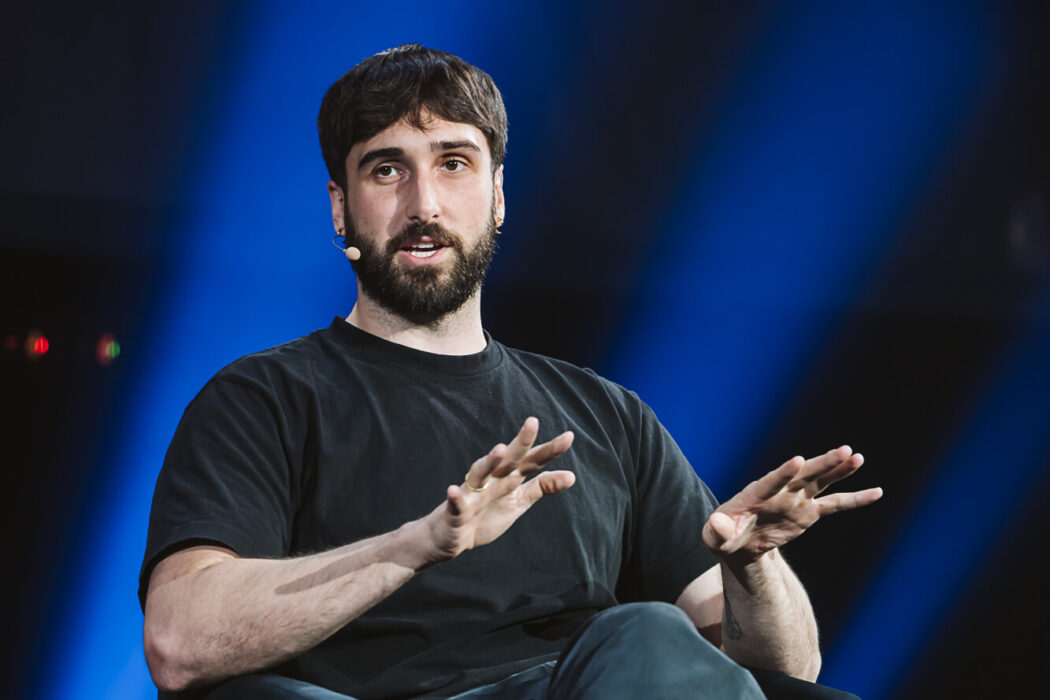
Cohere has indicated a singular focus on selling to enterprises or governments, and has already partnered with German submarine makers. Germany is the world’s third-largest economy by GDP, and Cohere co-founder Nick Frosst told 20VC last fall that being a Canadian company has fuelled business interest from around the world.
The Canadian-German partnership could provide beneficial access to North American and European markets for both local AI champions. At the very least, it will offer optionality for those seeking to avoid American economic and technological hegemony.
Madison McLauchlan
Reporter, Montréal
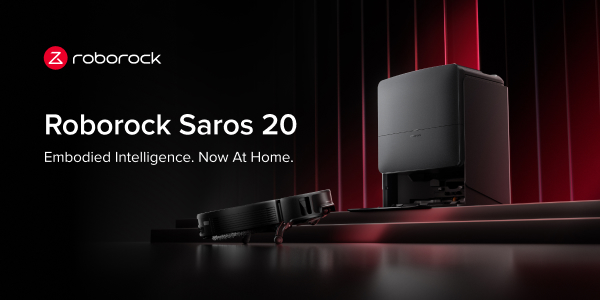
At CES 2026, Roborock introduced Saros Rover, a bold demonstration of embodied intelligence, where perception, movement, and real-time decision-making operate as a single integrated system.
Now, that same AI architecture has launched in North America with the Saros 20. The newly available robotic vacuum represents the practical deployment of embodied intelligence in the home — enabling advanced perception, adaptive mobility, and real-time autonomous navigation through an intelligent perception-decision-execution loop. With the Saros 20, embodied AI not as a concept, but as a practical system designed to operate seamlessly in real homes.
Explore how Saros 20 brings embodied intelligence into everyday living.
Former Startup TNT leader launches coalition for Canada’s early-stage investors
Ex-Startup TNT community development lead Jesse Wiebe has launched the Canadian Startup Capital Association, a new nonprofit coalition he hopes can bolster the country’s early-stage investment ecosystem as it faces significant structural challenges.
Canada’s new US economic advisory committee draws backlash from tech leaders
After Prime Minister Mark Carney shook up the Council on Canada-US Relations ahead of CUSMA negotiations, Canadian technology leaders and advocacy groups publicly expressed frustration that no members from the country’s tech community made the new roster.
Canada’s AI regulation will be “airtight” on bias, racism, and hate, Solomon says
At a breakfast hosted by QueerTech and the Canadian Queer Chamber of Commerce in Ottawa this week, Canada’s AI minister said inclusivity can be Canada’s “competitive advantage” and revealed some of the government’s intentions for its upcoming AI strategy refresh.
The man who helped build five generations of wireless retires from Ericsson’s Ottawa lab
Marco Cavaletti worked behind the scenes on five generations of telecommunications technology. Last month, the site lead of Ericsson’s Ottawa research and development facility hung up his hat.
What Live Nation’s antitrust loss could mean for one Canadian competitor
After US courts ruled that Live Nation and Ticketmaster were operating an illegal monopoly over large entertainment venues, Calgary-based competitor Showpass says it is ready to move in on the potential new opportunities.
BDC’s new $500-million loan program will help smaller businesses adopt AI
The LIFT initiative aims to connect 1,000 small and medium-sized enterprises with consultants who will help them figure out where AI can best be integrated into their businesses, then provide a loan to get it done.
Alberta establishes new office to spur on IP development
Operating as a nonprofit, the new Alberta Intellectual Property Office will serve as a hub for developing IP capability and protection, as well as provide businesses with legal expertise, market analysis, education, and resourcing to close the gap between research and development and commercialization.
Q&A: Behind the scenes of Cohere’s new AI transcription model
Cohere recently released an open-source version of its AI model that can generate text from audio in real time. BetaKit spoke with Cohere senior staff product manager Cassie Cao, who helms the multimodal division, about building the model from scratch.
Op-ed: We almost hired an AI candidate. Here’s what saved us
Quill Inc. and CoHost founder and CEO Fatima Zaidi shares the red flags she spotted while dealing with an AI-generated job applicant.
FEATURED STORIES FROM OUR PARTNERS
How Zoho is rethinking AI risk, context, and control in 2026
Zoho is shifting its AI strategy away from fragmented features toward a unified “system of record,” embedding its proprietary Zia engine across the entire Zoho One suite to provide deeper business context and better reliability. By owning the full technology stack, from data infrastructure to the application layer, the company aims to take direct responsibility for AI outcomes and security rather than relying on third-party providers.
🇨🇦 Weekly Canadian Deals, Dollars & More
VAN – A&K Robotics closes $8M to put self-driving pods in airports
VAN – ViewsML secures $4.9M to help scientists analyze tissue samples
VAN – Carbonyx raises $1.2M to turn waste into usable materials
TOR- Biossil exits stealth with $70M USD to resurrect failed drugs
TOR – CSMC awarded $1.6M for lunar power and water projects
TOR – Float launches agentic AI solution for corporate credit cards
TOR – Borderless AI introduces new Crypto-Native Payroll feature
MTL – Libro acquired by US restaurant reservation app Opentable
The BetaKit Podcast — Evaluating Canada’s Defence Industrial Strategy
“There’s a lot in this document… Do we feel the urgency and the threats are covered here?”
After months of waiting, the Defence Industrial Strategy offers clarity for $7 billion worth of spending commitments in Budget 2025. Is that enough? What’s missing? What comes next?
Vass Bednar (Canadian Shield Institute) and Matt Lombardi (The Icebreaker) join to evaluate the strategy, the spending, and some sticky questions about canola oil and Canadian sovereignty.
BetaKit Most Ambitious: Town Hall is the marquee opening event of Toronto Tech Week 2026.
Hosted at the iconic TIFF Lightbox, BetaKit Most Ambitious: Town Hall will bring together over 500 leaders from across Canada’s tech and innovation ecosystem for meaningful conversations about strengthening the nation’s autonomy, security, and prosperity.
Get your ticket while they’re still available!
Feature image courtesy ALL IN.
Source link