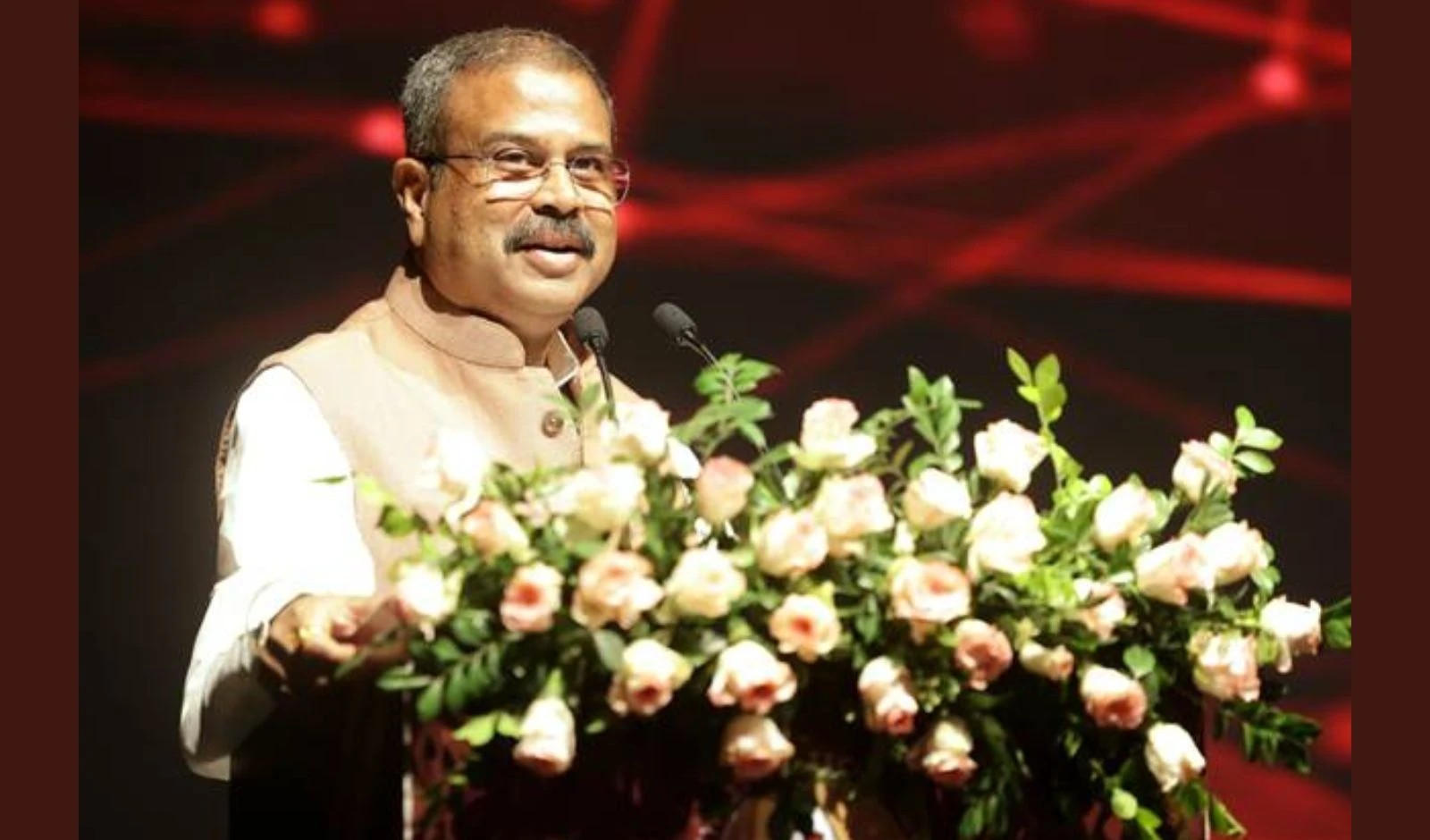
Union Education Minister Dharmendra Pradhan inaugurated the first ‘Technology Summit 2026’ of Indian Institute of Technology Madras at Bharat Mandapam in New Delhi.
Union Minister of State for Education and Skill Development Jayant Chaudhary attended the event as the Guest of Honour. Organised under the theme “Building for India with IITM,” the summit aimed to create a collaborative framework between educational institutions, industry leaders and the government to position India as a global leader in technology and innovation.
Representatives from Education, Industry and Government Participated
The event witnessed the participation of School Education and Literacy Secretary Sanjay Kumar, Higher Education Secretary Dr. Vineet Joshi, scientists, academicians, representatives from research institutions and leadership teams from major companies such as NTPC, BPCL, and HSBC. Discussions focused on the future of education and technology, research-driven growth and strengthening India’s startup ecosystem.
IIT Madras Emerges as a Major Hub for Research and Innovation
During his address, Dharmendra Pradhan said that Indian Institute of Technology Madras is playing a leading role in strengthening a research-driven and society-centric innovation ecosystem in the country. He noted that the institution is not limited to academic education alone but is also driving India’s capabilities in areas such as deep-tech, artificial intelligence, semiconductors, health-tech and advanced research.
He added that under the leadership of Prime Minister Narendra Modi, the government has been continuously introducing policies to promote research and innovation in the country. The government has allocated a special fund of INR 1 lakh crore for Research, Development and Innovation (RDI). The aim is to strengthen India’s research ecosystem and ensure that innovations move from laboratories to industries and society.
Research Must Move from ‘Lab to Market’
Dharmendra Pradhan stressed that research should no longer remain limited to research papers, patents, or academic achievements. He said the real success of a strong innovation ecosystem lies in its ability to transform research into practical products, scalable technologies and impactful solutions for society.
He further stated that nearly 70 percent of research investment in India currently comes from the government, reflecting strong public commitment. However, he emphasized the need for a future 50:50 partnership between the government and industry to accelerate innovation and develop globally competitive technologies.
Focus on the Vision of Viksit Bharat 2047
The Union Minister also spoke about the vision of “Viksit Bharat 2047,” stating that many countries around the world, especially those in the Global South, may look toward India’s development model in the coming years. In such a scenario, the responsibility of Indian universities and research institutions will become even more significant.
He said India’s innovation ecosystem should not only be strong but also globally collaborative and well-structured. Initiatives like “Bharat Innovates” are playing a key role in providing Indian higher education and technical institutions with an international platform.
Announcement of New Research Partnerships
During the summit, Indian Institute of Technology Madras announced strategic partnerships with NTPC, BPCL and HSBC. These collaborations aim to promote research in healthcare technology, green energy, sustainability and emerging future technologies. Special research centres will be established with support from these companies, where students, researchers and scientists will work together on advanced technologies.
Big Opportunities for Students and Startups
On the occasion, Jayant Chaudhary said that the IIT ecosystem is giving new momentum to deep-tech research and innovation in India. He added that the summit is a strong example of how education, industry and government can work together to develop advanced technologies. He particularly appreciated innovations taking place in robotic surgery, cardiac research, artificial intelligence, semiconductors and digital technologies.
He further stated that such collaborative platforms provide students and young researchers with opportunities to work on real-world industry challenges. This enhances students’ technical capabilities and opens up new avenues for employment and startups.
India Moving Towards Becoming a Global Technology Hub
The technology exhibition organised during the summit also became a major attraction. It showcased advanced technologies and research projects developed by 15 Centres of Excellence at Indian Institute of Technology Madras. The exhibition featured innovative solutions related to healthcare, sustainability, semiconductors, energy, advanced materials and Industry 4.0 technologies.
Experts believe that such technology summits will strengthen India’s education and innovation ecosystem while encouraging better collaboration among students, startups, and industries. This is expected to further accelerate India’s journey towards becoming a global technology and research hub.