Tesla’s former finance chief is reuniting with an old colleague in the battery recycling business. Deepak Ahuja, who spent nearly a decade as CFO at Tesla during its critical growth years, just joined Redwood Materials as the company scales up its mission to create a circular supply chain for electric vehicle batteries. The move reunites Ahuja with JB Straubel, Tesla’s cofounder and former CTO who launched Redwood in 2017, and signals the battery recycler’s push toward profitability as it competes for a piece of the expanding EV market.
Redwood Materials just landed one of the most experienced financial operators in the EV industry. Deepak Ahuja, who steered Tesla through its turbulent early years as a public company, is joining the battery recycling startup founded by his former colleague JB Straubel. The appointment marks a significant talent acquisition for Redwood as it races to build out the infrastructure needed to recycle millions of EV batteries hitting end-of-life in the coming decade.
Ahuja brings serious credentials to the role. He served as Tesla’s CFO across two separate stints, from 2008 to 2015 and again from 2017 to 2019, navigating the company through its IPO, the Model S and Model X launches, and the chaotic Model 3 production ramp that nearly bankrupted the automaker. His ability to manage cash flows during Tesla’s perpetual capital crunches made him one of Elon Musk’s most trusted lieutenants during the company’s make-or-break years.
Before joining Redwood, Ahuja spent roughly three years as chief financial and business officer at Zipline, the drone delivery startup that’s been quietly building a logistics network for medical supplies and commercial goods. That role gave him experience in another capital-intensive hardware business trying to scale operations globally, a skillset that translates directly to Redwood’s ambitions.
The reunion with Straubel is the real story here. The Tesla cofounder left the company in 2019 after 15 years to focus full-time on Redwood, which he’d been incubating since 2017. Straubel’s technical vision combined with Ahuja’s financial discipline could prove formidable as Redwood attempts something no company has done at scale: create a closed-loop supply chain that recovers critical battery materials and feeds them back into new battery production.
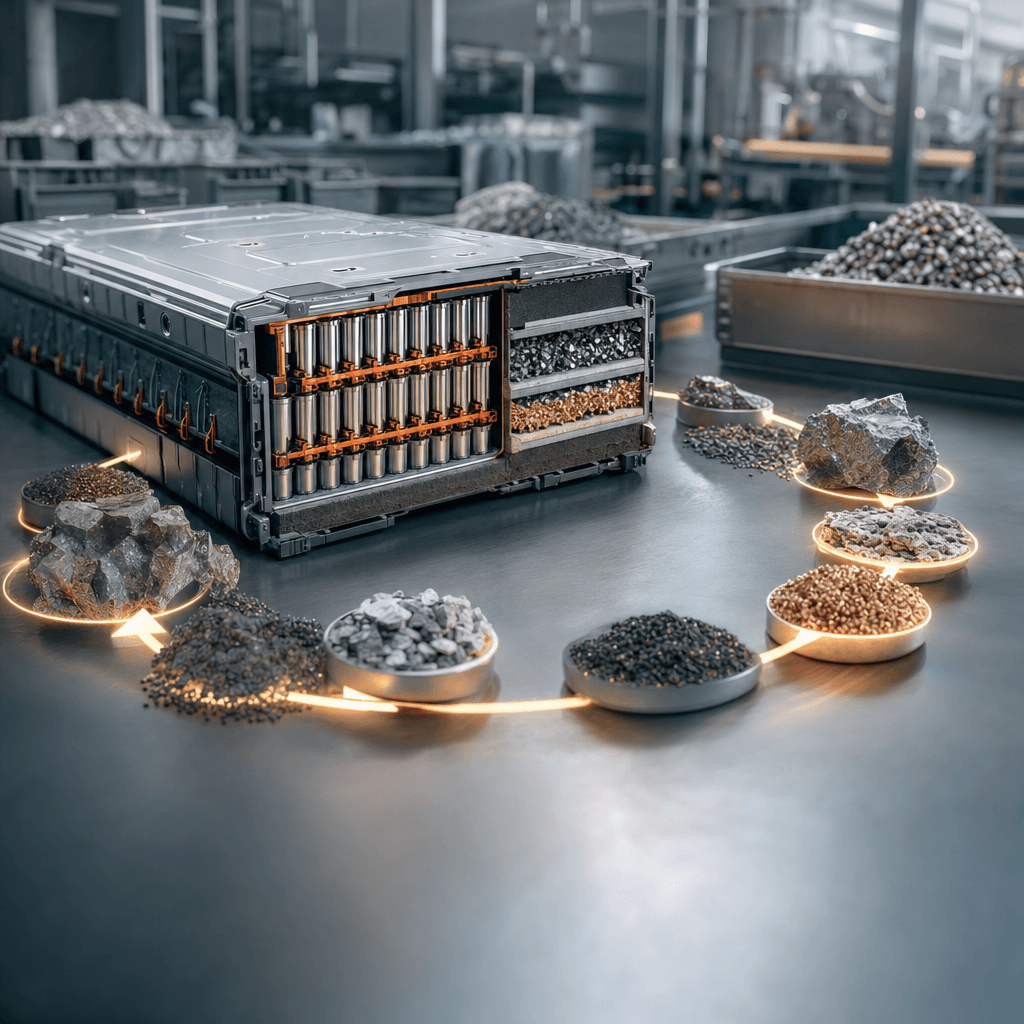
Redwood’s pitch is compelling from both an environmental and economic standpoint. The company recovers lithium, cobalt, nickel, and copper from old batteries and electronics, then refines those materials into components for new batteries. As EV adoption accelerates, the need for sustainable sourcing of these materials becomes critical. Mining new lithium and cobalt carries enormous environmental costs, and supply chains remain vulnerable to geopolitical disruptions.
The company has been making aggressive moves lately. Redwood announced partnerships with Toyota and Volkswagen to recycle batteries from their EVs, and it’s building a massive facility in Nevada near Tesla’s Gigafactory to produce battery components. The startup raised $700 million in a 2022 funding round led by Goldman Sachs and T. Rowe Price, valuing it at $3.7 billion, but it’s been relatively quiet on the fundraising front since then.
That’s where Ahuja comes in. Bringing on a CFO of his caliber typically signals a company is preparing for major financial events, whether that’s raising another mega-round, pursuing an IPO, or finally achieving sustainable profitability. Redwood needs to prove its recycling operations can generate positive margins at scale, not just recover materials in small batches. The battery recycling market is projected to reach $84 billion by 2035, but competition is heating up from established players like Umicore and Li-Cycle, which has struggled with its own financial challenges.
Ahuja’s track record suggests he knows how to prepare a company for public markets scrutiny. He helped Tesla navigate the transition from money-losing startup to profitable automaker, managing investor expectations during quarters when the company burned through hundreds of millions in cash. He also dealt with the regulatory complexity of being a public company in a highly regulated industry, experience that will serve Redwood well as it scales operations across multiple states and potentially overseas.
The timing is particularly interesting given the current state of the EV market. While growth continues, the pace has slowed from the explosive projections made a few years ago. Automakers are reassessing their electrification timelines, and battery prices haven’t fallen as quickly as anticipated. In this environment, companies that can reduce battery costs through recycled materials have a real competitive advantage.
Straubel has been preaching the gospel of battery recycling since before most people owned EVs. His argument is that within a decade, recycled materials will supply a meaningful percentage of the battery industry’s raw materials, reducing dependence on mining and lowering costs. But turning that vision into a profitable business requires exactly the kind of financial execution Ahuja specialized in at Tesla.
The move also highlights an interesting migration pattern in the EV ecosystem. As Tesla alumni spread across the industry, they’re building the next generation of companies needed to support mass EV adoption. Former Tesla executives now run charging networks, battery startups, autonomous vehicle companies, and manufacturing operations. Ahuja’s move to Redwood reinforces that the most interesting opportunities in transportation technology aren’t just in making vehicles, but in building the entire infrastructure around them.
Ahuja’s appointment at Redwood Materials is more than just another executive hire. It’s a signal that battery recycling is moving from experimental technology to serious business, with the financial firepower and operational discipline needed to compete at scale. As the first wave of EV batteries approaches end-of-life and automakers scramble to secure sustainable supply chains, Redwood is positioning itself as the infrastructure play that makes the entire ecosystem work. With Straubel’s technical vision and Ahuja’s financial expertise, the company has the leadership team to potentially define the battery recycling industry for the next decade. Watch for Redwood to make aggressive moves on fundraising, partnerships, or public markets in the coming quarters.