School’s almost out, but several Minnesota startups in the education technology (ed tech) space are already preparing for the next school year.
They’ve developed technology meant to make life a little easier for those teachers—and, in many cases, for parents. As ed tech entrepreneur Josh Thelemann observes about teachers (and which also could apply to parents), “They’re doing work before they get to school, they’re doing work after school, they’re doing work on the weekends.” His company and other ed tech startups want to “take some of those things off their plates.”
The Commons
Founded: 2025
HQ: St. Paul
Employees: Two full-time and six contractors
Metric: 7,700 students in 10 schools across four states
Most teachers will tell you that cellphones are one of the chief banes of their professional existence. Legislators in more than 40 states are hoping to lift that burden by passing or (like Minnesota) considering laws regulating student mobile phone use during the school day.
A startup called The Commons is offering a way to control tech use—by using technology. The Commons seeks to “teach students how to use their phones more responsibly,” company co-founder Shannon Godfrey says. Godfrey and co-founder Julia Gustafson started The Commons after working with schools to make them “phone-free using physical-based solutions”—essentially, having kids lock up their phones in pouches, racks, boxes, or other storage areas in the classroom. “While some of these programs had an instant impact, they didn’t create a lasting behavior change,” Godfrey says. And Gustafson adds, “teachers don’t want to be the phone police.”
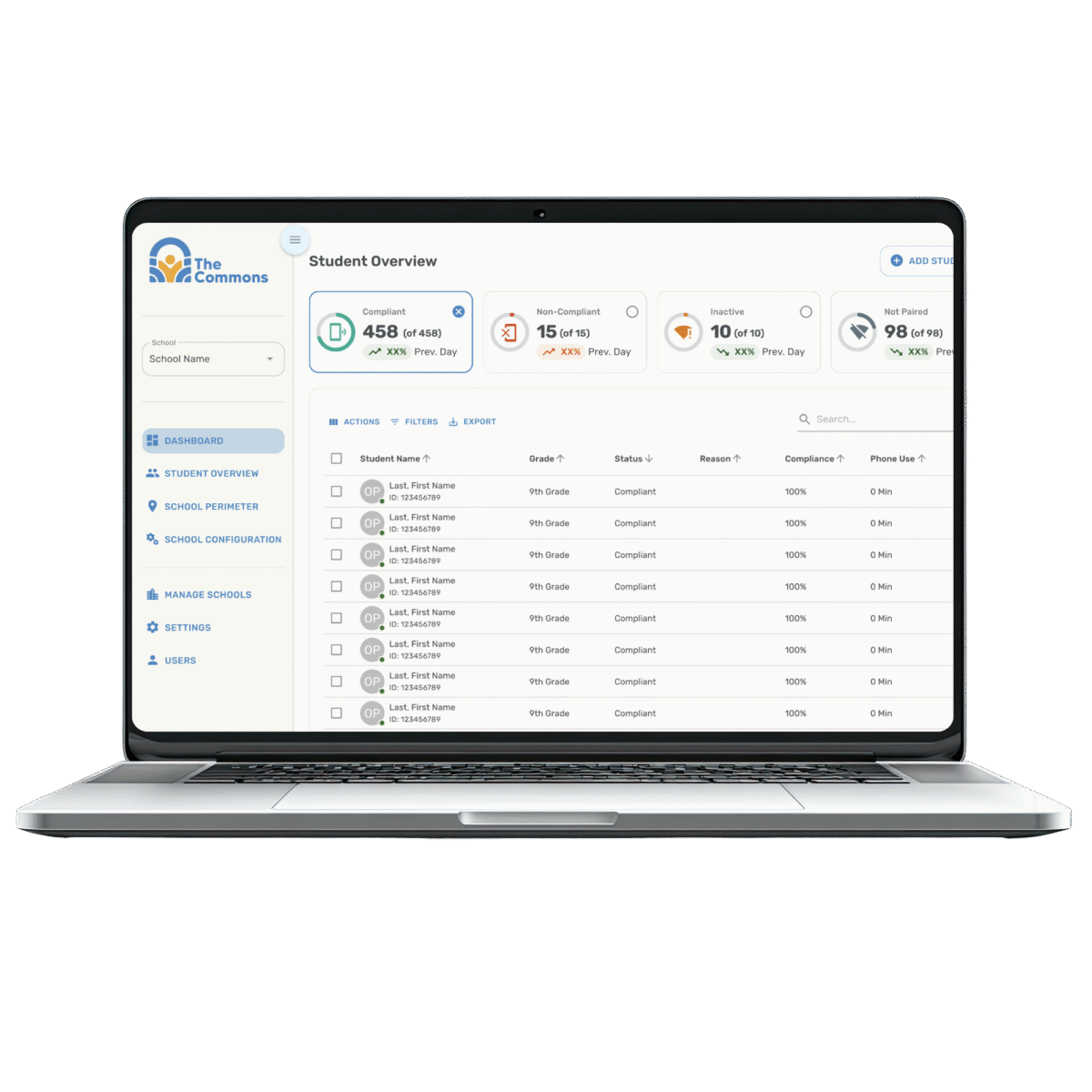
The Commons offers a different approach. When students step foot on campus, The Commons’ application automatically activates using a single-tunnel VPN that “shuts all the doors,” Gustafson says. The app blocks access to the “loudest noise” on student phones—social media, browsing, gaming, and YouTube—during the school day. The school can then choose which doors to reopen, which might include applications like Google Classroom. If the student attempts to circumvent the app, an administrator is alerted to ensure that it remains in place on the student’s phone.
At the same time, The Commons “still preserves the student’s privacy,” Godfrey says. “We don’t have access to the student’s text messages or browser history.”
While the app allows schools to enforce their phone policy, it also helps them teach students better device habits and better regulate their use of their devices. “If students can learn to put their phone down, that’s critical for them not only in the classroom but also in the workforce, on the weekend, in higher ed,” Godfrey says.
The Commons began with paid pilots in 10 schools in four states (including Hope Academy in Minneapolis), with 7,700 students on the application. The company sought partners in public, private, and charter schools to develop broad best practices for “a variety of school settings,” Gustafson says.
For the 2026-2027 school year, The Commons will exit pilot mode. The startup’s leaders say that they’ve renewed their existing partnerships and brought on additional districts, including locations in three new states, to reach a projected total of 20,000 students. The Commons’ philosophy, Godfrey says, is “not about getting rid of phones. It’s about how students better utilize them.”
Gwoop
Founded: 2020
HQ: Minneapolis
Employees: 2
Metric: More than 15,000 schools nationwide
Gwoop started out as an esports training digital platform. It’s still involved in that market, but about 80% of its business now comes from schoolkids age 13 and older. That change happened about four years ago, as co-founder and CEO Gavin Lee recalls: “Educators kept asking, ‘Can we use Gwoop? Because we’re trying to connect with our kids.’”
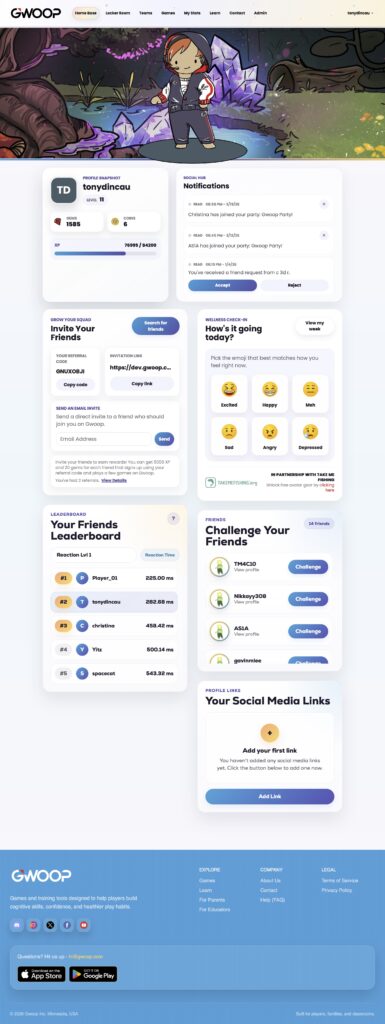
Gwoop’s web-based technology delivers “mini-games” created to boost student memory, focus, and reaction time. “These are skills that directly impact how they learn,” Lee says. “Students can jump on for a few minutes a day”—during study hall, homeroom periods, or whenever they have time to take a break. Whether they teach English or STEM subjects, teachers “are trying to figure out the best way to engage their students.” Lee says. Gwoop’s brain-building online games are designed to help provide that engagement.
What Lee and Gwoop co-founder and CTO Tony Dincau also discovered from educators is that “if a student’s brain and well-being aren’t in the right place, learning doesn’t happen,” Lee says. “That’s why we’ve also embedded a simple mental-health check-in so that schools and families can get a real-time sense about how students are doing” by clicking on emojis that reveal whether they’re happy, worried, stressed out, or down. According to Lee, many educators find this quick approach more effective than mental-health apps or pen and paper. The Gwoop platform then shares that information with the student’s teacher and parents should a student need some help or just someone to talk to.
Gwoop is free for teachers who use it for 30 or fewer students; schools and districts pay for broader access. The company also generates revenue through partnerships with brands aligned with healthy, real-world activities. One such brand is the nonprofit Take Me Fishing, whose online game is also intended to encourage real fishing in the Great Outdoors. Gwoop also have a new partnership with a major sport that will launch its games this fall. The company leverages the Unity game engine to build its proprietary platform.
“We’re a technology company, but we’re using technology to influence behavior off the screen,” Lee says. “Over 90% of kids play video games. A large percentage say those experiences influence what they’re interested in in real life. Instead of fighting that, we lean into it.” His company, he adds, believes that “the future of education belongs to platforms that can support the whole student, not just deliver lessons. We’re not trying to increase screen time. We’re trying to make the screen time kids already have more meaningful.”
Impacks
Founded: 2020
HQ: St. Cloud
Employees: Six full-time and two part-time
Metrics: 310 schools in 30 states; $1.5 million in revenue (2025)
School supply shopping has become more complicated and more expensive. Clare Richards, CEO of school supply online retailer Impacks, notes that spending on notebooks, crayons, folders, and writing instruments for kids has increased 50% since 2007. “Not only are the costs of items consistently going up, but the expectation of what a student brings into class has changed dramatically,” she says. What might have been five or six items 40 years ago has grown to more than 25 on average. (Little wonder that according to nonprofit Adopt a Classroom, teachers in 2025 spent, on average, $895 of their own money on supplies for their students.)
Richards and her husband, Brandon, launched Impacks to deliver an easier, more affordable, and tech-driven approach to buying needed school supplies. During college, both worked at Office Max, which exposed them to the shopping frustrations of busy parents navigating back-to-school needs. Clare went on to pursue a career in marketing at an agency, while Brandon worked in sales for technology and logistics companies. Those professional backgrounds would serve them well when they launched Impacks.
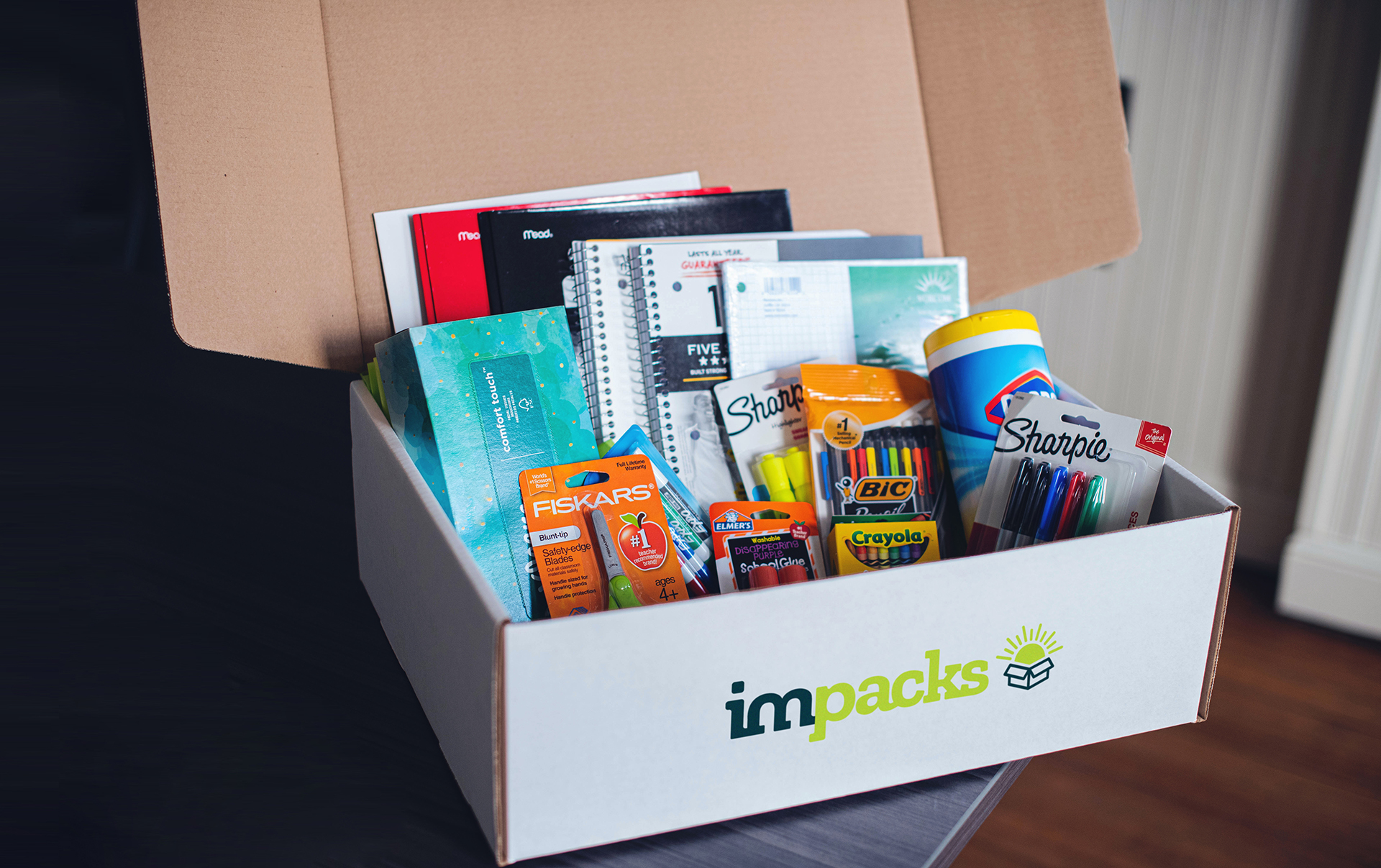
The Richardses began with four Greater St. Cloud schools and a couple of hundred kits. Richards describes the Impacks flagship product as a B2B2C supply kit, with the school being the second B. Kits can be tailored to each school list. In addition, Impacks customizes the portal page and marketing materials for each school.
Offering the Impacks program to families within a school comes at no cost to the school, and there are no order minimums or shipping charges. The company can deliver kits to either the school or the family’s home. When parents check out, they’re encouraged (though not required) to make a donation to support other schools, a donation that Impacks partially matches.
The startup currently works with more than 300 schools across 30 states, and it’s projecting that it will be available in 400 schools this coming academic year. Impacks holds about 220 SKUs, which include major brands such as Elmer’s, Ticonderoga, and Crayola. Though a small operation, Impacks believes it can offer prices that are cheaper and easier to navigate than big boxes and other online sources.
This summer, Impacks will introduce a direct-to-consumer option. As Richards notes, this is where the company will clearly demonstrate that it’s a tech company as well as a retailer. “We have developed an AI image-analysis technology that reads the school supply list and pairs it with SKUs in our system,” she says. “Parents will be able to see exactly what was on our list translated to their screen.” They also can add and drop products from their carts. It’s intended to “take a painful process and allow parents to get it done in a matter of moments,” Richards adds.
Proserva
Founded: 2022
HQ: Minneapolis
Employees: 8
Metric: More than 25,000 teachers across 48 states
While working as a behavior interventionist in the Hopkins Public Schools, Josh Thelemann saw that teachers and the school districts they work for were having numerous struggles managing professional development. Teachers are responsible for keeping track of all their certificates and workshops, plus all the professional development workshops, webinars, and courses they’d ever taken—while not putting themselves at risk of missing a key requirement or deadline.
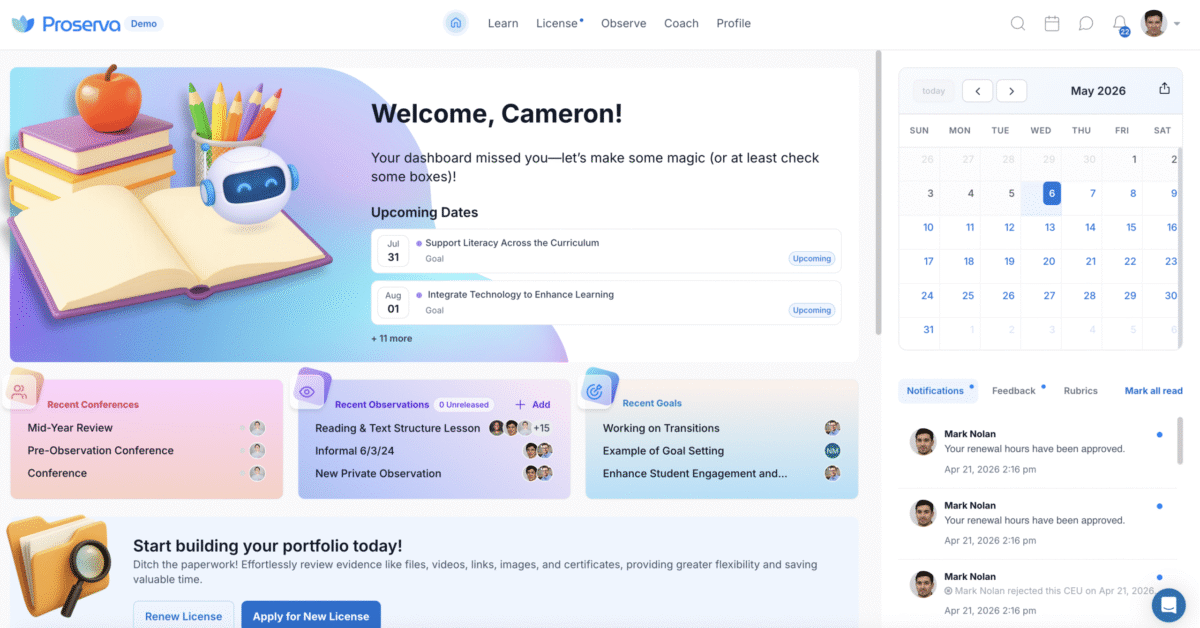
Thelemann launched Proserva to ease that burden. He describes his company’s technology as an all-in-one professional growth platform for educators. “We think of it as an operating system for a teacher’s entire career journey,” he adds, following that journey from earning the license through professional development and license renewals. In addition to tracking workshops and courses, Proserva is designed to capture other activities teachers can get credit for, such as coaching and peer-to-peer mentoring. “All of those can be tracked on the platform,” Thelemann says. “Once you complete something, it’s automatically captured in your evidence bank.” This information is sent to the teacher’s renewal committee.
Proserva’s learning management system (LMS) is open source. “Rather than building it completely ourselves, we let people out there in different subjects who know a lot more than we do build some of it out,” Thelemann says. Proserva has developed its platform, he says, via “feverish customer learning.” He defines this as “constantly soliciting feedback from our users, whether they’re teachers or administrators or state agencies.” Indeed, “when I’m demoing to district leaders and state agencies, I joke with them, ‘What you see is what you all built.’ They give us ideas, and we think, ‘This is great. We can fit this in. This could help a lot of people.’”
One of Proserva’s specialties is helping people earn their teacher’s licenses via portfolio. Licensure via portfolio is a Minnesota program that allows people to earn their licenses through a “portfolio” of evidence and experience (such as apprenticeships), rather than completing a traditional teacher preparation program such as BA or MA in education. One of Proserva’s first clients was the state’s Professional Educators Licensing and Standards Board. “We’re currently the only platform in Minnesota that folks can use to get their teaching license via portfolio,” Thelemann says. As of the end of 2025, he adds, Proserva had helped more than 325 Minnesota educators earn their teaching licenses this way.
This month, Proserva received a grant from the National Institute for the Advancement of Education. “This will pair us with six other states, including Minnesota, to build out a playbook around teacher apprenticeships and BAs so that [they] can get their teacher’s licenses,” Thelemann says.
Source link