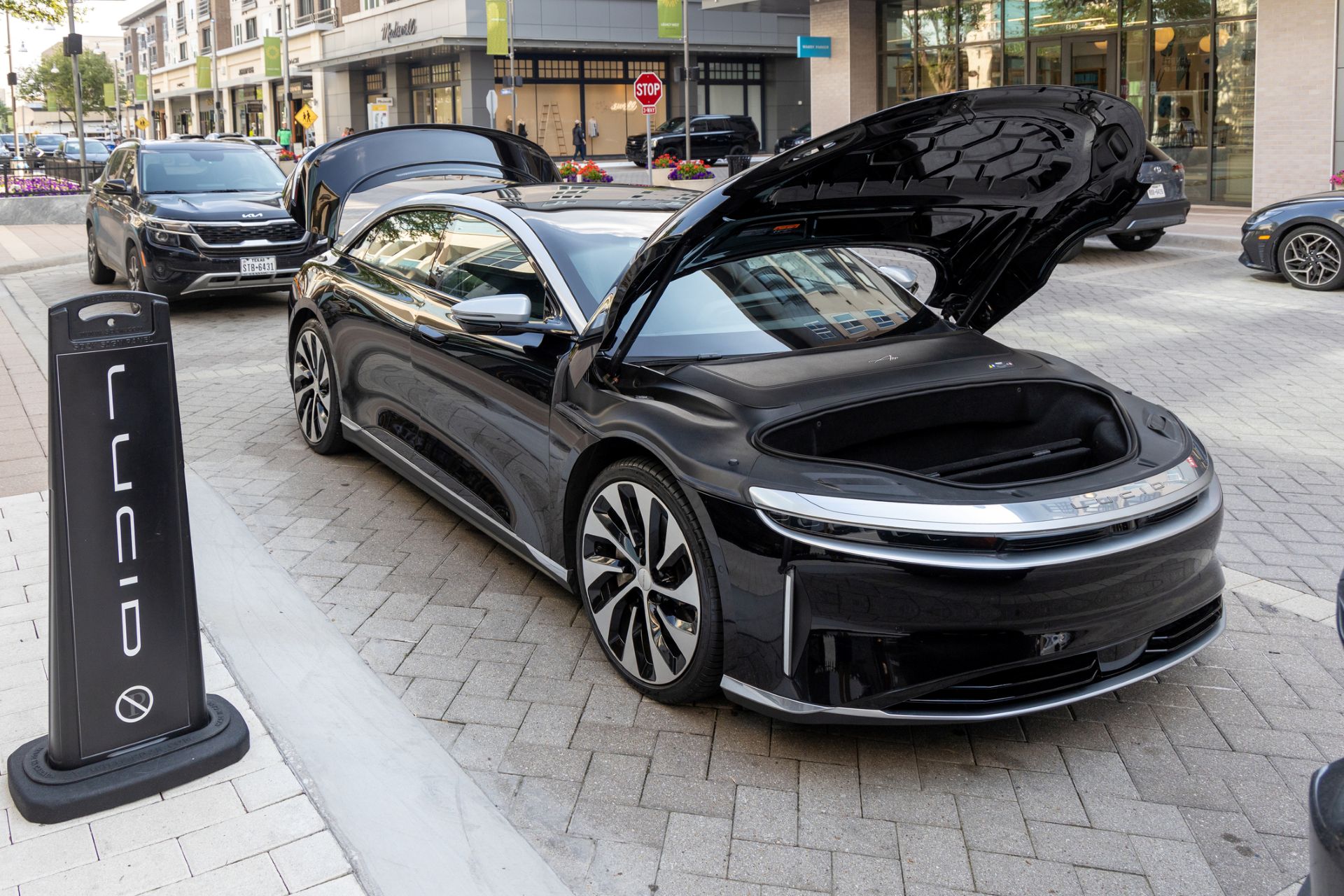
Lucid’s latest earnings report is renewing concerns about whether luxury EV companies can survive long enough to become stable players in the zero-emissions car market.
The company reported a staggering $1 billion net loss in the first quarter of 2026, a result that quickly sparked skepticism online and raised fresh questions about the company’s production strategy, quality control, and how long deep-pocketed investors can keep subsidizing its weak sales.
What happened?
Lucid produced about 5,500 vehicles in the first quarter of 2026, but it delivered just under 3,100 of the Air sedans and Gravity crossovers, a total that was practically unchanged from the same period last year, per Automotive News.
The lackluster sales come as the brand recalled over 3,600 Air Pure sedans due to potential rear-drive failures.
The automakers’ net loss had increased by nearly threefold from the year prior, widening from $366 million to now $1 billion. As a result of its poor first-quarter performance, Lucid’s stock fell an additional 5%, adding to the 75% tumble over the past year.
Why is Lucid’s loss important?
Lucid’s troubles matter because the EV transition depends on trust, competition, and reliability — not just sleek products.
 BOBS from Skechers has helped over 2 million shelter pets around the world — and the charity program just announced this year’s Paws for a Cause design-winning sneakers.
These “hound huggers” and “kitten kicks” sneakers are machine washable and equipped with memory foam insoles. Plus, they were designed by passionate students who were inspired by their very own rescue pets.
BOBS from Skechers is also committed to donating half a million dollars to the Best Friends Animal Society this year to help every dog and cat experience the safety and support of a loving home.
|
Passenger vehicles are a major source of pollution, and wider EV adoption is critical for cutting everyday people’s fuel costs and reducing harmful tailpipe fumes.
But if high-profile EV startups keep posting enormous losses, missing delivery goals, and frustrating customers with recalls or limited service access, it could make everyday drivers more hesitant to make the switch.
What’s next?
The situation also points to a broader business problem: Some startups have pursued premium branding and ambitious product road maps before proving they can consistently build, sell, and service vehicles at scale. When that happens, buyers can be left facing long repair waits, uncertain resale values, and worries about whether the company will still exist a few years down the road. Lucid’s latest quarter also reflects a wider challenge in the EV market.
The company’s CFO, Taoufiq Boussaid, stated on a conference call that Lucid is changing its production guidance for the second quarter.
“With [new CEO Silvio Napoli] on board and conducting his review of the business, we are suspending our prior guidance and will provide a full updated outlook at our second-quarter earnings call,” he said.
Get TCD’s free newsletters for easy tips, smart advice, and a chance to earn $5,000 toward home upgrades. To see more stories like this one, change your Google preferences here.