


As Korean beauty products fill shelves in New York, Korean food gains traction across Southeast Asia, and Korean content platforms expand beyond their home market, a new question is emerging among investors. Cultural popularity may open doors, but what turns a Korean startup into a scalable global business? That question sits at the center of K-Style Expo Q2 2026, where selected founders will pitch directly to international investors looking for more than the next viral trend.
Why K-Lifestyle Is Becoming a Startup Opportunity, Not Just a Cultural Trend
For years, discussions around Hallyu focused largely on cultural influence. Korean dramas, music, beauty trends, and food helped introduce millions of consumers to Korean brands. Today, that influence is increasingly translating into business opportunities that extend far beyond entertainment.
According to the 2026 Overseas Hallyu Survey released by the Korea Foundation for International Cultural Exchange (KOFICE), 69.7% of respondents across 30 countries reported favorable views of Korean cultural content. Markets across Southeast Asia continue to rank among the most receptive audiences, with Indonesia recording an 82.7% favorability rate.
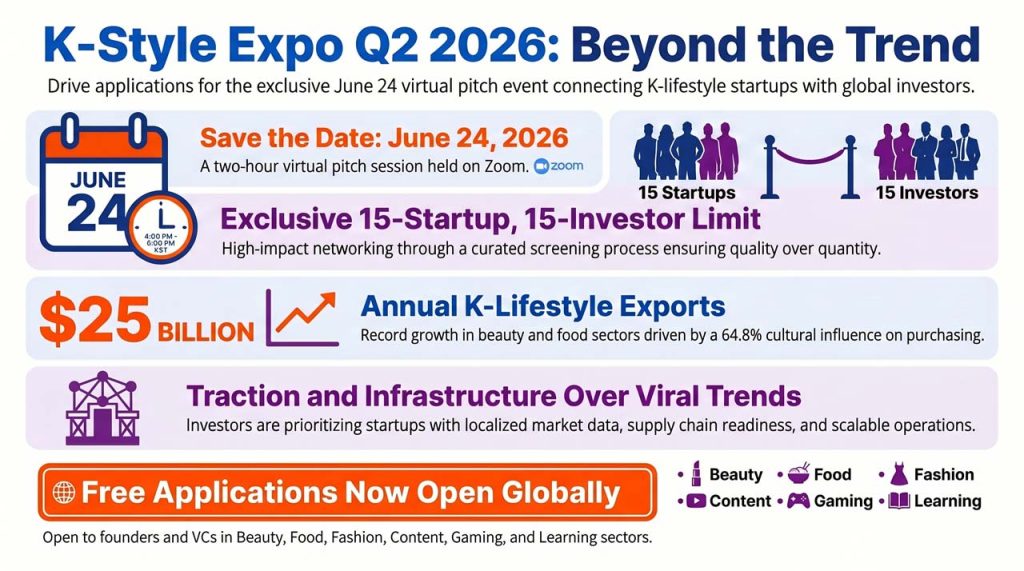
More importantly, that cultural engagement is influencing purchasing behavior. The survey found that 64.8% of respondents said Hallyu affected their decision to purchase Korean products or services. What began as interest in Korean culture is increasingly creating demand for Korean consumer brands across beauty, food, fashion, education, gaming, and digital content.
The impact is becoming visible in trade data. South Korea’s Ministry of Food and Drug Safety reported that cosmetics exports reached a record USD 11.4 billion in 2025. During the same period, K-Food Plus exports climbed to USD 13.62 billion, while agri-food exports surpassed USD 10 billion for the first time, according to the Ministry of Agriculture, Food and Rural Affairs.
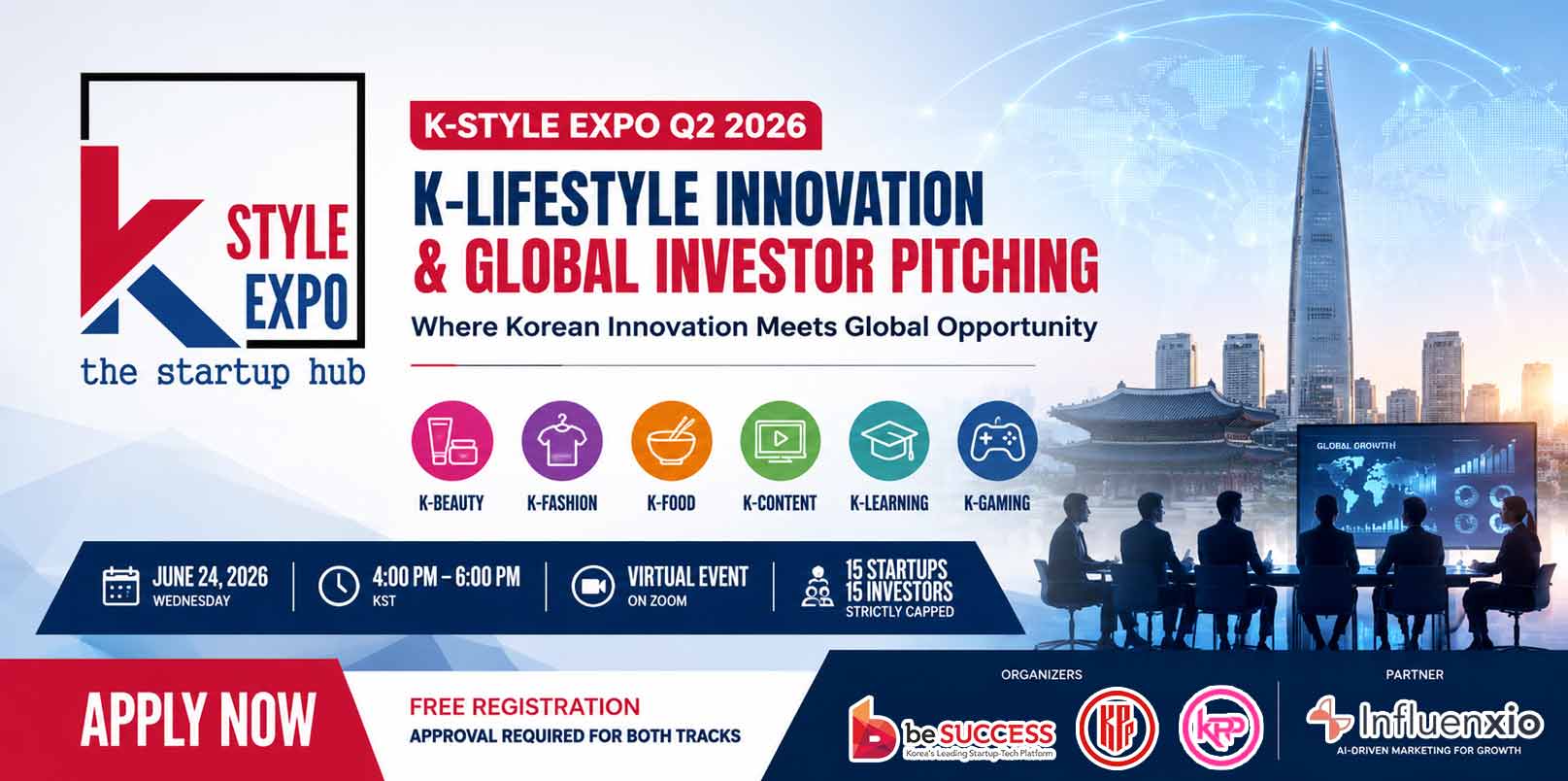
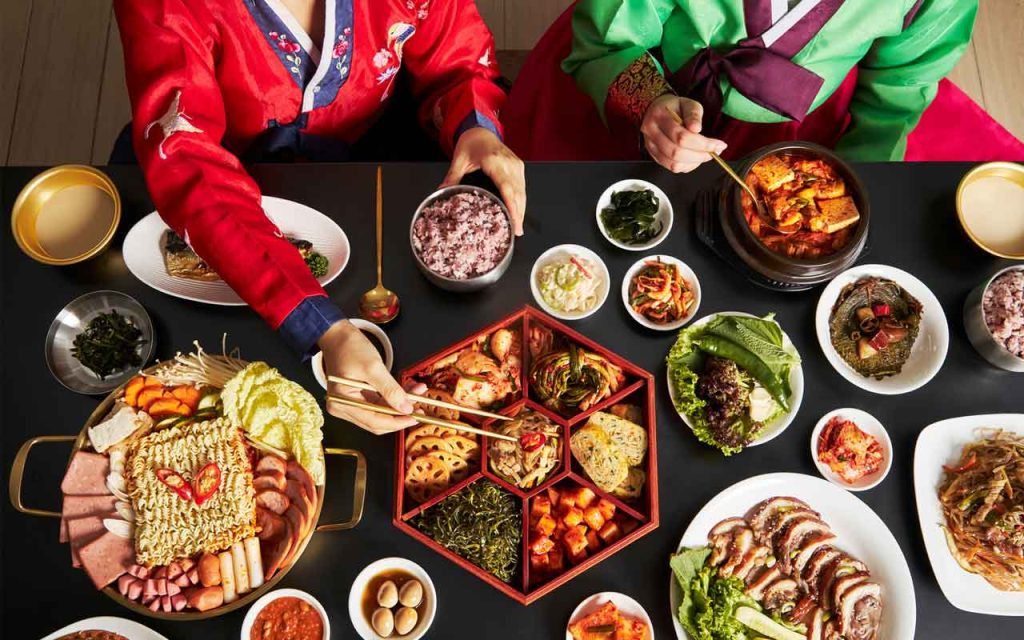
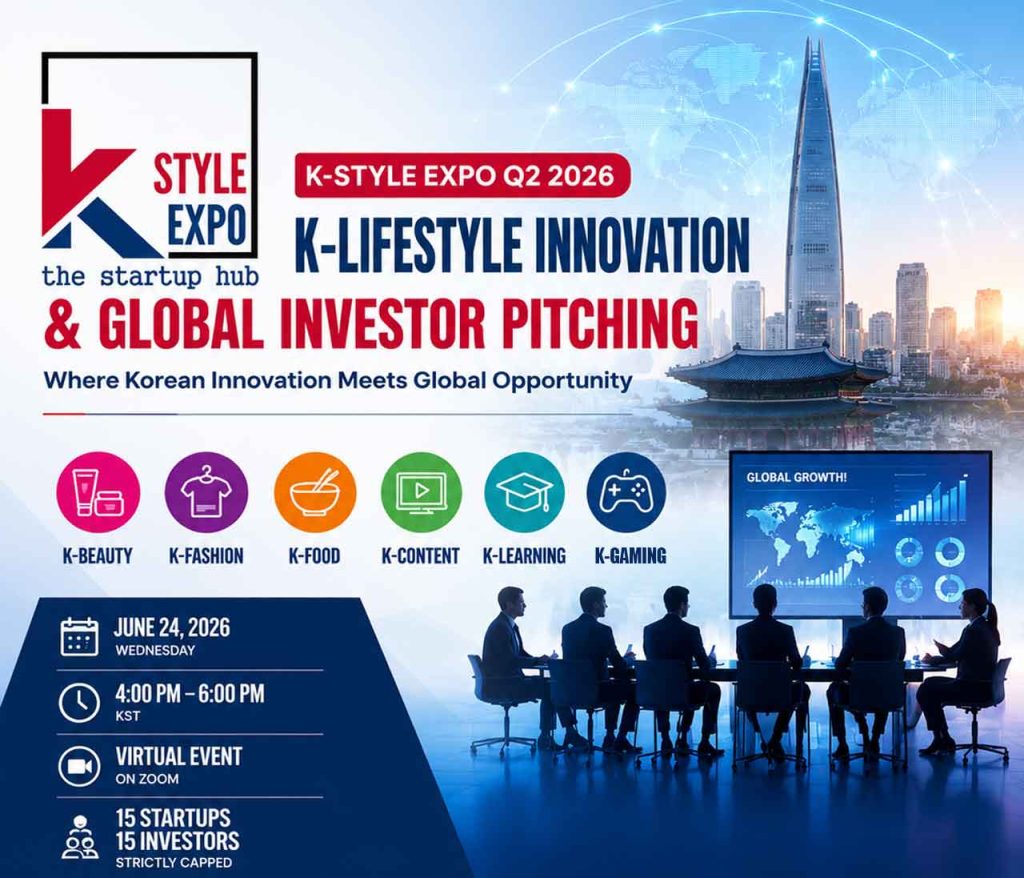
These sectors now form the foundation of K-Style Expo Q2 2026, which brings together startups operating across K-Beauty, K-Food, K-Content, K-Gaming, K-Fashion, and K-Learning.
Still, the growing popularity of Korean products is only a very small part of the story.
Investors are increasingly asking a different question. Consumer demand may create an opening, but long-term success depends on whether startups can convert that demand into repeat purchases, scalable operations, and sustainable growth across international markets. The companies that solve that challenge are often the ones that attract investor attention.
Why Investors Are Looking Beyond Hallyu
That distinction is becoming increasingly important as global investors grow even more selective today.
Despite continued growth in cross-border digital economy, venture capital firms are placing greater emphasis on execution, localization, and measurable traction. A recognizable Korean brand story may help attract attention, but investors ultimately need evidence that a company can succeed outside its home market.
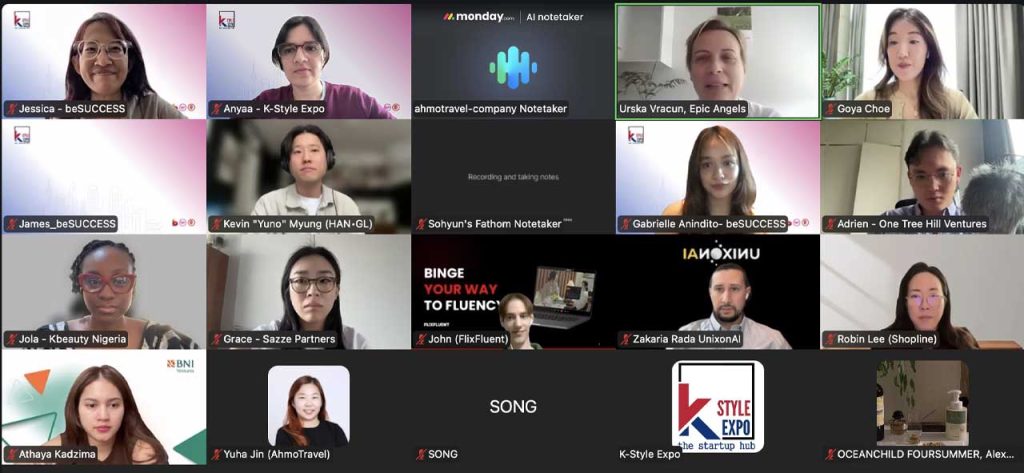
Edmund Carulli, Head of Investment at BNI Ventures and a judge at a previous K-Style Expo edition, believes the strongest opportunities often sit beneath the surface.
“What catches our attention is when a K-lifestyle startup has built scalable infrastructure underneath the brand,”
he told KoreaTechDesk an exclusive interview.
“Whether it’s the supply chain, payment, community engagement, or data on repeat consumer behavior, that’s where it becomes investable.”
His perspective reflects a broader shift occurring across global venture markets. Investors increasingly want to see the operational systems that support growth rather than relying solely on consumer excitement around Korean culture.
What Stood Out During Previous K-Style Expo Pitch Sessions
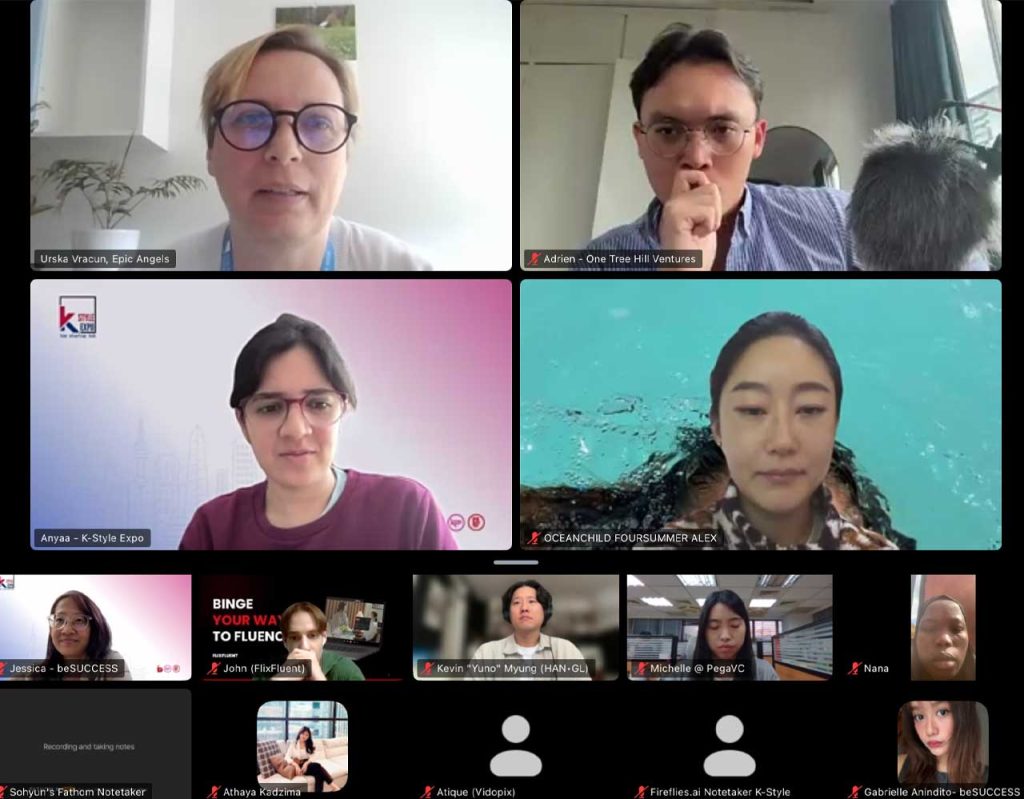
Organized by beSUCCESS, KoreaProductPost, KPopPost, and supported by official partner Influenxio, the quarterly-based K-Style Expo was created to connect Korean startups with investors, buyers, and ecosystem stakeholders interested in cross-border growth opportunities.
The event reflects a broader shift taking place across Korea’s startup ecosystem as founders increasingly look beyond the domestic market and investors search for companies capable of turning global interest in Korean products and services into sustainable businesses.
Yet, not every startup attracts the same level of attention.
Drawing on his experience investing across Southeast Asia, Carulli noted that founders who demonstrated a clear understanding of their target expansion markets stood out most during previous pitch sessions.
“Startups that already had a clear SEA market thesis stood out,”
he said.
“The ones that came in saying we’ve already piloted in Indonesia, Vietnam, or Thailand and here’s our retention data were immediately more interesting than those still positioning Korea as their primary benchmark.”
The observation reflects a reality many founders discover when expanding internationally. Entering a new market often requires much more than translating a product description or launching a local marketing campaign.
Consumer behavior, distribution networks, regulations, pricing expectations, and payment systems can vary significantly across markets. Investors want evidence that founders understand those differences and have started addressing them.
What Founders Need to Show in the First Few Minutes
Pitch competitions frequently reward strong storytelling, but investors often make early judgments based on a handful of key signals.
Carulli says three factors matter most.
“The problem is real, the market is sized, and you’ve already started moving.”
So, for startups seeking international capital, early traction can often carry more weight than a polished presentation. Pilot customers, retention data, partnership discussions, distribution tests, or localized market validation may all help demonstrate execution capability.
Strong consumer interest may open doors, but investors increasingly expect founders to show how that demand can be converted into repeat customers, scalable operations, and long-term growth. Founders who can demonstrate that progress are often in a stronger position to attract investor attention.
Why K-Style Expo Q2 2026 Matters for Global Startup Ecosystem Participants
The significance of K-Style Expo extends beyond a startup pitch competition.
For global founders, the event provides direct access to investors, industry judges, and ecosystem stakeholders who understand both Korean innovation and international expansion challenges.
As for investors, it offers a curated opportunity to evaluate startups operating at the intersection of Korean cultural influence and global consumer demand.
Moreover, the event’s structure is intentionally focused. Only 15 startups and 15 investors or judges will participate, creating a smaller environment where meaningful conversations can take place.
Selected startups will present live before a panel of investors and receive direct feedback through Q&A sessions. The winning startup will also receive post-event support that includes curated investor meetings, media exposure, and AI-powered marketing assistance.
As Korean consumer brands continue expanding into global markets, events like K-Style Expo provide an opportunity to identify which startups are building durable businesses rather than simply riding market momentum.
K-Style Expo Q2 2026 Event Details
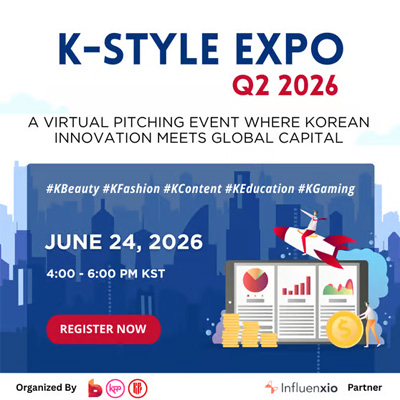
- Date: June 24, 2026
- Time: 4:00 PM – 6:00 PM KST
- Platform: Zoom
Applications are open to:
Global Investors and Judges
- Venture capital firms
- Angel investors
- Family offices
- Institutional investors
International Startups and Innovators
- Founders
- Core team members
- Early-stage startups
- Growth-stage startups
- Companies operating in K-Beauty, K-Food, K-Fashion, K-Content, K-Gaming, and K-Learning
Participation is FREE, but all applications are subject to screening and approval.
Only 15 startups and 15 investors will be selected.
K-Style Expo Q2 2026: The Real Opportunity May Be Bigger Than the Event
Global interest in Korean products continues to grow, but growth alone does not create successful companies.
The next generation of K-lifestyle startups will likely be defined by something less visible than cultural influence. Their success may depend on how effectively they localize, execute, build distribution, understand customers, and create systems that support long-term expansion.
K-Style Expo Q2 2026 offers a glimpse into that next phase. It is not a mere showcase of Korean brands, but an opportunity to see how founders and investors are redefining what global growth looks like for Korean startups.
Your gateway to Korea’s fast-growing K-lifestyle economy starts here.
Apply for K-Style Expo Q2 2026 today.
Key Takeaways
- K-Style Expo Q2 2026 will take place on June 24, 2026, as a virtual pitch event connecting Korean startups and global investors.
- Applications are open to founders, startup teams, venture capital firms, angel investors, family offices, and institutional investors.
- Only 15 startups and 15 investors or judges will be selected, creating a focused networking environment.
- According to KOFICE’s 2026 Overseas Hallyu Survey, 64.8% of respondents said Korean cultural content influenced their purchasing decisions.
- Korean cosmetics exports reached USD 11.4 billion in 2025, while K-Food Plus exports reached USD 13.62 billion.
- BNI Ventures’ Edmund Carulli says investors increasingly look beyond brand popularity and focus on scalable infrastructure, localization capability, and evidence of market traction.
- Founders with a clear expansion strategy, strong market understanding, and early validation are often better positioned to attract investor interest.
- K-Style Expo Q2 2026 provides a platform for startups and investors to explore cross-border growth opportunities across the K-lifestyle economy.
🤝 Looking to connect with verified Korean companies building globally?
Explore curated company profiles and request direct introductions through beSUCCESS Connect.
– Stay Ahead in Korea’s Startup Scene –
Get real-time insights, funding updates, and policy shifts shaping Korea’s innovation ecosystem.
➡️ Follow KoreaTechDesk on LinkedIn, X (Twitter), Threads, Bluesky, Telegram, Facebook, and WhatsApp Channel.
Source link