- Lassie has raised $35 million in a Series A led by Andreessen Horowitz, bringing its total funding to $47 million.
- Co-founders Steijn Pelle and Frédéric Renken spent months working inside a dental practice by hand before writing a single line of code.
- The company now operates in 700+ practices across 49 states and saves owners over 250,000 hours of administrative work each year.
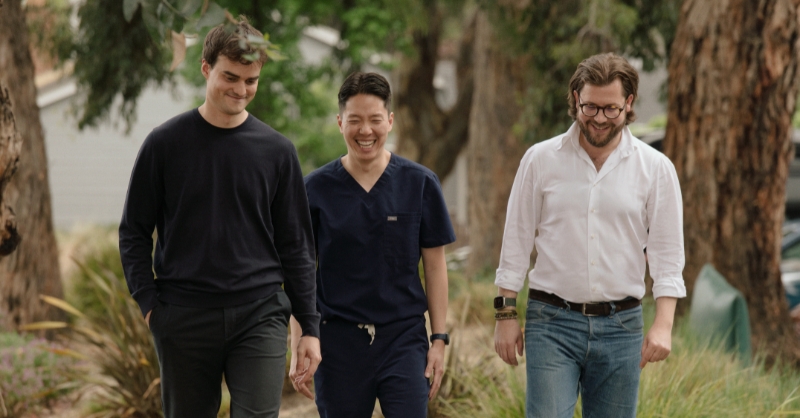
When Steijn Pelle’s dentist showed him what it actually takes to run a dental practice, he didn’t go back to his laptop and start building. He pulled up a bar stool in the back office and spent months processing insurance claims and reconciling payments by hand. That experience — working inside Dr. Kwon’s Bay Area practice — shaped every product decision that followed at Lassie.
San Francisco-based Lassie announced it has raised $35 million in Series A financing, bringing its total capital raised to $47 million. The round was led by Andreessen Horowitz, which closed a $15 billion mega-fund in January 2026 with a stated thesis of backing AI companies that replace operational drag. The round also drew support from Night Capital, Rahul Vohra (founder and former CEO of Superhuman), Zach Perret (co-founder and CEO of Plaid, valued at $8 billion in its most recent secondary), Taavet Hinrikus (co-founder and former CEO of Wise), Gokul Rajaram, and Brian Balfour (co-founder and CEO of Reforge).
Alex Rampell, co-founder of Affirm and General Partner at a16z, is joining Lassie’s board. Dr. Ed Zuckerberg and Jason Warnick, former CFO of Robinhood, join as advisors.
Lassie was founded by Steijn Pelle, an early product manager at Robinhood and Coinbase, and Frédéric Renken, the first product hire at Superhuman. Previous backers include SV Angel, Homebrew, and Go Global Ventures.
The $200,000 problem
A typical doctor’s office loses more than 100 hours a month to administrative work and spends roughly $200,000 a year on staff that owners can barely find, let alone keep. Lassie’s agent goes directly into a practice’s insurance portals, pulls reimbursements, reconciles them against records, updates the system of record, and verifies funds in the bank — replacing human labour entirely rather than adding another layer of software on top of it.
The company operates in more than 700 practices across 49 states and currently provides business owners with over 250,000 hours of labour each year. It is part of a broader wave of agentic AI companies — such as octonomy, which raised $20M to automate complex enterprise workflows — that are moving the market from AI tools that assist to AI systems that execute.
“Small business owners should be freed up from doing busywork, so they can focus on what they are passionate about. After watching 700 businesses rely on Lassie to do a big part of their administration, I am convinced that the future is bright.” — Steijn Pelle, CEO and co-founder.
“I am thrilled to partner with Steijn, Frédéric, and the team as they build towards one of the most important shifts in software: from tools that help businesses operate to agents that do the work.” — Alex Rampell, General Partner, a16z.
“Before Lassie, I was drowning in paperwork. Now, Lassie saves us over 100 hours a month and payments that used to take four to five weeks hit our account in less than a week.” — Dr. Eric Kwon, founder, Grace Dental.
The competitive landscape
Lassie competes with deeply entrenched legacy systems. Dentrix, owned by Henry Schein and trusted by more than 35,000 practices, offers a broad suite covering scheduling, billing, imaging, and analytics but requires staff to operate it. NexHealth focuses on patient communication and intake automation but does not autonomously execute financial back-office tasks. The broader race to build AI that does work rather than advises has attracted significant capital — Decagon raised $250M at a $4.5B valuation on a similar premise in enterprise customer service. Where these platforms give practices better tools, Lassie’s bet is that practices want the work done for them entirely.
a16z has backed this thesis before: Pit, a Stockholm-based startup building custom AI systems to replace manual enterprise workflows, secured $16M from the firm in May 2026 — with the same Alex Rampell on record saying “every company can now run on systems they actually designed themselves.”
Market context
According to Grand View Research, the global AI automation market was valued at $129.92 billion in 2025 and is projected to reach $1.14 trillion by 2033, growing at a CAGR of 31.4% — with healthcare expected to be the fastest-growing vertical at 36% annually.
The real question Lassie forces the market to answer is not whether AI can handle dental paperwork. It already does. The harder question is how far autonomous back-office systems can expand before practice owners start asking what, exactly, they still need staff for.