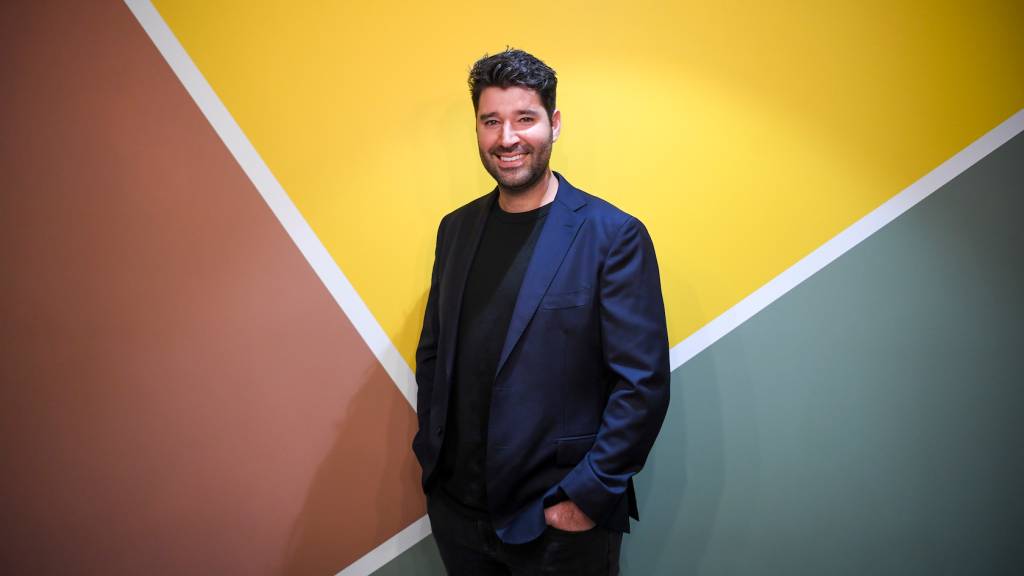
This as-told-to essay is based on a conversation with Gabrielle Tao, a former Salesforce SVP. It has been edited for length and clarity.
I spent more than two decades working in tech, including at companies like Oracle and Salesforce. By many measures, my career was successful — I’d helped build multiple successful products. But it still felt like there was a limit to how far I could go as a woman of color.
I had wanted to start my own company for decades, but I never genuinely thought I could do it. I spent years absorbing subtle and explicit messages that I didn’t have what it took, and I think a lot of underrepresented people in tech quietly internalize those messages over time.
But in recent years, AI has changed the equation. The technology has made me believe founders like myself can finally build products and businesses that have a better chance of competing with much larger companies.
Last September, I left my senior vice president role at Salesforce, where I had worked since 2019, to pursue an AI governance startup of my own.
I remember thinking: If not now, when?
Entrepreneurship didn’t feel like a real option for most of my career
For most of my career, entrepreneurship felt almost impossible, especially when it meant competing with giants like Oracle, Microsoft, and Salesforce. While breaking in is still an uphill battle, I believe AI has lowered the barriers to entry for tech entrepreneurs. To start a business, you often need websites, operations, marketing materials, analysis, and customer research — and AI can now accelerate all of that.
I also realized AI could help much smaller teams move far faster than they could in the past. Research that once took enormous amounts of time can now happen much more quickly, and building products has become much more accessible.
For the first time, I felt like smaller companies had a real chance to compete in ways they couldn’t before. That shift in technology — combined with my years of experience — finally gave me the confidence to take the leap myself.
Read more about people who’ve found themselves at a corporate crossroads
I spent years preparing financially before resigning
Leaving a stable job was scary.
A big part of what finally pushed me to take the leap was my Buddhist practice. It helped me think more seriously about living life without regret and having the courage to challenge myself.
I also spent a lot of time preparing financially. I support my father and mother-in-law financially, and my husband is retired, so I knew I couldn’t make a move like this without careful planning and my family’s support.
Before resigning, I spent a lot of time thinking through budgeting, savings, and how my family would live if I stopped receiving a corporate paycheck. Since I left Salesforce, we’ve cut back on discretionary spending, including travel.
Although I believe I prepared well for the financial side of entrepreneurship, looking back, I wish I had planned the actual business and product more deeply before leaving my job. When I resigned, I still had maybe 10 or 20 business ideas in my head. That uncertainty slowed some of my early progress, but over time, I found my direction.

Gabrielle Tao
I keep coming back to one AI tool
Today, I’m focused on building Tovix AI, an AI governance startup focused on AI testing and monitoring tools.
The products have been live for two months, and the business is generating revenue — I now have a small number of paying customers.
As I build the business, multiple AI tools have been helpful, but the one I keep coming back to is Claude, which helps with nearly everything related to research and development. It often feels like having an architect, engineering team, and product manager all in one — and it’s become a core part of building products, automating testing, and deploying code.
I underestimated the power of my corporate career in kickstarting my startup
Over decades in tech, I developed a much deeper understanding of how businesses actually work than I realized at the time, and I don’t think I could have built a startup without that corporate experience.
I built a deep understanding of how companies operate across sales, marketing, finance, legal, product development, pricing, and customer support.
I also discovered that I had built trusted relationships with former colleagues over many years. Once I started my company, I found that many people were willing to collaborate and share advice.
I think a lot of people — especially people who feel stuck in corporate careers or who have recently been laid off — underestimate the value of the experience and knowledge they’ve already built.
I spent years believing entrepreneurship wasn’t a realistic option for someone like me. For the first time in my life, partly because of advances in AI, it finally feels like a real option.
Do you have a story to share about how you’re navigating a career crossroads? If so, please reach out to the reporter via email at [email protected], or via Signal at jzinkula.29.