Evotrex just landed $30 million in Series A funding to build recreational vehicles that don’t need hookups or charging stations. The startup, backed by consumer electronics giant Anker, is betting that adventure-seekers want to venture far beyond traditional campgrounds without worrying about power. In a crowded RV market seeing a wave of electric entrants, Evotrex’s hybrid approach could redefine what off-grid travel actually means.
Evotrex just raised $30 million to solve a problem that’s been plaguing the recreational vehicle industry for decades – the tyranny of the power cord. The Series A round, backed by consumer electronics powerhouse Anker, positions the startup to challenge both traditional RV makers and the wave of electric vehicle companies now entering the space.
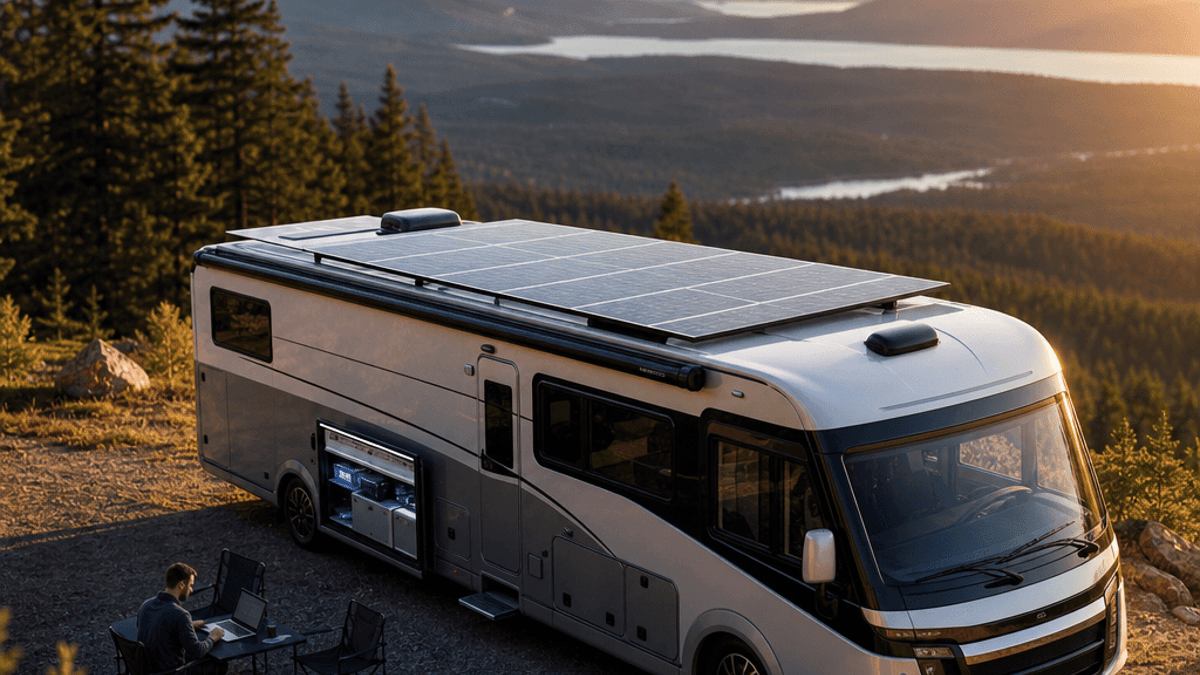
The pitch is simple but ambitious: build RVs that can truly go anywhere, powered by a hybrid system that generates its own electricity without needing campsite hookups or EV charging stations. For anyone who’s ever planned a cross-country road trip around the availability of 50-amp service or watched their battery die in the backcountry, it’s a compelling vision.
Anker’s involvement isn’t surprising. The company built its reputation on portable power solutions and battery technology, expertise that maps directly onto Evotrex’s core challenge. While terms of the investment weren’t disclosed, Anker’s participation signals confidence that off-grid power systems could be the next battleground in outdoor recreation tech. The consumer electronics giant has been expanding beyond phone chargers into larger power stations and solar solutions, making an RV play a logical extension.
The RV market is having a moment, even as it navigates post-pandemic demand fluctuations. American consumers bought over 500,000 RVs in 2021, and while sales have cooled from that peak, the outdoor recreation boom hasn’t gone away – it’s just evolving. Younger buyers want different things than the traditional snowbird demographic. They want to work remotely from national forests, not retire to Arizona RV parks.
That shift is creating opportunities for startups willing to rethink what an RV should be. Companies like Pebble and Lightship have raised venture money to build electric RVs with sleek designs and tech-forward features. But they all face the same infrastructure problem: where do you charge a massive battery in rural Wyoming? Evotrex is betting that hybrid power – likely combining solar panels, batteries, and possibly a range-extender generator – offers a more practical path to true off-grid capability.
The technical challenges are significant. RVs are power-hungry beasts. Air conditioning alone can draw thousands of watts, and that’s before you account for refrigeration, water heating, and the laptops and Starlink dishes that remote workers now consider essential. Any system claiming to support extended off-grid living needs serious generating capacity and intelligent power management.
That’s where Anker’s battery management expertise becomes critical. The company knows how to squeeze maximum efficiency from lithium cells and build systems that balance multiple power sources. If Evotrex can package that technology into a vehicle that doesn’t compromise on comfort or range, they’ll have something genuinely differentiated in a market dominated by companies still building rolling hotel rooms that need to be plugged in every night.
The $30 million will fund product development and help Evotrex move from concept to production. The startup hasn’t revealed detailed specifications or pricing yet, but the RV market generally ranges from $50,000 entry-level trailers to $500,000-plus luxury motorhomes. Where Evotrex positions itself in that spectrum will determine whether it’s targeting weekend warriors or serious full-timers.
Competition is heating up fast. Beyond the electric RV startups, traditional manufacturers like Winnebago and Thor Industries are experimenting with hybrid and electric options. They have manufacturing scale and dealer networks that startups can’t match, but they’re also burdened by legacy designs and supply chains. Startups like Evotrex can build from scratch, optimizing every system for efficiency and modern use cases.
The funding environment for consumer hardware startups has been challenging lately, making a $30 million raise noteworthy. Investors have pulled back from capital-intensive businesses that require tooling, inventory, and long development cycles. That Evotrex secured backing suggests the team has a compelling prototype or demonstrated technology that convinced Anker and other investors the execution risk is manageable.
Evotrex is making a calculated bet that the future of RVs isn’t purely electric – it’s intelligently hybrid. With Anker’s backing and $30 million in the bank, the startup has the resources to prove whether off-grid freedom can be engineered into a product that works in the real world, not just on paper. The RV industry has been waiting decades for someone to crack the power problem. If Evotrex succeeds, they won’t just build a better camper – they’ll redefine where adventurers can actually go.