Seven-year-old electric vehicle startup Canoo has filed for bankruptcy and will “cease operations immediately.” The company is liquidating its assets in a Chapter 7 proceeding in the Delaware Bankruptcy Court.
The company said in a press release published late Friday that it was “in discussions with foreign sources of capital” that proved unsuccessful and also singled out an inability to secure funding from the U.S. Department of Energy’s Loan Program Office, which has been on a lending spree in the waning days of the Biden administration.
Canoo said in its bankruptcy filing (and the filings for its subsidiaries) that it owes money to hundreds of creditors and that it has more than $164 million in total liabilities. It claimed around $126 million in assets.
The bankruptcy filing comes just a few weeks after Canoo furloughed the remainder of its workers and idled its factory in Oklahoma. The company struggled throughout 2024 to get more than a few of its electric vans into the hands of prospective customers and suffered numerous executive departures. It had just $700,000 in the bank in mid-November.
Canoo is the latest EV startup to go bankrupt after merging with a special purpose acquisition company (SPAC) as a shortcut to going public. Electric Last Mile Solutions was the first in June 2022. But since then, Fisker, Lordstown Motors, Proterra, Lion Electric, and Arrival all filed for different levels of bankruptcy protection in their various home countries. (Canoo bought Arrival’s assets out of insolvency in 2024, though it’s unclear if it ever put any of it to use.)
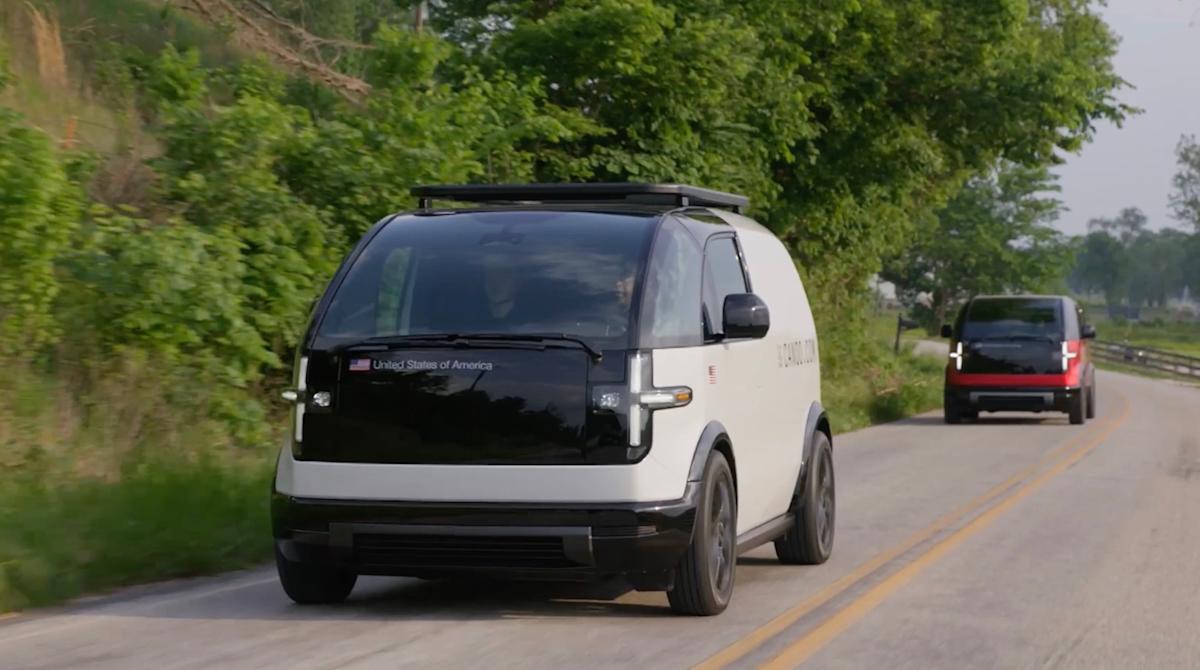
Canoo announced plans to merge with SPAC Hennessy Capital Acquisition Corp. in August 2020 and went public that following December, raising around $600 million. In the years since it went public, the company made a small number of its bubbly electric vans and handed them over to partners — some paying — willing to trial the vehicles. The U.S. Postal Service, Department of Defense, and NASA all have or had Canoo vehicles.
At one point, the company even courted Walmart, which agreed to purchase as many as 10,000 EVs from Canoo in 2022. But the deal was essentially nonbinding and bore little risk for the retail giant.
Canoo was founded in late 2017 by a splinter group of executives who were fed up with the drama surrounding the other EV startup where they worked at the time, Faraday Future. Originally called Evelozcity, those executives developed a modular electric vehicle platform that could power cabins in multiple shapes and sizes, and utilized advanced technology like a steer-by-wire system.