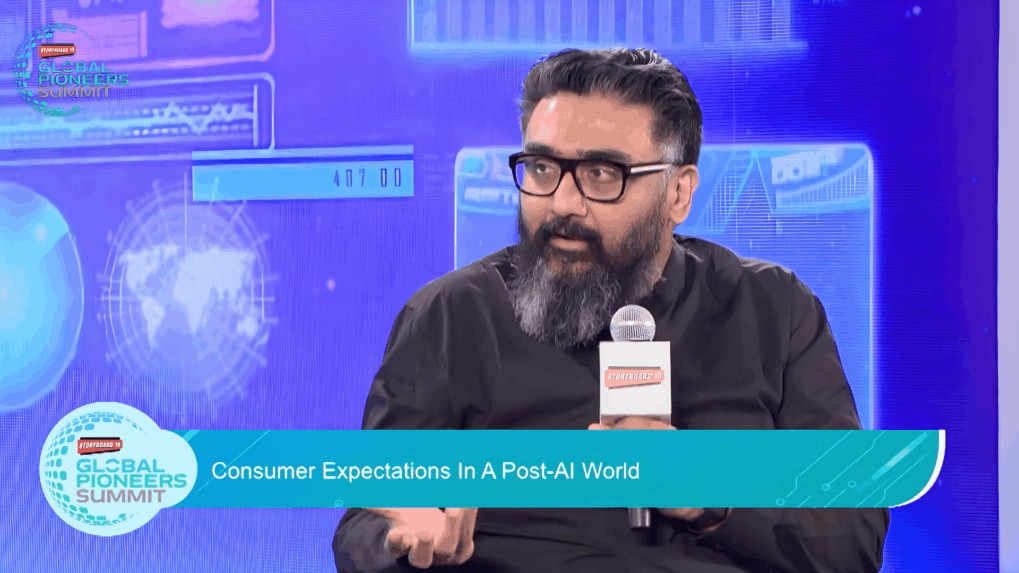
For much of the past decade, Kunal Shah has occupied a rare position in India’s technology industry: founder, investor, philosopher and public intellectual rolled into one.
Now, he is preparing for his biggest role yet.
Meta has chosen Shah, the founder of fintech company CRED, to become the next global leader of WhatsApp, succeeding Will Cathcart and placing an Indian entrepreneur in charge of a platform used by more than three billion people worldwide. The appointment comes alongside Meta’s $900 million investment in CRED, deepening ties between the social media giant and one of India’s most closely watched startups.
Read more: Meta invests $900 million in CRED, names Kunal Shah as next WhatsApp chief
For many outside India, Shah may appear to be an unconventional choice. He has never run a global messaging platform. He has spent most of his career in consumer finance. Yet within India’s startup circles, he has long been regarded as one of the country’s most influential product thinkers—someone whose ideas often travel further than the companies he builds.
The Philosophy Graduate Who Left Business School
Born in Ahmedabad and raised in Mumbai, Shah studied philosophy at Mumbai’s Wilson College before enrolling in a management program that he eventually left. His entrepreneurial career began long before India’s startup boom became mainstream.
Unlike many founders of his generation, Shah built his reputation not through engineering or software development but through a deep interest in consumer behaviour. Colleagues and investors frequently describe him as a student of psychology and incentives—traits that would later shape both FreeCharge and CRED.
FreeCharge: Betting on Digital Payments Before They Were Cool
In 2010, Shah co-founded FreeCharge with Sandeep Tandon. At a time when India’s digital payments ecosystem was still nascent, the company sought to make mobile recharges and bill payments more rewarding by offering coupons and discounts alongside transactions.
The model gained traction rapidly. In 2015, e-commerce company Snapdeal acquired FreeCharge in what was then one of the largest startup acquisitions in India, valued at roughly $400 million. The deal turned Shah into one of the country’s best-known entrepreneurs and established his reputation as a founder capable of anticipating consumer trends before they became obvious.
The CRED Experiment
Three years later, Shah launched CRED.
The idea appeared counterintuitive. Rather than targeting the broad mass market, CRED focused on a narrow segment: financially disciplined credit-card users with strong credit scores. Members were rewarded for paying their bills on time and gained access to exclusive offers, experiences and financial products.
What looked like a niche proposition evolved into one of India’s most valuable fintech companies. Backed by prominent global investors, CRED expanded into lending, commerce, payments and financial services while cultivating an unusually loyal customer base. The company became known as much for its brand-building and marketing as for its financial products.
The approach reflected a recurring theme in Shah’s career: building businesses around trust and behavior rather than merely transactions.
Also read: Meta says AI era drove choice of Kunal Shah as next WhatsApp chief; links CRED investment to leadership transition
More Than a Founder
Over the years, Shah became one of India’s most prolific angel investors, backing hundreds of startups across fintech, software and consumer technology. He also served as a part-time partner at Y Combinator and advised several companies and founders.
His influence extended beyond boardrooms. Through podcasts, interviews and social media, Shah became one of the most quoted voices in India’s startup ecosystem, often discussing psychology, incentives, technology adoption and the future of work.
That visibility transformed him into something unusual for a startup founder: a public thinker whose ideas attracted as much attention as his businesses.
Why Meta Picked Him
Meta executives have framed Shah’s appointment around product-building, trust and the next era of technology.
Those themes align closely with WhatsApp’s growing ambitions. What began as a messaging application is increasingly becoming a platform for payments, commerce, customer service and AI-powered interactions.
In India especially, WhatsApp has evolved into critical digital infrastructure for consumers and businesses alike. Millions of small merchants use it to communicate with customers, while larger enterprises rely on it for customer engagement and commerce. Meta executives have repeatedly emphasized India’s importance to WhatsApp’s future growth.
Shah’s experience building products around trust, payments and consumer behavior may therefore be more relevant than a traditional messaging background.
Meta Chief Product Officer Chris Cox personally approached Shah for the role, according to reports, underscoring the strategic importance the company places on the transition.
The Next Chapter
The appointment also represents something larger than a career milestone.
For years, Indian founders built products primarily for domestic audiences while leadership of global technology platforms remained concentrated in Silicon Valley. Shah’s move to WhatsApp signals how dramatically that dynamic has changed.
India is now one of the world’s most important digital markets, and the entrepreneurs who emerged from its startup ecosystem are increasingly being viewed as candidates to lead global technology businesses.
Whether Shah can translate his success as a founder into stewardship of one of the world’s largest communications platforms remains to be seen.
But his journey—from philosophy student to startup founder, from FreeCharge to CRED, and now from fintech entrepreneur to WhatsApp chief—already reflects the maturation of India’s technology industry itself.
WATCH
First Published on