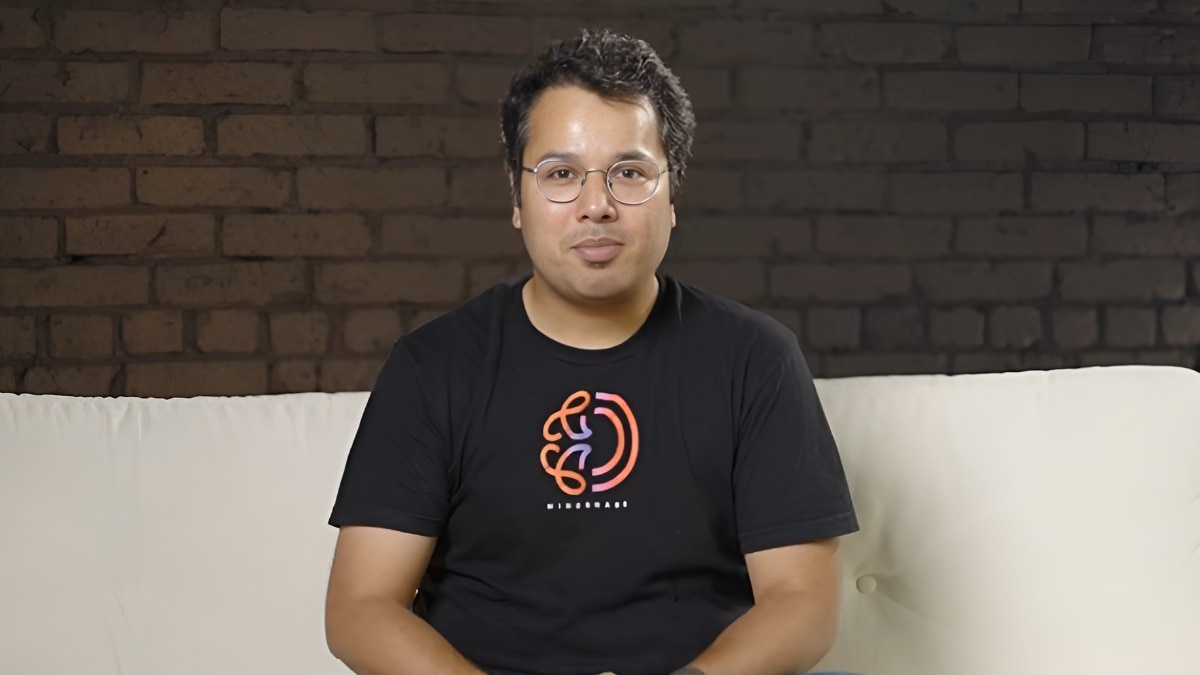
An IIT degree, an MBA from Harvard Business School and a company reportedly acquired for around USD 300 million (about Rs 2,700 crore): it sounds like a dream career on paper. But according to Goldcast co-founder Palash Soni, success came less from credentials and more from taking risks that others could not see.
In a conversation shared on Instagram by creator Viraj Ala, Soni reflected on his journey from student to entrepreneur and spoke openly about funding struggles, leadership, layoffs and the mindset that helped him build Goldcast, an AI-powered B2B video platform acquired by Blackstone-backed Cvent in December 2025.
FROM IIT KANPUR TO HARVARD — THEN A BIG BET
When Ala asked about his background, Soni replied simply, “I went to IIT Kanpur for undergrad. I did my MBA from Harvard Business School.”
Soni’s journey before building Goldcast was already shaped by technology and business experiences. According to his LinkedIn profile, he completed a dual BTech-MTech degree in Electrical Engineering from IIT Kanpur, where he also interned at companies like Qualcomm and Boeing.
Before starting Goldcast, he worked at InMobi in Bengaluru in product management and strategy roles and also founded a customer relationship management startup called Aqita.
While pursuing his MBA at Harvard Business School, Soni co-founded Goldcast in 2020 with Kishore Kothandaraman and Aashish Srinivas. The startup went on to raise more than USD 40 million, work with hundreds of enterprise customers and eventually become part of one of the biggest B2B marketing technology acquisitions of the decade, according to Soni.
Asked what he does today, he smiled and said, “I just sold my company.” When Ala mentioned Goldcast’s reported USD 300 million acquisition, Soni responded, “Yeah, it was a great deal.”
However, Soni believes degrees alone never build companies.
When asked about one lesson schools never teach, his answer surprised many: “It’s actually naivety.”
He recalled playing Counter-Strike during college, saying, “I was a noob. But I would run out in the open field and get headshot.” That willingness to try, fail and learn became part of how he approached entrepreneurship.
WHY HAVING LESS BECAME AN ADVANTAGE
Soni explained that Goldcast never had unlimited resources.
“We didn’t have the most money, so everything was kind of against us. So it forced focus, and that focus was a blessing in disguise,” he said.
The same mindset helped when investors were not immediately convinced by the idea.
“We saw something in the market that no one else saw. I always had a very hard time raising money for Goldcast We believed in something that was very hard for outsiders to see.”
Asked whether that belief was a strength or weakness, he answered without hesitation: “It was a strength.”
THE HARDEST PART OF LEADERSHIP
The conversation also touched on layoffs.
When asked what they taught him about human nature, Soni candidly replied, “I should have done it sooner.” At the same time, he said he always tried to remain approachable. “Even till the end, we had 150 people, and I think I’ve spoken with everyone one on one multiple times.”
Finally, when asked what separates people at the top from everyone else, Soni’s answer was just two words: “Intellectual honesty.”
For him, building a successful company was not only about talent or prestigious institutions, but about backing an idea, staying focused and believing in it long before others did.
– Ends