


Welcome back to Asia Tech Review, your curated digest to keep up to date with tech news across Asia.
Today we’re looking at how Thailand and OpenAI are teaming up to help 10 health and educational startups in the country grow through a new initiative. And we have the details of a massive new round for Ajaib, a billion-dollar valued Indonesian investment app that’s similar to Robinhood in the US.
To keep up with our issues, follow us on LinkedIn or WhatsApp. Please do share Asia Tech Review with people you know who want to get smart about Asia tech.
For news as it happens, follow ATR Bulletin, our real-time news site that keeps you in the know.

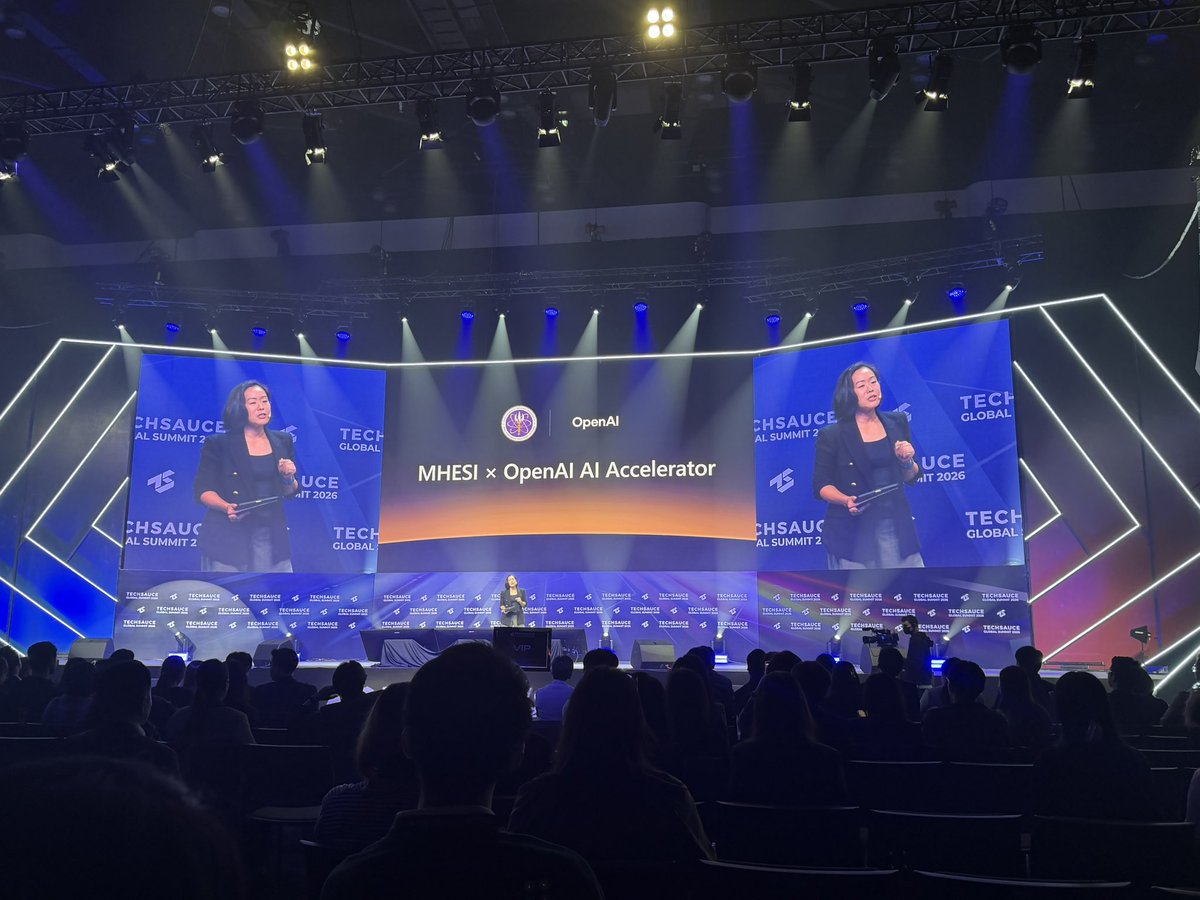
Thailand’s government enlisted an unlikely partner after it announced a partnership with OpenAI that will see the two launch an eight-week incubation programme to develop startups and bring AI growth into its economy.
Ten startups have been selected for the inaugural batch, which marks the first time OpenAI has worked with a national government in this way. The first companies selected span healthcare and education.
Accelerators are typically run by investment firms, or at least with them in close proximity, so this particular one will be quite different. OpenAI isn’t exactly opening up its vast coffers, but it is providing hands-on support:
OpenAI will provide each team with US$2,000 in API credits, one-on-one technical guidance, and access to OpenAI’s latest frontier models. Each startup will also have a dedicated mentor throughout the program. Weekly sessions will cover product design, engineering, automated testing, evaluation, responsible AI, privacy and security, cost management, growth, and fundraising.
There will be a demo day in Bangkok in November, but it isn’t clear whether the initiative will be repeated.
Speaking at the Techsauce Global Summit event on Friday, Thailand’s deputy prime minister Dr Yodchanan Wongsawat (who leads the ministry of education, science, research and innovation) suggested that the government is keen to turn this into a regular series that could eventually attract startups from overseas. A follow-up event would need more participants, and investors especially, to have meaningful impact beyond a publicity stunt.
Jon Russell@jonrussell
OpenAI is launching an 8-week accelerator programme with Thailand’s government (Ministry of Higher Education, Science, Research and Innovation)
8:24 AM · Aug 28, 2026 · 598 Views
1 Reply · 1 Like
Beyond the programme, Dr Wongsawat laid out an ambition for Thailand’s economy to tap into technology, and AI in particular, around areas such as food, education and health. Politicians often paint pretty pictures, but making into a reality is not easy.
Startup ecosystems tend to blossom organically without government stimulation, but Thailand’s startup scene has wilted in recent years.
The country counted more than half a dozen early-stage programs before Covid, with telecom operators, banks and conglomerates getting in on the act. That may be overkill or a signal of startups becoming trendy, but fast forward to today and the accelerators have disappeared and few domestic VCs are left.
We wrote earlier this year about the funding decline when looking at why Thai startups wanting to go public overseas:
Thai companies raised nearly $5 billion in 2020, a figure that placed it behind only China. But the impact of the Covid-19 pandemic and Thailand’s volatile political landscape has seen the numbers dwindle to just $408 million last year.
This initiative with OpenAI shows that the government is trying to put startups, AI and general tech on its economic map, perhaps taking cues from South Korea and others. Time will tell if will be anything more than ceremonial, and whether OpenAI will seek out similar opportunities elsewhere.
In parallel, OpenAI also announced a “ Learning Accelerator” programme in India.
The Thailand tie-up appears to be led by Sandhya Devanathan, a former Meta VP who just joined OpenAI to lead consumer growth, enterprise adoption and regulatory engagement. Based in Singapore, she is a Thai national.
Indonesia’s startup market may be in the doldrums following fraud and the sentencing of Gojek’s founder, but that won’t stop growing startups from getting funded. Proof of that came late last week when Ajaib, a digital investing app modeled on Robinhood, closed a $270 million investment. That’s the country’s largest deal since 2022.
The investment is led by Japan’s SBI Holdings and it values Ajaib at over $1 billion. That’s all the specifics we have. Ajaib has previously been valued at over $1 billion before, and it has now raised more than $500 million.
The obvious question is how investors find a meaningful return at that valuation, and that’s one that continues to dog startup investing across Southeast Asia. Singapore has pushed hard to make its stock exchange a viable option, and SGX has an agreement with Nasdaq to enable dual listings, while Hong Kong has also been mooted as a possible option for startups in the region.
We await that elusive first listing to pave the way. Certainly, the fact that Sea and Grab, Southeast Asia’s most prominent public figures, are only tradeable in the US is indicative of the situation.
SBI, meanwhile, has been busy doing deals. In recent months, it bought a majority stake in Singapore-based crypto exchange Coinhako, was part of stablecoin platform Fasset’s recent round and backed financial instutitonal focused startup Pints AI. It seems to see this relative down market as a good time to be bold on financial platforms in Southeast Asia.
China’s Didi plans to invest more than $200 million in Argentina this year as it expands into smaller cities and builds out safety technology for its Latin America push [Reuters]
Shein will debut in Hong Kong on Tuesday after failing to win Chinese regulatory approval for planned New York and London listings, giving the Singapore-headquartered retailer a more politically acceptable route to market [Reuters]
India’s market regulator approved Jio Platforms’ $3.8 billion IPO, teeing up what could be the country’s biggest listing during a sharp rebound in new offerings [Reuters]
Meituan returned to profit in the second quarter as easing price competition allowed it to pull back on subsidies, with adjusted net profit reaching 2.5 billion yuan ($372 million) and revenue up 14.4% to 105 billion yuan [SCMP]
China’s CXMT reported first-half revenue of 150.3 billion yuan ($22.4 billion), nearly 10 times higher than a year earlier, as AI demand helps turn the memory chipmaker profitable [Bloomberg]
Malaysia’s semiconductor industry chief raised his 2026 electronics export forecast to more than 900 billion ringgit ($223 billion) as AI demand runs ahead of expectations [Bloomberg]
Tencent released Hy4 Preview, a 770 billion-parameter foundation model with a 1 million-token context window that it says beats Z.AI and Moonshot AI in internal tests [Tencent]
South Korea plans to give every citizen free access to generative AI services, turning homegrown chatbots into a public utility as Seoul pushes for AI sovereignty [WSJ]
Vietnamese leaders urged Qualcomm and Samsung Electronics to expand investment in AI, semiconductors and R&D as the country tries to move further up the regional tech supply chain [Reuters]
Z.ai released GLM-5.3’s weights on Hugging Face under a new licence that requires companies with more than $10 billion in aggregate revenue to pass a security review before hosting the model commercially [The New Stack]
Beijing’s AGI Bar has become an unofficial clubhouse for China’s AI industry, with entrepreneurs using it to trade gossip, recruit talent and court investors over beers [Bloomberg]
CXMT will supply LPDDR6 memory chips for Xiaomi’s upcoming 18 Fold smartphone, marking the first mass-market use of the new DRAM standard less than a year after the Chinese chipmaker began LPDDR5 production [Reuters]
Chinese AI companies including Alibaba, MiniMax and ByteDance are leading AI video-generation benchmarks, helped by huge short-video datasets, looser copyright rules and aggressive pricing [SCMP]
AI video tools such as ByteDance’s Seedance 2.0 are replacing Chinese actors and influencers in parts of the content industry, with 89 of Douyin’s top 100 animated dramas generated by AI by May [FT]
Nvidia is pushing robots, cars and drones as the next frontier for AI chips and software, with China’s humanoid robot supply chain giving it a large physical-AI market despite wider US export controls [WSJ]
CXMT sued the Pentagon over its inclusion on a US list of companies alleged to support Beijing’s military [Reuters]
Google opened its first Pakistan office in Karachi as it pledges to support the country’s $30 billion IT export target and expand beyond advertising in the market [Nikkei Asia]
Meta and Roblox agreed to strengthen child-safety measures in the Philippines, including age checks, parental controls and faster removal of harmful content [Reuters]
Cambodia says it has inspected nearly 800 online scam sites and shut more than 600, claiming no large-scale fraud compounds remain operating as international pressure on Phnom Penh grows [Nikkei Asia]
The Trump administration is drafting new AI chip export controls that would target Chinese firms’ access to advanced chips through data centres in countries including Thailand and Singapore [The Information]
Taiwanese prosecutors searched two Unimicron Technology sites and questioned 18 people over allegations that the company falsely labelled China-made printed circuit boards as Taiwanese [Reuters]
Chinese drone makers are developing low-cost, 3D-printed interceptors for kamikaze drones, with companies at Shenzhen’s main drone fair pitching AI-assisted accuracy and speeds above 300 km/h [FT]
For news as it happens, follow ATR Bulletin, our real-time news site that keeps you in the know.
Source link