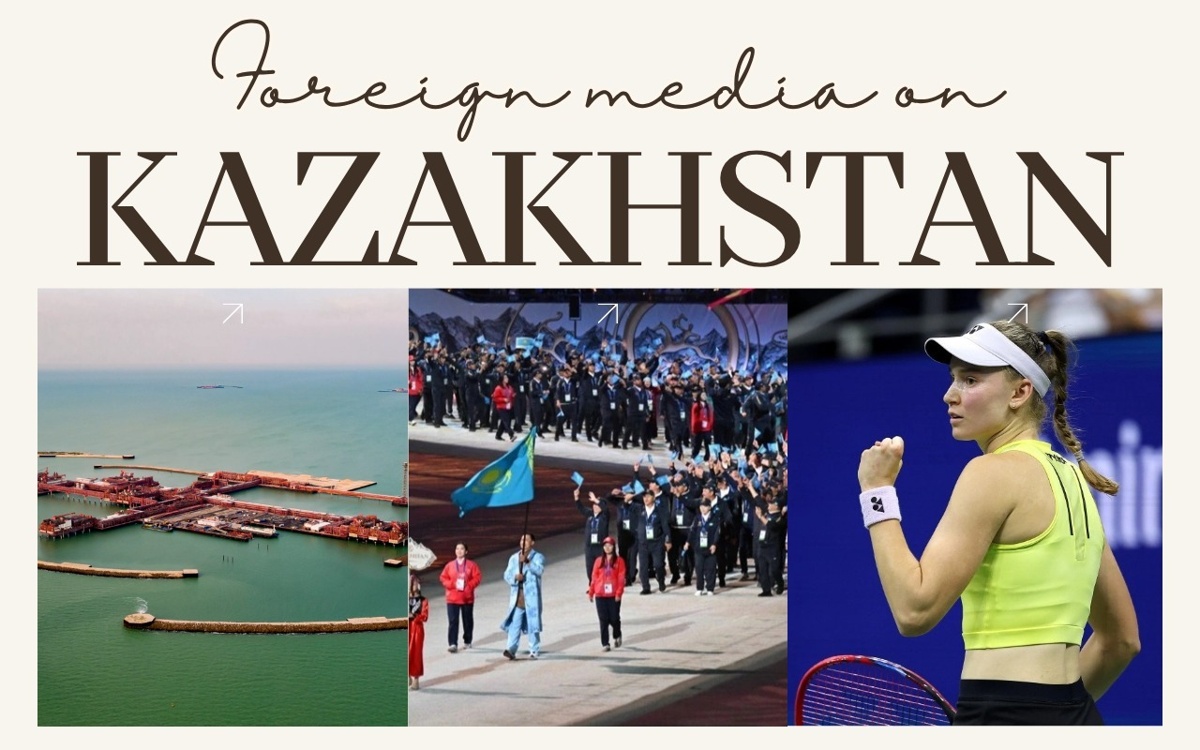
Eureporter: From oil reserves to infrastructure: How Kazakhstan invests in future generations
According to Eureporter, Kazakhstan is preparing to use part of its National Fund to finance major infrastructure projects, potentially shifting sovereign wealth from financial savings into assets that support long-term economic growth.
The country plans to allocate more than $4 billion from the fund for infrastructure in 2027, followed by just over $3 billion annually in 2028 and 2029. The fund’s foreign-currency assets stood at $65.5 billion by mid-2026.
The approach reflects a broader debate over whether sovereign wealth should only be preserved for future generations or also invested in infrastructure that strengthens the economy today.
Kazakhstan has previously tapped the fund during major shocks, including the 2008-2009 financial crises and the COVID-19 pandemic. This time, however, the objective is different: addressing infrastructure bottlenecks before they constrain economic growth.
Ultimately, the strategy’s success will depend not simply on how much Kazakhstan withdraws, but on the long-term value of the infrastructure created in return.
The Pie: How Kazakhstan invests in student startups and takes them global
Kazakhstan is accelerating its push into artificial intelligence and technology entrepreneurship, with Nazarbayev University (NU) becoming a key hub connecting research, startups and international investors, The Pie reports.
Central to this effort is the partnership between Nazarbayev University Science & Technology Park (NU STeP) and StartX, the non-profit accelerator affiliated with Stanford University. Since 2022, 18 projects represented by NU STeP have participated in StartX programs, gaining access to mentors, professional networks and the US technology ecosystem.
“We are proud that startups from Kazakhstan are gaining international recognition,” said NU Executive Vice President Aslan Sarinzhipov, adding that the goal is to create technology companies capable of competing globally.
Among the participants is Cerebra AI, whose technology analyzes CT scans to detect signs of ischemic stroke in less than five minutes and is used in 46 medical institutions.
Other projects include biotechnology company Arlan Biotech, medical AI startup Defect AI, biomechanics company Mirai Tech and WeGlobal AI, whose platform has reached more than one million students.
The Nazarbayev University & NIS Foundation invests $1 million annually in startup development, while NU has allocated 40 hectares for a new science and technology park. The initiative aims to turn Kazakhstan’s research and technology projects into globally competitive companies.
South China Morning Post: Kazakhstan aims to become an education hub, but experts say jobs must match skills
Kazakhstan is seeking to become a Central Asian education hub while expanding university cooperation with Hong Kong and mainland China, experts said at the SCMP China Conference: Central Asia 2026.
Nazarbayev University president Professor Waqar Ahmad said Kazakhstan had attracted nearly 40,000 foreign students and was building partnerships with leading universities, including a dual-degree programme with Hong Kong University of Science and Technology.
“If you look at education hubs, whether it’s London, New York or the UAE, it isn’t just quality education. It’s the broader ecosystem,” Ahmad said.
UNDP Kazakhstan representative Katarzyna Wawiernia stressed that education must translate into employment opportunities.
“A young population does not automatically become an economic dividend,” she said. “It becomes a dividend when education, skills, investment and productive job creation move together.”
Experts also highlighted growing demand for specialists who understand both Kazakhstan’s and China’s business environments as economic cooperation deepen.
Reuters: Kazakhstan suspends proceedings to recover $5 bln from the NCOC oil consortium, IFX reports
Kazakhstan’s Justice Ministry has suspended enforcement proceedings to recover 2.3 trillion tenge ($5.06 billion) from the operator of the giant Kashagan oil field, Reuters reports.
The North Caspian Operating Company (NCOC), whose shareholders include Shell, TotalEnergies, ExxonMobil and China’s CNPC, has been locked in a long-running dispute with Kazakhstan over alleged environmental violations related to sulphur storage.
NCOC and its contractors reject the allegations and the fine, with the dispute also being heard in international arbitration.
In July, Kazakhstan reportedly warned NCOC’s chief that he could face criminal prosecution if the fine was not paid.
The Japan Times: Elena Rybakina secures rise to No. 1 to make history for Kazakhstan
Elena Rybakina became the first player representing Kazakhstan to secure the world No.1 ranking after reaching the U.S. Open semifinals with victory over Zheng Qinwen, The Japan Times reports.
The second seed, who arrived at Flushing Meadows following an injury in Cincinnati, will officially replace Aryna Sabalenka at the top when the rankings are updated on Monday.
“I’m very proud representing Kazakhstan,” Rybakina said. “Now they play tennis, and more and more are coming to the tennis facilities.”
The 2022 Wimbledon and 2026 Australian Open champion becomes the 30th woman to reach No.1 in the rankings.
The Times of Central Asia: Kazakhstan tops World Nomad Games amid conflicting medal counts
According to The Times of Central Asia, Kazakhstan finished first in the team standings at the 2026 World Nomad Games in Kyrgyzstan, although published reports differ over the final medal totals.
Qazinform News Agency reported that Kazakhstan won 32 gold medals and 74 medals overall, ahead of host Kyrgyzstan, which collected more medals but less gold.
Kyrgyz presidential press secretary Askat Alagozov confirmed Kazakhstan’s victory after acknowledging a “technical discrepancy” involving the counting of medals won by three Kazakh athletes.
“We congratulate our Kazakh brothers on their victory!” Alagozov said, emphasizing the spirit of mutual respect and fair competition at the Games.
Other published accounts reported different medal totals, including for Mongolia, making it difficult to establish a definitive final table.
The sixth World Nomad Games concluded on September 6 after a week of traditional sports competitions around Issyk-Kul.
You can read last week’s digest here.