For a startup city in the AI era, merely discovering technology is not enough. In addition to identifying promising technologies and supporting early-stage startups, it requires the capability to connect capital and markets and nurture them into global enterprises. Seoul, which ranked 9th in the world for startup ecosystems, has also aligned its next goal with “corporate growth.” The plan is to send startups born in Seoul to the global market by connecting technology demonstration, investment, commercialization, and overseas expansion, centering on AI and deep tech.
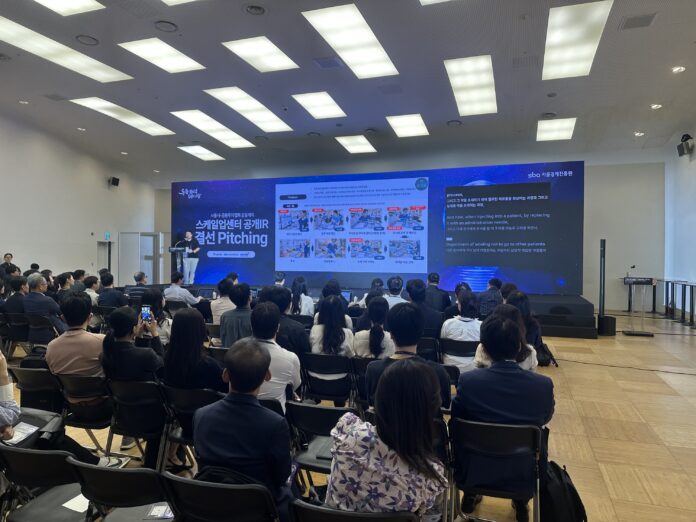
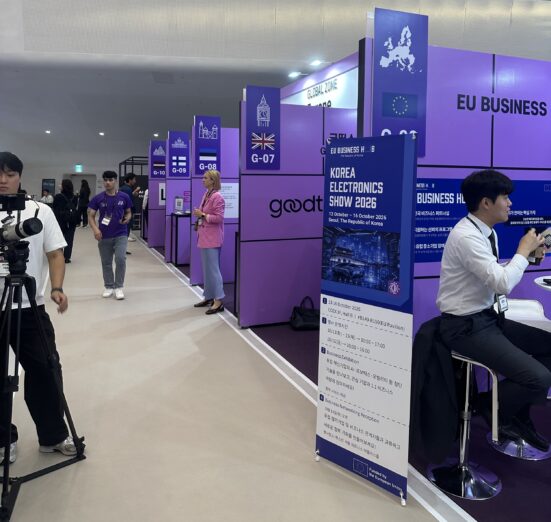
The global startup festival ‘Try Everything 2026,’ co-hosted by the Seoul Metropolitan Government and Maekyung Media and organized by the Seoul Business Agency (SBA), concluded its two-day schedule from the 9th to the 10th at the Dongdaemun Design Plaza (DDP). This year’s theme was ‘AI Changes Everything, Now Try Everything.’ Members of the startup ecosystem, including domestic and international startups, investors, large and mid-sized companies, and universities and research institutions, gathered to discuss industries transformed by AI and new business opportunities. The official program consisted of a global conference, IR pitching, open innovation, one-on-one meetups, exhibitions, and networking held at DDP Art Halls 1 and 2 and the Conference Hall.
This year, the Seoul Metropolitan Government showcased innovative technologies from 80 domestic and international startups, including physical AI and robots, and explored opportunities for attracting investment, business cooperation, and overseas expansion through one-on-one meetups connecting global VCs and large corporations.
Seoul, Ranked 9th Globally, Now Becomes a ‘City Sending Startups to the World’
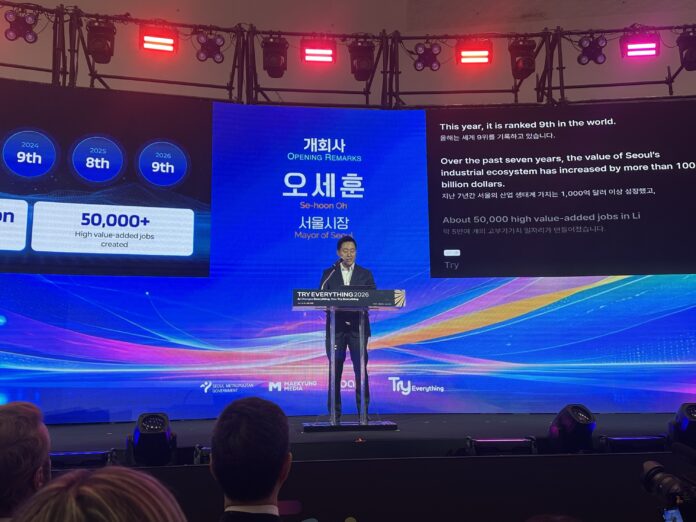
Seoul Mayor Oh Se-hoon, who attended the opening ceremony, emphasized the importance of an ecosystem connecting entrepreneurs, investors, companies, universities, and research institutions, stating that AI has entered a stage of creating new markets beyond transforming industry and daily life.
Mayor Oh stated, “AI is already breaking down industrial boundaries and changing our work and lives,” adding, “What is important now is not just predicting change, but who takes the challenge first to create a new market.”
Seoul’s startup ecosystem has also ranked among the top in global evaluations. Seoul has been in the top 10 for three consecutive years in the global startup city evaluation covering approximately 300 cities worldwide, and this year it ranked 9th. Mayor Oh also mentioned the achievements that the value of Seoul’s startup ecosystem has grown by more than $100 billion over the past seven years and more than 50,000 high-value-added jobs have been created.
The cards Seoul has played as its next growth axes are AI and deep tech, global scale-ups, and an open startup ecosystem. Centered around future industry hubs such as Yangjae AI, Hongneung Bio, and Suseo Robotics, the plan connects research and development, technology demonstration, and commercialization. It also supports the verification of source technologies from universities and research institutions in corporate and public sectors, passing through startups. The direction is to go beyond simply discovering technologies and tightly connect the entire process—from discovery to actual market entry—within Seoul’s industrial hubs.
Capital accompanies technology as it moves into the market. Since 2019, the Seoul Metropolitan Government has supported startup investments by establishing venture funds totaling 7 trillion won, and starting in 2027, it will create a new ‘Next Economy Seoul Fund’ worth 4 trillion won. By supplying capital to future industries such as AI and K-culture, while simultaneously leveraging networks with overseas investors and startup support organizations, the city aims to expand the foundation for companies originating in Seoul to target the global market from the early stages.
The Seoul Metropolitan Government also emphasized the role of the private sector in creating an environment where startups can grow after securing technology and capital. It plans to establish points of contact to enable investors, large and medium-sized enterprises, universities, and research institutions to meet more frequently with startups to verify technologies and collaborate, while eliminating regulations and unnecessary procedures that hinder the imagination and challenges of entrepreneurs. Creating an ecosystem that supports second chances, ensuring that a single failure does not become the end of an entrepreneurial journey, was also presented as a specific task.
Mayor Oh identified the private sector as the protagonist of the startup ecosystem in this process, stating, “Innovation is born when startups take on bold challenges, investors discover possibilities, and companies and universities lend their support.” He went on to emphasize that he would transform Seoul into “a city that goes beyond being a place where innovation begins to a city that nurtures innovation and sends it out to the world.”
Why is productivity rising slowly despite excellent AI performance?
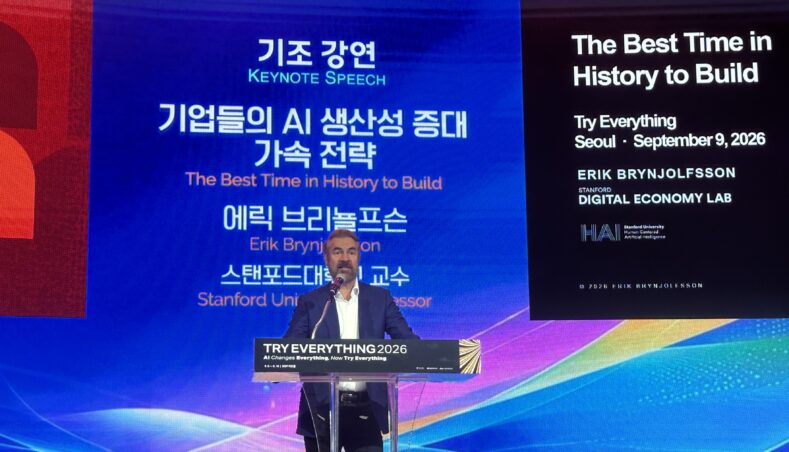
As AI was placed at the center of this year’s event, the keynote speech immediately following the opening posed questions regarding the process by which the technology translates into actual productivity, rather than focusing on AI performance. The lecture by Erik Brynjolfsson, a world-renowned digital economy researcher and professor at Stanford University, was titled “Strategies for Companies to Accelerate AI Productivity Growth.” He developed his argument from the perspective that now, as we hold the most advanced technology in human history, is an opportune time to foster entrepreneurship and establish new companies.
The starting point was the Industrial Revolution over 200 years ago. Just as the steam engine significantly boosted production and living standards by transferring tasks previously performed by human muscles to machines, today’s AI represents a new general-purpose technology impacting the realms of knowledge and judgment. While the number of areas where machines surpass human capabilities—such as visual recognition, language comprehension, and mathematics—is rapidly increasing, the productivity of companies and the economy as a whole has failed to keep pace with the speed of technological advancement. This is the gap identified by Brynjolfsson as the “AI Productivity Paradox.”
It was difficult to bridge the productivity gap solely by introducing better AI. The core message of the lecture was that it is difficult to significantly increase productivity by merely adding new technology to existing tasks; instead, business processes, organizational roles, and even the way of working must be redesigned together. The logic is that the performance of AI can translate into corporate productivity only when technology investment, organizational innovation, new work processes, and entrepreneurship are aligned.
Technology is advancing exponentially, but organizations and systems are failing to keep pace. Brynjolfsson found entrepreneurial opportunities in this very gap. His perspective is that the current changes can open up greater opportunities for entrepreneurs who design new companies and work methods based on technology, rather than those who simply use AI to process existing tasks slightly faster.
Going beyond lectures to investment, demonstration, and global expansion
At the venue, programs connecting these discussions to actual business opportunities continued for two days. In one-on-one on-site meetups connecting startups with investors and large corporations, companies that had undergone pre-matching discussed investment and collaboration possibilities, and the number of dedicated meetup booths was expanded from 15 last year to 30 this year.
Open innovation also played a major role. At the ‘Seoul Open Innovation Insight Day,’ jointly organized by the Seoul Economic Promotion Agency and Mark & Company, companies such as Amorepacific, CJ ENM, InBody, Hyundai Home Shopping, CJ CheilJedang, and Samsung Electronics participated to share their startup scouting criteria and collaboration experiences. The event covered the entire process, from startups leveraging large corporations’ infrastructure to validating business models and connecting them to actual partnerships.
Programs aimed at global expansion also extended to various markets, including Finland, Estonia, and the United States. Events ranged from a Global Startup Exchange where Korean and international startups presented their market entry strategies to global VC networking and sessions on entering overseas markets. Topics that rapidly emerged in this year’s startup market, such as Physical AI, defense and deep tech, Frontier AI, and open innovation, also took the stage. The program booklet included a Palantir FDE session, Antropic’s Asia-Pacific AI startup growth strategy, and a session addressing the mass production challenges of Physical AI.
The questions raised by Try Everything this year went a step beyond the potential of AI technology itself. The question of who can first turn rapidly developing technology into a business, and then take it to the global market through investment and validation, has emerged as a new standard in the startup competition. The meetings among startups, investors, companies, and universities and research institutions gathered at DDP over the two days were also focused on connecting technology to actual businesses and markets.
The phrase “a city that fosters innovation and sends it out to the world,” used by Mayor Oh at the opening ceremony, encapsulates the direction Seoul is envisioning for its startup ecosystem. From discovering promising technologies to nurturing companies and helping them establish themselves in the global market, the challenges Seoul must address have also become clear.
Related
Source link