AI medical scribe Heidi began with a simple premise: free up doctors from time-consuming admin to spend more time with patients.
What followed was rapid growth across the globe, outpacing every other startup in Blackbird Ventures’ portfolio, including Canva.
Over the past 18 months, the company has grown from US$15 million to approximately US$50 million in annual recurring revenue, closed a $98 million Series B led by Point72, and expanded its team to almost 500. In October 2025, the company’s value was reported to be $703 million, on target for a potential $1 billion valuation in the future.
“This is a Melbourne startup gone global,” says Dr Simon Kos, Heidi’s chief medical officer.
“Right now we’re in 190 countries, we’re in 110 languages and we’re doing 2.8 million notes a week, which makes us the world’s biggest scribe by volume.”
They did that in just three years.
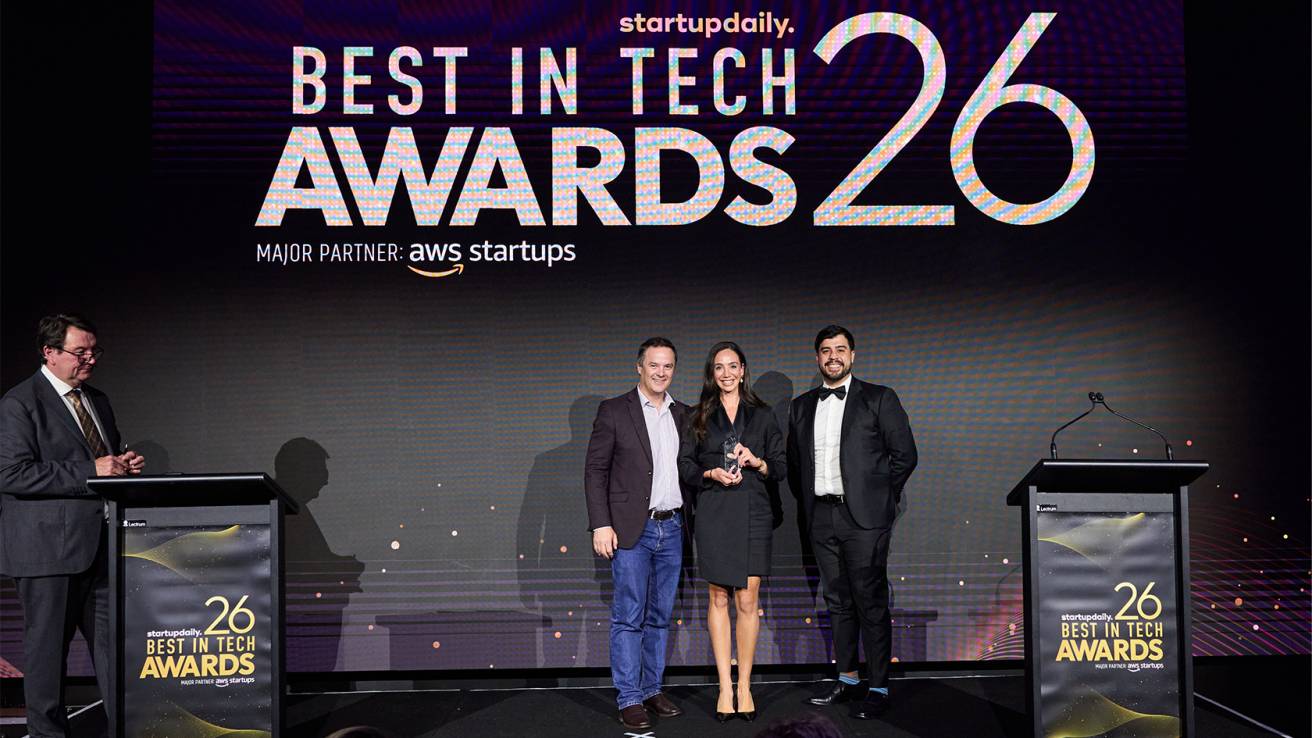
That reach, and its impact on clinicians and patients , helped Heidi take out two awards at the Startup Daily Best in Tech Awards 2026: AI Gamechanger, presented by The Nudge Group, and Scaleup of the Year, presented by AWS Startups.
The AI Gamechanger award celebrates a startup or scaleup using artificial intelligence to deliver practical and impactful AI applications that solve real-world problems.
It’s an achievement that Kos says marks only the beginning of Heidi’s journey.
“There’s a quiet revolution going on in healthcare, and it means better care for people all around the globe,” he told Startup Daily.
More time on patients, not paperwork
No doctor went into medicine to spend hours charting and compiling patient notes.
Yet a 2025 survey found nearly a third of Australian GPs were experiencing burnout, while doctors reported spending an average of 15% of their day on administrative tasks.
It was a problem Heidi cofounder Dr Thomas Kelly knew firsthand. Throughout his medical career, he watched colleagues leave the profession under the weight of administrative work, high patient volumes and mounting pressure on an already stretched system.
Heidi is designed to take some of that work out of the consultation, capturing conversations and turning them into clinical notes and other documentation so doctors can spend more time focused on their patients.
Rather than asking clinicians to fundamentally change how they work, the platform sits around the consultation. Tools such as Heidi Evidence can also surface relevant medical evidence during an appointment, giving doctors access to information at the point it is needed.
Crossing the AI barrier
Healthcare has been slower than many industries to embrace AI, largely because the stakes are so high.
“Healthcare is an incredibly conservative industry with low levels of digitisation and really sensitive data, and if you get it wrong, patients’ lives are on the line,” Dr Kos explains.
Heidi has tackled that sensitivity with safeguards including pseudonymisation and by keeping its core technology in-house.
“One of the hardest things was to get artificial intelligence used in healthcare, and we crossed that barrier,” Kos says.
By owning its full stack, Heidi can keep greater control over patient data and deploy its technology directly within hospital systems, rather than relying on third-party models.
Next, Dr Kos says the company is looking beyond transcription towards a more integrated product, where a single patient interaction could trigger actions such as referrals and follow-ups.
Doubling the world’s healthcare capacity
Independent pilots across Australian healthcare settings found Heidi returned an average of 59 minutes of capacity to clinicians each day. For Dr Kos, that is only the beginning.
“[We’re] on a mission to double the world’s healthcare capacity by 2030,” he said.
The ambition comes as healthcare systems around the world grapple with rising demand and limited clinical capacity. Heidi’s bet is that AI can help close some of that gap by giving clinicians more time to see and care for patients.
Already, the technology has been implemented across major Australian health services including the Royal Children’s Hospital in Melbourne and Queensland’s Children’s Health Service. In New Zealand, Heidi was approved as one of two AI healthcare providers approved for public health use before being rolled out across emergency departments nationwide.
For Dr Kos, the bigger story is what that growth means for doctors and patients.
“It’s not just another story of, ‘Oh, we’re a successful business,’” he says.
“We are actually changing people’s lives. You’ve got clinicians that are able to see more patients.”
See the full Best in Tech winners list here.
Thank you to the Startup Daily Best in Tech Awards 2026 partners: