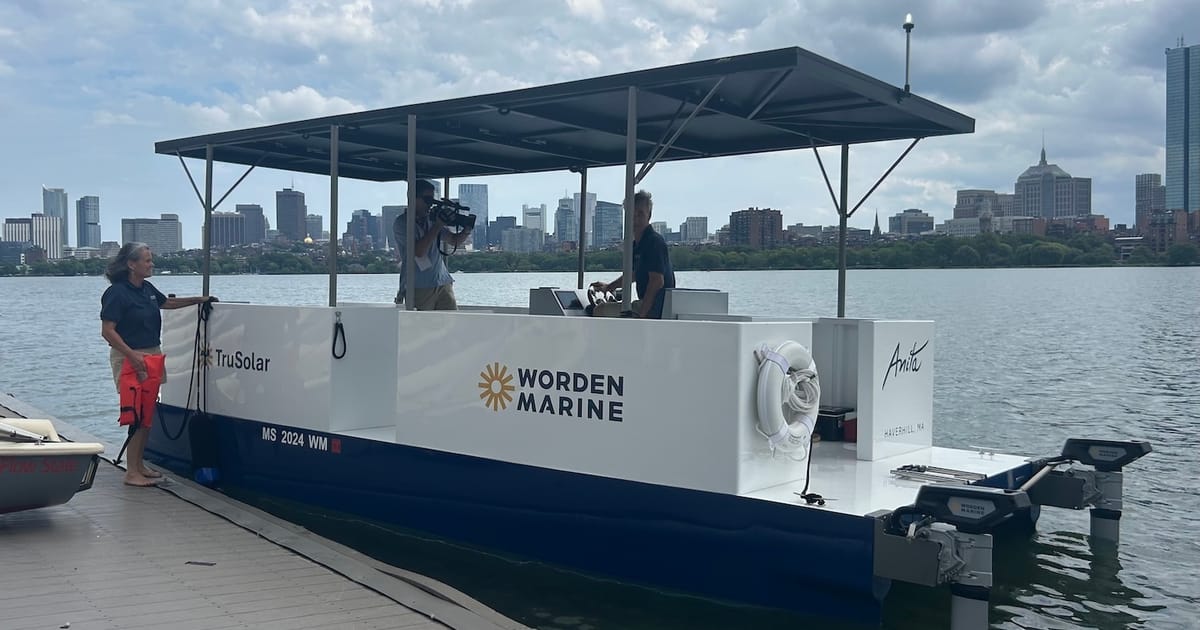
To maximize the emissions impact of his latest invention, however, he needs people to buy his boats. So his other major focus is building a sustainable business to get his climate-friendly technology out on the water. Worden Marine hasn’t closed any sales yet, but is talking with several possible customers, Worden said.
“It has to be a business or it’s not going to last very long,” he said. “First and foremost, it’s the experience, the technology, the environment. The business will follow.”
To keep the boats affordable, he turned to commercially available solar panels that cost about 20 cents per watt of capacity. The hull was engineered using carbon fiber and Kevlar to make sure it is both lightweight and strong. The larger TruSolar40, fully fitted out, will weigh just 9,000 pounds, so light for a vessel this size that when Worden went to buy a trailer for it, the vendor was initially confused by the number.
Buyers will be able to configure the final product to their needs. Seats can be organized to hold up to 16 passengers for ferry service. The TruSolar40 will not be the first solar-driven commercial vessel on the water — in 2018, the first Coast Guard–approved sun-powered boat started carrying passengers along the Hudson River — but they remain rarities.
Early on in the development process, Worden had the luck of meeting a retired U.S. Coast Guard captain who familiarized him with the standards a boat must comply with to be certified for commercial operations. So before the final designs were even drafted, Worden was working with the Coast Guard to ensure his vessel would meet the requirements.
Radar will be an option for navigating through misty conditions. There will be enough room to add a bar or a small bathroom, Worden said. A deck could be built off the back to allow for swimming, and there’s even enough space for a small grill.
“Our real technology is what’s above our head and under our feet,” Worden said. “You can put whatever you want in between. We’ll make it fun, too.”