HealthLeap just closed a $38 million funding round to expand its AI-powered patient monitoring system that flags high-risk hospital patients before critical events occur. The two-stage financing combines an $8 million seed round co-led by Sequoia Capital and First Round Capital with a $30 million Series A led by Hummingbird Ventures, positioning the startup to scale across major hospital networks as healthcare systems increasingly turn to AI for early intervention.
HealthLeap’s rapid-fire funding rounds signal investors are betting big on AI’s ability to prevent medical emergencies before they happen. The healthcare AI startup just announced it’s raised $38 million across two rounds – an $8 million seed co-led by Sequoia Capital and First Round Capital, followed immediately by a $30 million Series A led by Hummingbird Ventures.
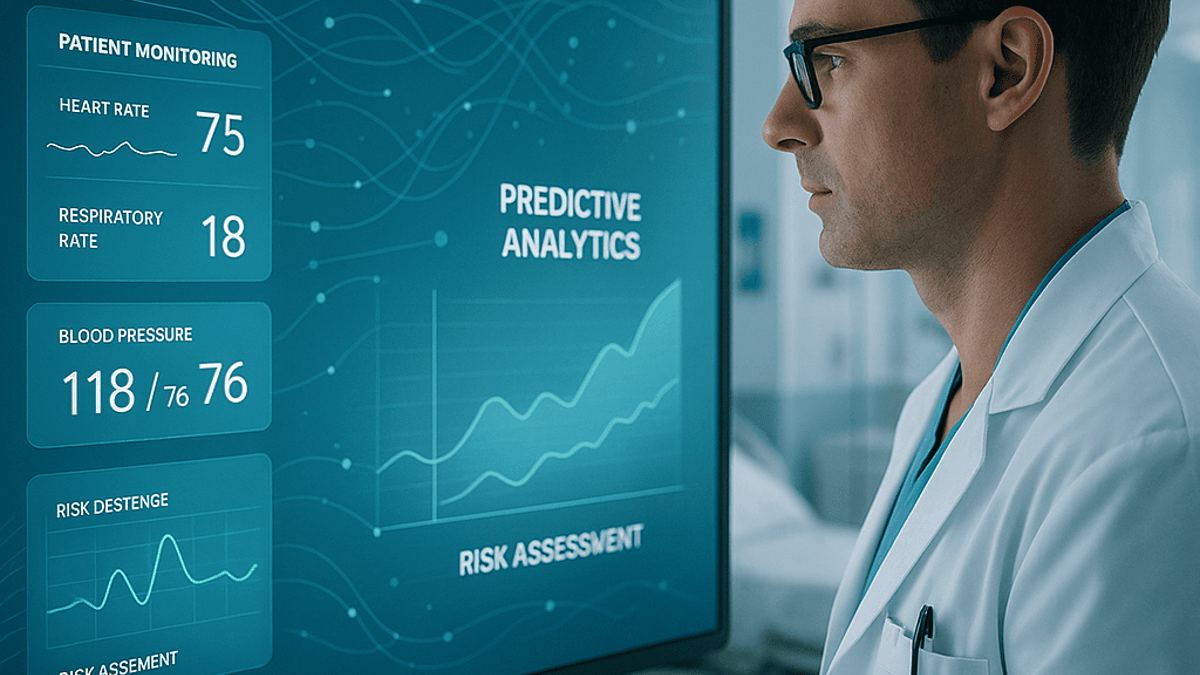
The company’s AI platform analyzes patient data streams in real-time, flagging individuals who may need immediate medical attention before their conditions deteriorate. It’s the kind of predictive healthcare technology that hospital administrators have been demanding as they grapple with staffing shortages and rising patient volumes.
HealthLeap’s timing couldn’t be better. Healthcare AI funding has surged 127% year-over-year according to CB Insights, with hospital systems increasingly willing to pay premium prices for technology that can prevent costly emergency interventions. The average cost of a preventable hospital readmission runs $15,000, making HealthLeap’s early warning system an attractive investment for cash-strapped healthcare networks.
The back-to-back funding rounds reflect Silicon Valley’s current appetite for healthcare AI startups with proven clinical outcomes. Sequoia Capital has been particularly aggressive in the space, having also backed AI diagnostic companies like PathAI and Freenome in recent months. Their co-investment with First Round Capital in HealthLeap’s seed round suggests both firms see significant market potential.
Hummingbird Ventures‘ decision to lead the Series A indicates European investors are also bullish on US healthcare AI opportunities. The Amsterdam-based firm typically focuses on B2B software companies with strong unit economics – a profile that fits HealthLeap’s hospital subscription model perfectly.
HealthLeap’s AI system processes electronic health records, vital signs, lab results, and other patient data to generate risk scores that help clinical teams prioritize care. The technology addresses a critical gap in hospital workflows where nurses and doctors often rely on intuition and experience to identify deteriorating patients.
Early pilot programs at regional hospital systems have shown promising results, with HealthLeap’s AI reportedly reducing unplanned ICU transfers by 23% and cutting average length of stay by 1.2 days. Those metrics translate directly to cost savings that hospital CFOs can easily quantify when evaluating AI investments.
The healthcare AI market is expected to reach $102 billion by 2028, driven largely by hospital systems seeking to improve patient outcomes while controlling costs. HealthLeap is positioning itself to capture a significant share of the patient monitoring segment, which represents roughly 15% of that total addressable market.
With $38 million in fresh capital, HealthLeap plans to expand its sales team and accelerate product development. The company is also exploring partnerships with major electronic health record providers like Epic and Cerner to integrate its AI directly into existing hospital workflows.
HealthLeap’s substantial funding round positions the startup to capitalize on hospitals’ growing willingness to invest in AI-powered early warning systems. With proven clinical outcomes and backing from top-tier investors, the company appears well-positioned to scale its patient monitoring platform across major healthcare networks. The key will be executing on hospital partnerships and demonstrating consistent ROI as the healthcare AI market continues its rapid expansion.